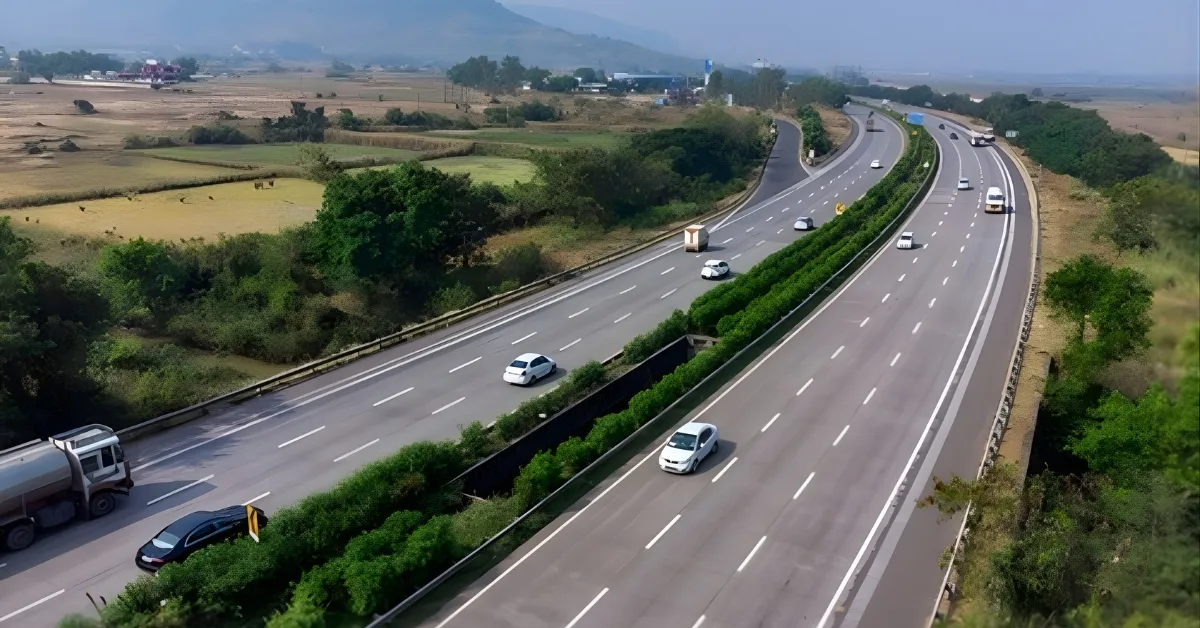
The Delhi-Dehradun Expressway is one of India's most ambitious highway projects. It was launched to cut travel time between Delhi and Dehradun from over 6 hours to just over 2.5 hours. The expressway spans nearly 210 km and connects Delhi's Akshardham to Dehradun, passing through Baghpat, Shamli, Muzaffarnagar, and Saharanpur. A 32-km stretch from Akshardham to the Eastern Peripheral Expressway near Baghpat has already opened for trial runs in December 2025. The route map includes modern features like wildlife corridors, service lanes, and multiple interchanges.
Built as a six-lane access-controlled road, it can be expanded to eight lanes in the future. The project budget is estimated at around ₹12,000 crore. Once fully operational, this expressway will not only save time but also boost tourism and trade between Delhi and Uttarakhand. In this article, we'll explore its route, map, budget, and other key details.
Delhi-Dehradun Expressway Route and Map
🚨Delhi–Dehradun Expressway opens for trial run.
— Indian Infra Report (@Indianinfoguide) December 1, 2025
The expressway is projected to reduce the 6–6.5-hour trip to roughly 2–2.5 hours. pic.twitter.com/5scko9fwB5
The Delhi-Dehradun Expressway, also known as the Delhi-Saharanpur-Dehradun Expressway, is a major access-controlled greenfield and brownfield project aimed at drastically reducing the travel time between Delhi and Dehradun.
Expressway Overview and Route
- Total Length: Approximately 210 kilometres (130 miles).
- Reduced Travel Time: Expected to cut the journey time from the current 5–6 hours to about 2.5 hours.
- Start and End Points:
- Starts at Akshardham Temple in Delhi.
- Ends in Dehradun, Uttarakhand.
- States and Cities Covered: It passes through Delhi, the central districts in Uttar Pradesh (including Baghpat, Shamli, Muzaffarnagar, and Saharanpur), and Uttarakhand (Dehradun).
- Lanes: The expressway is being developed with a mix of 6- and 12-lane sections (express and local).
Route Breakdown by Phase
The expressway is divided into four main phases:
| Phase | Route Segment | Length | Type | Key Details |
| Phase I | Delhi (Akshardham) to Eastern Peripheral Expressway (EPE) | ~32 km | Brownfield Upgrade | Starts at Akshardham Temple in Delhi and extends to the EPE junction near Khekra in Baghpat. Includes an elevated stretch through Geeta Colony and Shastri Park. The Delhi-Baghpat stretch recently opened for a trial run. |
| Phase II | EPE Junction (Baghpat) to Saharanpur Bypass | ~118 km | Greenfield Alignment | An entirely new alignment featuring multiple interchanges and underpasses, bypassing congested cities. |
| Phase III | Saharanpur Bypass to Ganeshpur | ~40 km | Brownfield Upgrade | Connects the Saharanpur Bypass to Ganeshpur on NH-307, near the southern entrance of Rajaji National Park. |
| Phase IV | Ganeshpur to Dehradun | ~20 km | Brownfield Upgrade | This critical section includes Asia's longest elevated wildlife corridor (about 12 km) over the eco-sensitive zone of Rajaji National Park/Shivalik Reserve Forest, as well as a 340-meter tunnel (the Daat Kali tunnel) for wildlife protection. |
Key Features
- Wildlife Corridor: It is the first highway in India to feature a dedicated wildlife protection corridor, which includes a 12-kilometre elevated section and animal underpasses to ensure the unhindered movement of animals, particularly elephants.
- Exits: The entire 210 km corridor is planned to have 16 entry and exit points.
- Link Roads (Spurs): It will have link roads to enhance connectivity to nearby cities, notably the Saharanpur–Roorkee–Haridwar Expressway and the Ambala–Shamli Expressway.
- Facilities: Plans include setting up wayside amenities, rest facilities, parking lots, and first-aid units every 25-30 km.
Current Status
The expressway is currently under construction. As of December 2025:
- A significant 32 km stretch of Phase I (from Akshardham in Delhi to the EPE junction near Baghpat) has recently opened for a trial run and is expected to be fully inaugurated soon.
- The entire project has a tentative completion deadline in mid-2025 or early 2026.
Delhi-Dehradun Express Budget Cost
The Delhi-Dehradun Expressway, also known as the Delhi-Saharanpur-Dehradun Economic Corridor, is a major infrastructure project with a significant investment. Here are the key details regarding the project's estimated cost:
Total Project Cost
The total estimated cost for the construction of the Delhi-Dehradun Expressway is approximately:
- ₹11,800 Crore to ₹13,000 Crore (or ₹118.68 Billion to ₹130 Billion).
- This cost includes the development of the 210-kilometre highway, the elevated stretches, tunnels, bridges, and the specialised wildlife corridor.
Project Funding and Model
- Funding Authority: The project is being executed and funded by the National Highways Authority of India (NHAI), under the Ministry of Road Transport and Highways, Government of India.
- Project Model: It is primarily executed under the Engineering, Procurement, and Construction (EPC) model, in which the government bears the financial risk and manages contractor payments, while the contractor handles design and construction.
Notable High-Cost Features
- A portion of the high budget is attributed to the specialised construction required for environmental protection and reduced travel time:
- Asia's Longest Elevated Wildlife Corridor: A significant 12-kilometre elevated structure through the eco-sensitive zone of the Rajaji National Park to ensure safe passage for wildlife, particularly elephants.
- Tunnel Construction: The expressway includes the construction of the Daat Kali tunnel (approx. 340 metres) to avoid impacting the forest area.
- Once fully operational, the expressway is expected to reduce the travel time between Delhi and Dehradun from 5–6 hours to about 2.5 hours.
Conclusion
🚨 Delhi–Dehradun expressway likely to open by February 2026. pic.twitter.com/Zlh657Bw48
— Indian Tech & Infra (@IndianTechGuide) November 7, 2025
The Delhi-Dehradun Expressway represents a landmark achievement in Indian infrastructure, progressing toward a dramatic reduction in travel time from six hours to just 2.5 hours. With an estimated cost of around ₹12,000 crore, the 210-km corridor is notable for its commitment to environmental stewardship, featuring Asia's longest elevated wildlife corridor over Rajaji National Park.
As of December 2025, the initial 32-km phase is successfully undergoing a public trial run, signalling the project's final stages. The anticipated opening by February 2026 is set to provide seamless, high-speed connectivity, significantly boosting tourism and economic activity across Delhi, Uttar Pradesh, and Uttarakhand.





Comments
All Comments (0)
Join the conversation