Have you ever thought about the seven continents that make up our world? From Asia, the largest and most populous, to the icy expanse of Antarctica, each landmass is unique. We have Africa, often called the "Mother Continent" or "Dark Continent", rich in history and diversity. Europe, a small continent, is sometimes called the "Old Continent" for its ancient civilisations. Then there is Australia, also a country, known as the "Island Continent" or Oceania. South America and North America complete the set, together forming the Americas. Each continent has its own stories, cultures, and key geographical facts. However, do you know which continent is often known as the "New Continent"? Here are a couple of clues: This massive landmass was significantly explored by Europeans later than Africa, Asia, and Europe. It is home to the world's longest mountain range and the largest rainforest. In this article, we'll take a look at the fascinating journey of discovery and the reasons behind the naming of this "New Continent".
Which Continent Is Known As The New Continent?

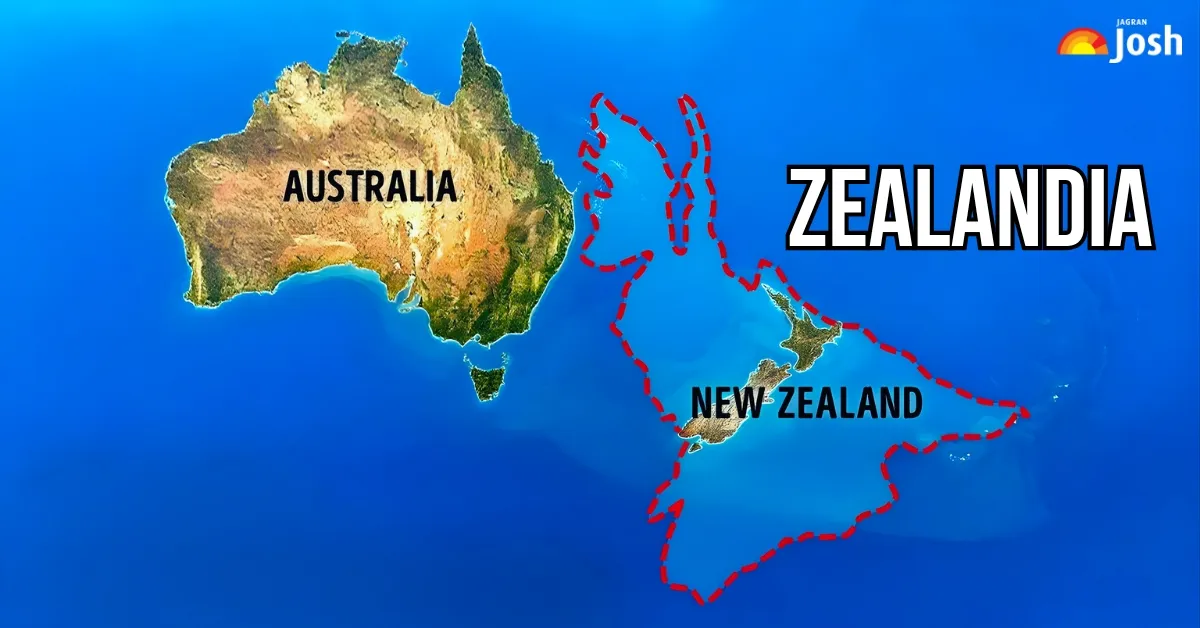
The continent known as the "New Continent" is Zealandia, also called Te Riu-a-Māui in Māori. It is considered a new continent because its status was formally recognised by geologists only in 2017, after decades of research. Located in the Southwest Pacific Ocean, it is mostly submerged, with about 94% of its landmass submerged. Only the islands of New Zealand, New Caledonia, and a few smaller territories rise above the water.
At approximately 4.9 million square kilometres, Zealandia is about half the size of Australia and is Earth's smallest, thinnest, and youngest continent. It is made of continental crust, separating it geologically from the surrounding oceanic crust.
10 Lesser-Known Facts About Zealandia
- Zealandia's continental crust is unusually thin, at only about 20 kilometres, compared to the typical 30-40 kilometres for other continents. This is why it sank.
- Its submergence was due to extreme tectonic stretching after it split from the supercontinent Gondwana about 80 million years ago, causing the crust to thin and lose buoyancy.
- It was not submerged by rising sea levels (like during the last Ice Age), but by the crust sinking into the Earth's mantle, a process completed about 25 million years ago.
- Despite being underwater, Zealandia has all three main rock types: igneous, metamorphic, and sedimentary, a key characteristic of a continent, unlike the predominantly basaltic oceanic crust.
- It is too large and geologically distinct to be considered a microcontinent or a chain of islands; its size is comparable to that of the Indian subcontinent.
- Zealandia was once nestled between Antarctica and Eastern Australia as part of Gondwana, the ancient southern supercontinent.
- Deep-sea drilling has uncovered fossils of tiny marine organisms and pollen from land plants, proving that parts of Zealandia were once a warm, shallow sea environment, not always a deep ocean.
- The continent straddles two major tectonic plates, the Pacific Plate and the Indo-Australian Plate, with the Alpine Fault running through New Zealand marking the boundary between them.
- Scientists have mapped a giant volcanic region on Zealandia's submerged surface that formed during the separation from Gondwana, revealing extensive magma flow.
- The oldest rocks found on Zealandia are over 1.3 billion years old, based on uranium-lead dating of zircon minerals in the crust.
Which Is The Newest Continent?

The newest continent formally recognised by geologists is Zealandia, also known as Te Riu-a-Māui. It was formally recognised by geologists as Earth's eighth continent around 2017. This landmass is approximately 4.9 million square kilometres, about half the size of Australia. About 94% of Zealandia is submerged beneath the Southwest Pacific Ocean, making it unique among the world's continents. The only visible parts are the islands of New Zealand and New Caledonia. It's considered the world's smallest, thinnest, and youngest continent.
Is Zealandia A Real Continent?

Yes, Zealandia is considered a real continent by most geologists, based on four key scientific criteria. First, it rises higher than the surrounding ocean crust. Second, it possesses a wide variety of igneous, metamorphic, and sedimentary rocks. Third, its crust is much thicker than the ocean floor. Finally, it has clear, distinct boundaries that separate it from the oceanic crust. Scientists agree that it is a single, massive piece of continental crust that simply happens to be mostly underwater, validating its status as a true continent.



-1765256165783.jpg)


Comments
All Comments (0)
Join the conversation