

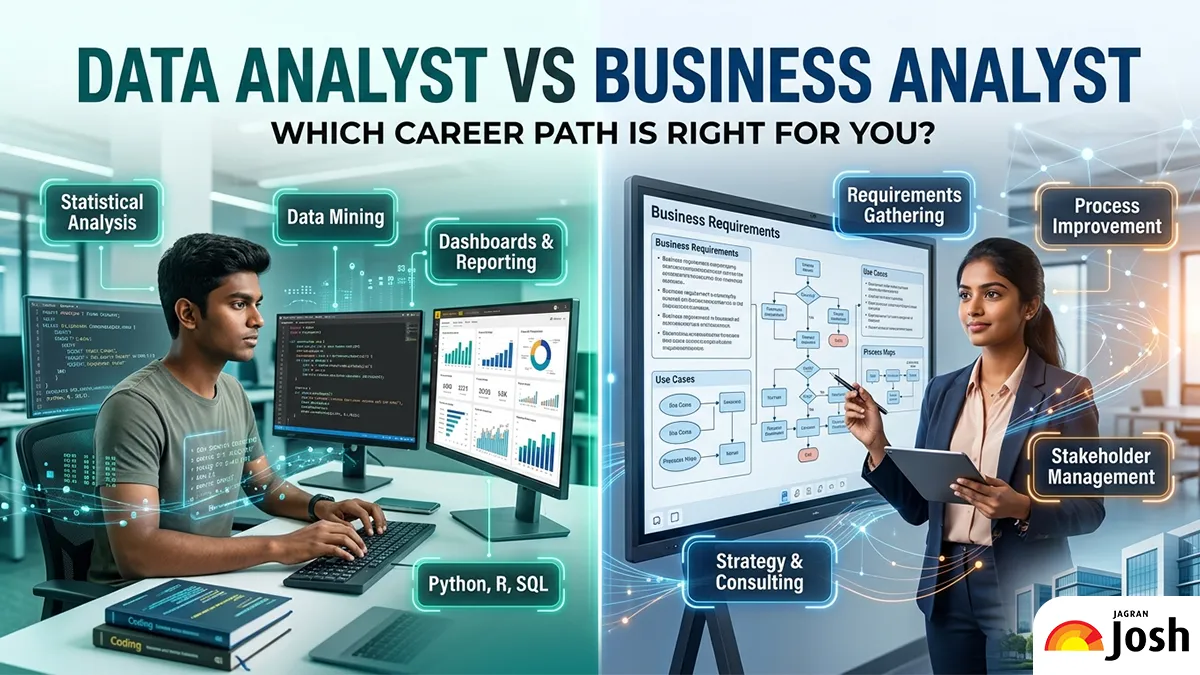
Deciding between being a Data Analyst or a Business Analyst depends on which type of work is most interesting. Both roles use information to help a company do well, but they use it in different ways. One focuses more on the numbers, while the other focuses more on the business steps. It is all about finding the right fit for a personal career path.
Also check: Entrepreneur Vs. Intrapreneur: Which Career Path Fits You Best?
What does a Data Analyst do?
A Data Analyst is like a digital detective. The main job is to look at large sets of numbers and technical data to find hidden patterns. They use tools to clean up messy information and create charts that show what has happened in the past.
- Main Focus: Working with technical data and numbers.
- Key Task: Creating reports and dashboards to show trends.
- Best for: People who love logic, patterns, and spending time with data.
What does a Business Analyst do?
A Business Analyst is more like a bridge between the business and the tech team. Instead of just looking at numbers, they look at the whole big picture of the company. They talk to different teams to understand their problems and suggest practical solutions to make the business run better.
- Main Focus: Solving business problems and improving processes.
- Key Task: Explaining technical ideas to non-technical people.
- Best for: People who enjoy communication, planning, and organising projects.
Key Differences
| Feature | Data Analyst | Business Analyst |
| Primary Goal | Finding insights in data | Improving business operations |
| Daily Work | Sorting and cleaning numbers | Meeting with teams and planning |
| Tools Used | Data software and spreadsheets | Project management and flowcharts |
Which Path is Right for You?
If finding hidden answers in big sets of numbers looks interesting, a Data Analyst role is a perfect match. For those who prefer talking to people and finding better ways for a company to work, a Business Analyst role is the right choice. Both jobs are very popular today and offer great careers for the future.
Also check: Information Technology vs Information Systems: Choose Your Path