

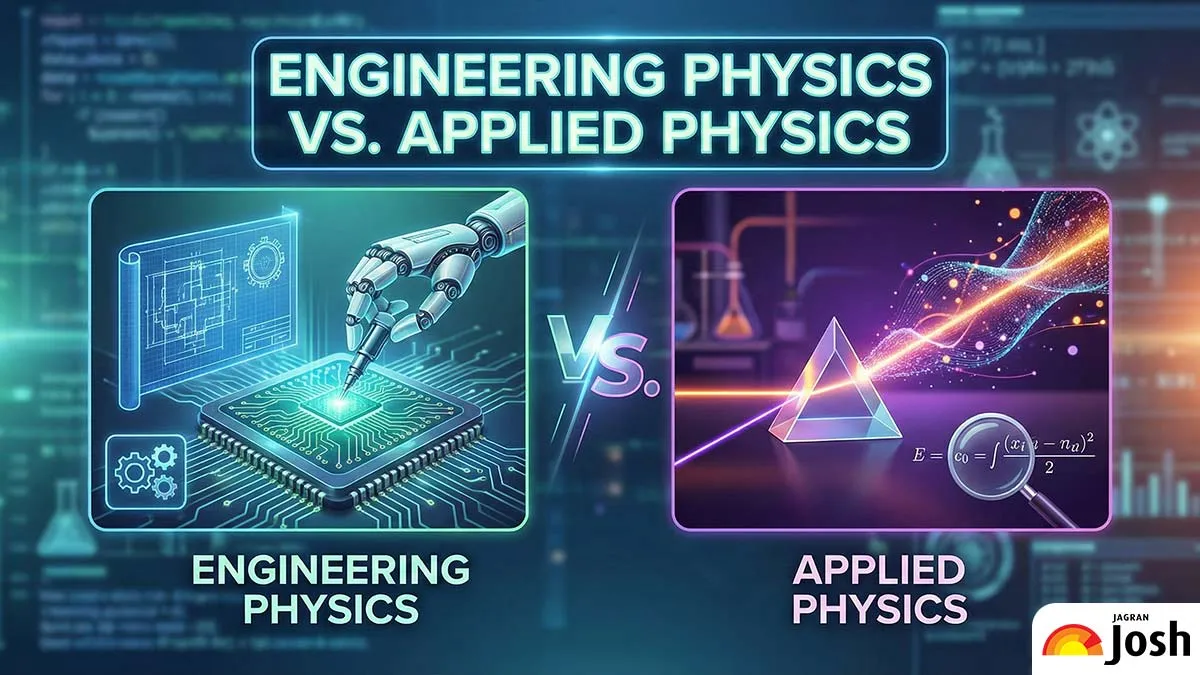
If you love science but also want to build things, you’ve likely come across two fields which sound similar: Engineering Physics and Applied Physics. At first, they seem like the same thing—"Both use physics to solve real-world problems.".
However, they have different goals and lead to different types of work. Here is a simple guide to help you tell them apart.
Also check: M.Sc Physics vs. M.Sc Applied Physics: Which One to Pursue?
Goal: Discovering vs. Building
The easiest way to see the difference is to look at what someone in that field is trying to achieve.
- Applied Physics is about using physics to solve a specific scientific problem. It’s the bridge between "pure" science and the real world. You are trying to see if a scientific theory can actually work in real life.
- Engineering Physics is about taking those proven theories and turning them into a reliable product or machine. It’s for people who want to be engineers but need a deeper understanding of science than a standard engineer would have.
What Do You Actually Do?
Take a new laser, for example.
- The Applied Physicist asks: "Can we use light to move microscopic particles?" They spend their time in a lab testing the behavior of light and matter to prove it’s possible.
- The Engineering Physicist asks: "How do I build an affordable laser tool that a doctor can use in a hospital every day?" They focus on the design, the materials, and making sure the tool doesn't overheat or break.
Key Differences

Which One Should You Choose?
Choosing between them depends on where you want to spend your day.
- Choose Applied Physics if you want to be at the edge of discovery. You might work in a university or a private lab, trying to find the "next big thing" in science, like quantum computing or new ways to store solar energy.
- Choose Engineering Physics if you want to be an inventor. You want the deep knowledge of a scientist, but your heart is in the workshop. You want to build a physical device that works.