

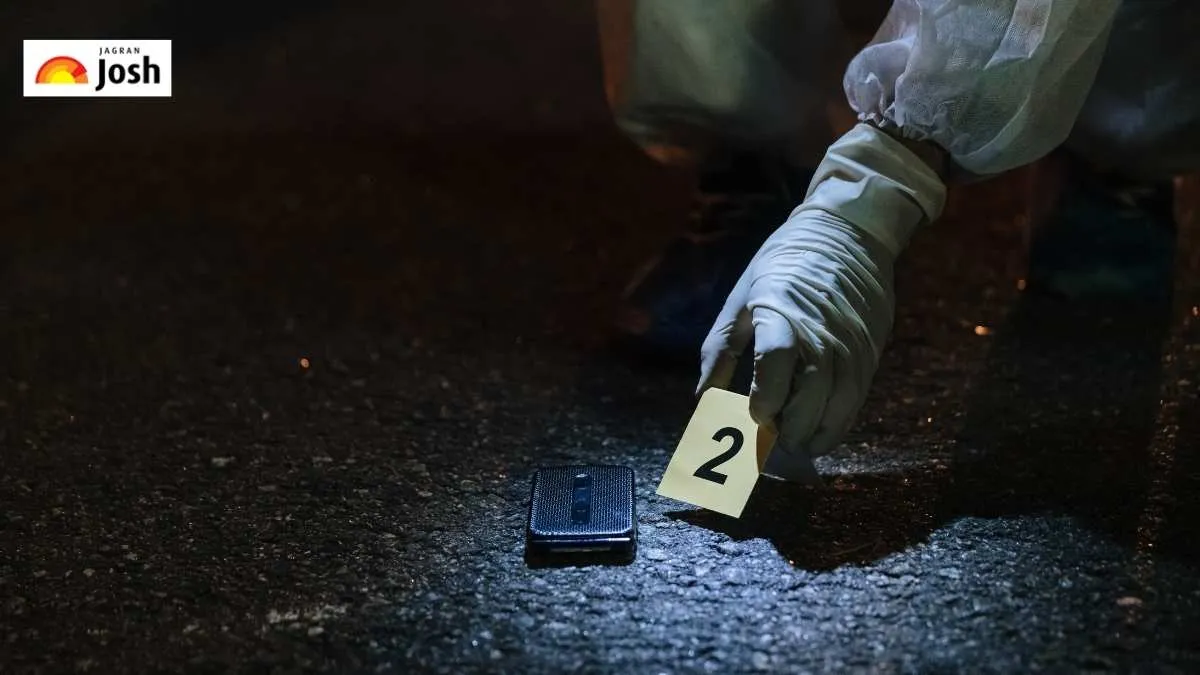
Forensic science is an intriguing multidisciplinary field that combines criminal justice and scientific research for many students right out of Class 12 science. Choosing the appropriate classes in Class 12 is the first step, regardless of the candidate's interest in the following areas:-
-
Crime Scene Investigation
-
DNA analysis
-
Ballistics
-
Toxicology
-
Digital forensics
This is because admission to an undergraduate program in forensic science depends on this foundation. For admissions to a Bachelor of Science (B.Sc.) Forensic Science, Bachelor's of Science (B.Sc.) Criminology and Forensic Science, and integrated scientific programs, several Indian universities, including specialised ones like the National Forensic Sciences University (NFSU), have explicit academic requirements.
What Subjects Should You Choose for Forensic Science?
Before we dive into the subject choices to be taken in Class 12th to pursue higher education in forensic science, it is important to know what forensic science is.
| Forensic Science:- The use of scientific disciplines, including subjects like chemistry, biology, mathematics, psychology, physics, and social science, criminal procedures and investigations is known as forensic science. It is an intriguing connection between science and crime can be found in the field of forensic science. Forensic science is to gather, examine, and provide law enforcement officers with information and data from a crime scene so they can use it to solve crimes. |
Before we get into more complex subjects like forensic biology, trace evidence analysis, or forensic chemistry, universities make sure that the students have a basic understanding of science when they enrol for undergraduate forensic science courses.
Given below is the list of the subjects that a student should choose and complete class 12th to pursue a higher education in forensic science to seek admission to a B.Sc. (Honours) in Forensic Science:-
|
(Source of Information:- https://www.ugc.gov.in/pdfnews/8218435_B.Sc-Hons-Forensic-Science.pdf)
Importance of Physics in Forensic Science:-
-
Physics serves as the foundation of numerous forensic operations, which range from ballistics analysis to optical techniques utilised in microscopic evidence assessment.
-
Taking physics in Class 12 means that the students grasp motion, energy, light, sound, and measurement principles, which are all required for technical investigation tasks.
-
Physics is important for forensic science admission because it is essential for assessing physical evidence, such as spatter patterns, ballistics, glass breakage patterns, and accident reconstruction.
-
Students with a strong physics background are better able to apply, interpret, and employ scientific equipment and principles in criminal investigations.
Importance of Chemistry in Forensic Science:-
-
Chemistry plays an important role in areas such as forensic toxicology, trace evidence identification, drug analysis, and chemical profiling.
-
An understanding of chemical processes, molecular interactions, and analytical techniques such as chromatography and spectroscopy begins in 12th-grade chemistry.
-
Chemistry is important for forensic science admittance because it serves as the foundation for studying, identifying, and interpreting physical evidence from crime scenes, such as poisons, explosives, drugs, and trace elements.
-
Chemistry is required for procedures like as spectroscopy and toxicology, making it a core subject in a forensic laboratory analysis and investigations.
Importance of Biology or Mathematics in Forensic Science:-
-
Biology in PCB (Physics, Chemistry, Biology) is ideal for students interested in forensic biology, DNA profiling, serology, and human anatomy interpretation.
-
Mathematics in PCM (Physics, Chemistry, Mathematics) is useful for statistical analysis, digital forensics, measurement theory, and computational modelling.
-
Biology and Mathematics are needed for forensic science admittance because they offer the fundamental analytical tools, which are needed to investigate crime scenes, analyse evidence, and offer expert testimony.
-
Biology, particularly genetics, is important for DNA analysis, whereas mathematics is required for probability calculations and physical measures.
What are the Career Opportunities Available in Forensic Sciences?
The interdisciplinary character of forensic science opens up a wide range of job opportunities for science graduates. From the crime scene to the courtroom, practitioners in this discipline are critical in bringing scientific knowledge and analytical tools to the pursuit of justice. An undergraduate degree in forensic science offers access to specialised professions that allow students to actively assist in criminal and civil investigations, making it a highly satisfying and significant career.
Given below is the list of some of the careers that a student can pursue after completing an undergraduate and a postgraduate degree in forensic science:-
| Forensic Engineer | Fingerprint Expert |
| Handwriting expert | Toxicologist |
| Forensic Anthropologist | Forensics Expert |
| Forensic Linguist | Legal Counsellor |
| Cyber Consultant | Forensic Medical Examiner |
| Dactyloscopists | Forensic Accountant |
(Source of Information:- https://tnvelaivaaippu.gov.in/pdf/career_info/Forensic-Science.pdf.)
To study undergraduate science in India, whether through CUET UG or other admission channels, the student must begin their education in core science topics in Class 12. Physics, Chemistry, and either Biology or Mathematics are the officially recognised eligibility combinations for the most renowned programs. This scientific foundation prepares the student for challenging coursework, laboratory skills, and analytical problems in forensic sciences careers ahead.
Related Searches:-