

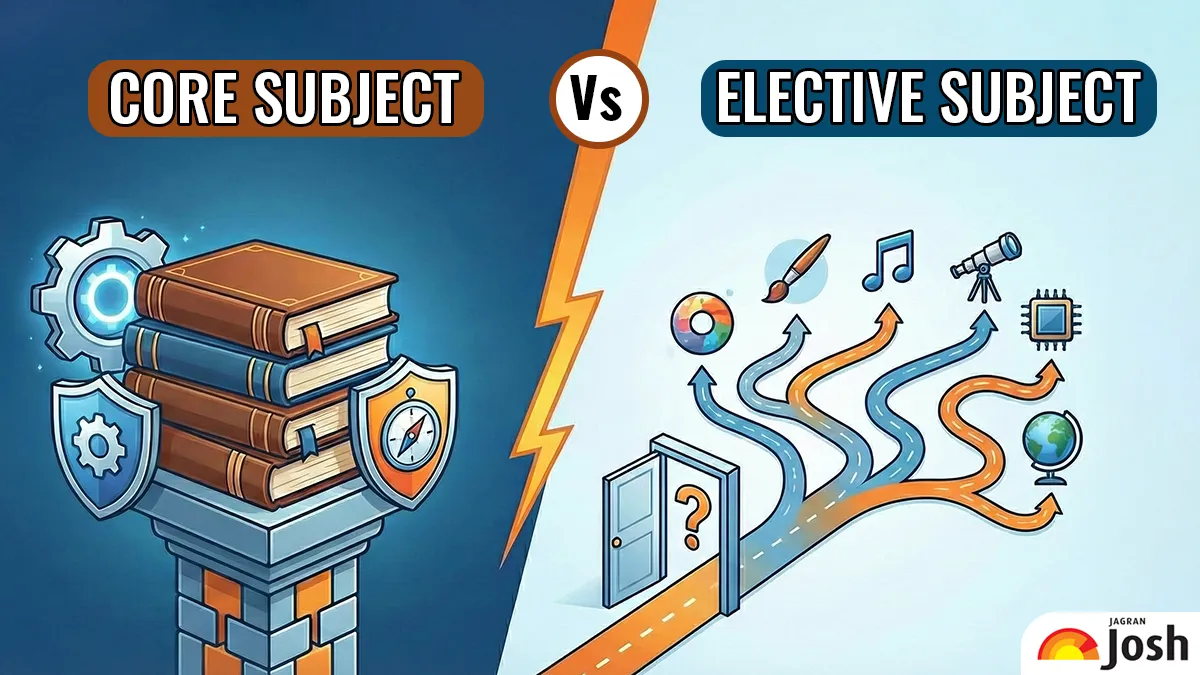
When you look at a school or college schedule, you will usually see two types of classes: Core Subjects and Elective Subjects. While both are important for finishing a degree, they serve very different purposes.
Also check: Integrated Degree vs Regular Degree: Which Should You Choose?
Here is a simple breakdown of both the subjects.
Core Subjects: "Must-Haves"
Core subjects are the foundation of an education. These are the classes that every student in a specific program must take to complete a degree. There is usually no way to skip them because they provide the essential knowledge needed for a career or a degree.
-
Who chooses them? The school or the department.
-
The Goal: To make sure every student has the same basic skills and knowledge.
-
Examples: If you are studying Engineering, your core subjects might be Math and Physics. If you are in high school, core subjects are usually English, Science, and History.
Elective Subjects: "Personal Selection"
Elective subjects are classes that students get to pick based on their own interests. Think of these as the "extras" that allow a person to customize their education. While you still have to take a certain number of them to graduate, you have the freedom to decide which ones you want.
-
Who chooses them? The student.
-
The Goal: To explore new hobbies, learn a side skill, or just try something fun.
-
Examples: A business student might take Photography as an elective. A high schooler might choose Drama, Cooking, or Coding.
Key Differences

Why Do We Need Both?
Education is a balance. Core subjects ensure that a student is professional and capable in their main field. Without them, a person might miss the most important parts of their job.
On the other hand, elective subjects keep study interesting. They allow students to take a break from their heavy main subjects and learn something they actually enjoy. They also help people discover their hidden talents.
Summary
-
Core = The bricks of a house.
-
Elective = The paint and decorations.
By mixing these two together, students get a well-rounded education that is both professional and personal.
Also check: PG Diploma Or PG Degree: Which One Is Better?