

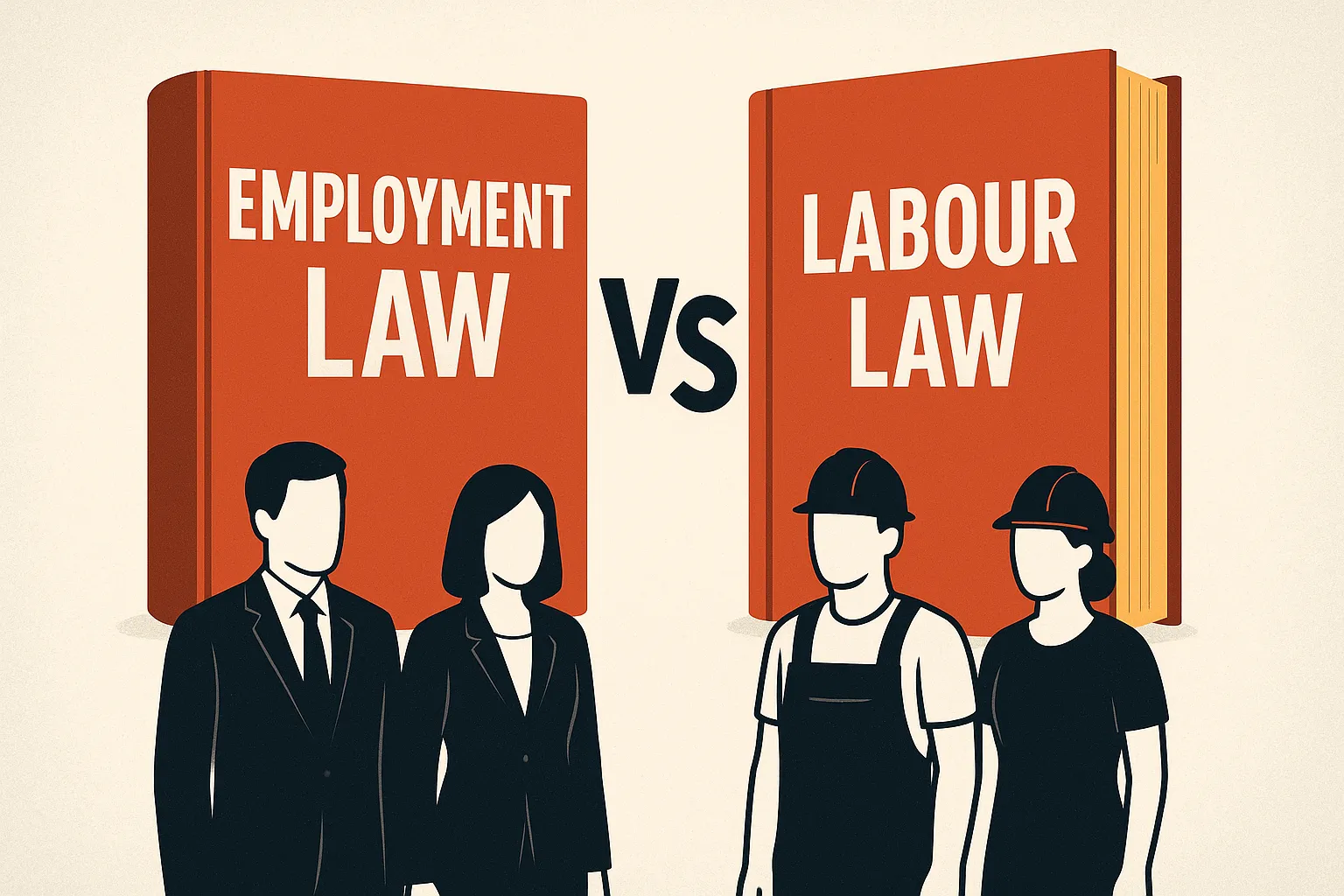
Imagine a big rulebook for workplaces. Inside this book, there are two main sections that often get mixed up: Employment Law and labour Law. While both deal with jobs, they focus on slightly different things.
Also check: Criminal Law vs Civil Law: What's the Distinction?
Employment Law: Rules for Individual Workers
Employment Law is about the rules for each single worker and the company they work for. It covers the basic rights and duties everyone has when they get a job.
What it covers:
-
Hiring and Firing: Rules for how companies must hire people and how they can let people go.
-
Pay and Benefits: Making sure workers get paid fairly, get minimum wage, and sometimes get things like sick leave or vacation.
-
Safety at Work: Rules to keep workplaces safe and healthy.
-
Fair Treatment: Stopping unfair treatment (discrimination) based on things like age, gender, race, or religion.
-
Worker Privacy: Rules about what information a company can keep about its workers.
-
Whistleblowing: Protecting workers who report bad things happening at their company.
Employment Law looks at the relationship between one worker and their boss/company. It's about protecting the rights of individual people at their jobs.
Labour Law: Rules for Groups of Workers
Labour Law is about the rules for groups of workers who want to team up to make their workplace better. It's especially important for workers who join a union. A union is like a club for workers who bargain together.
What it covers:
-
Forming Unions: Rules that let workers create or join a union without getting in trouble.
-
Collective Bargaining: Rules about how unions and companies talk and make agreements together about pay, hours, and working conditions. This is called "bargaining."
-
Strikes and Picketing: Rules about when workers can stop working (strike) or protest (picket) to get better conditions.
-
Unfair Union Practices: Rules stopping unions or companies from doing unfair things during union activities.
Labour Law looks at the relationship between groups of workers (unions) and their employers. It's about giving workers power when they act together.
Core Difference
Imagine two different scenes:
-
Employment Law: Picture a single person sitting with their boss, talking about their pay or a problem they're having.
-
Labour Law: Picture a big meeting room with a group of workers (the union) sitting on one side, and the company bosses on the other, talking loudly and making a big agreement.
Can They Overlap?
Sometimes, yes! If a union worker is treated unfairly (like discrimination), it could be both an Employment Law problem (because it's unfair to an individual) and a labour Law problem (if the union agreement had rules about fair treatment).
Also check: Commercial Law vs Corporate Law: What are the Key Differences?
Conclusion: Employment Law helps individual workers, while labour Law helps groups of workers, especially those in unions. Both are important for making sure jobs are fair and safe.