

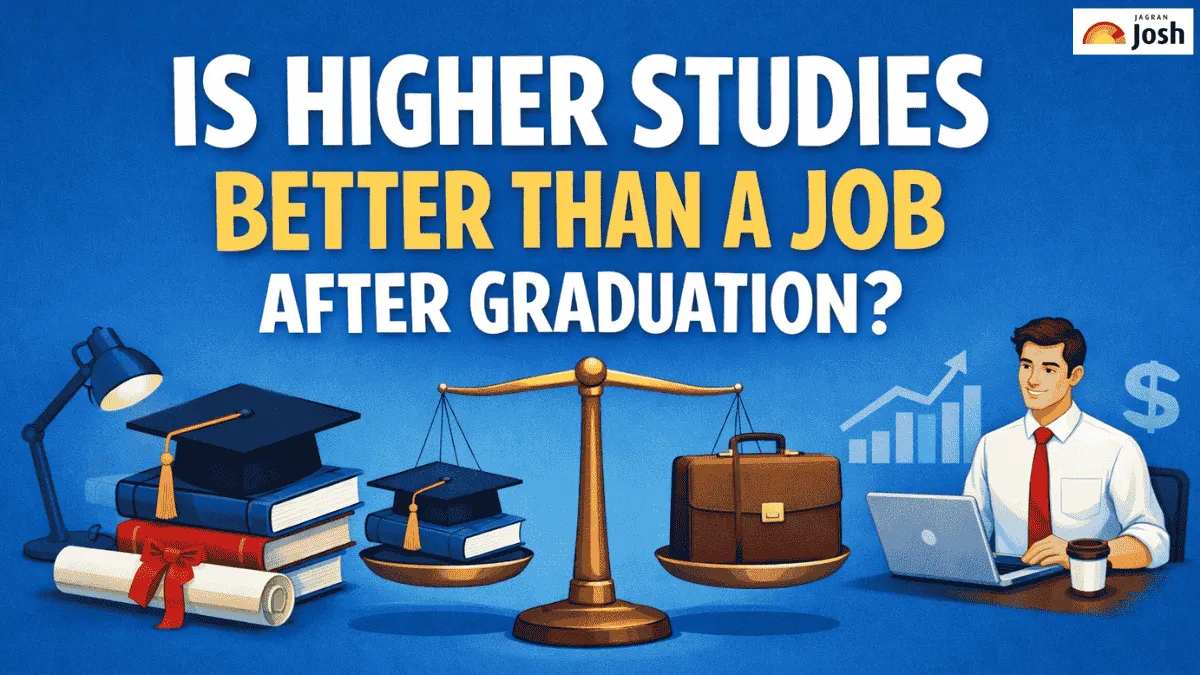
After you finish your first degree, a big question pops up: Should you keep studying, or should you go find a job right away? Both choices have good points and bad points. What's "better" really depends on what you want for your life.
Also check: Why Research Skills Matter for Science Graduates?
Let's look at this in a simple way.
Choosing to Study More (Higher Studies)
What it means: Going to university again for a Master's degree, a PhD, or another special course.
Merits:
- You Learn More: You become a super expert in one area. This can be great if you love learning.
- More Money Later: Often, people with higher degrees earn more money over their whole career. It might not happen right away, but over many years, the extra study can pay off.
- Special Jobs: Some jobs, like being a top scientist or a university professor, need higher degrees.
- New Friends: You meet more people who are interested in the same things as you.
Demerits:
- Costs Money: Higher studies can be very expensive. You might need to take out loans.
- No Paycheck Yet: While you are studying, you are not earning a full-time salary.
- Takes Time: You spend more years in school instead of working.
- No Job Guarantee: Even with more degrees, a job isn't always guaranteed, though it can help.
Choosing to Get a Job (After Graduation)
What it means: Starting work in a company right after you finish your first degree.
Merits:
- Money Now: You start earning a salary right away, so you can pay bills, save money, or buy things you want.
- Real-World Skills: You learn how things work in a real company, not just from books. This is called "experience."
- Grow Your Network: You meet people who are already working in your field, which can help you find other jobs later.
- Find Your Path: You might discover what you really like (or don't like) to do by trying out different jobs.
Demerits:
- Less Pay at First: Your first job might not pay as much as someone with a higher degree.
- Slower Climb: It might take longer to get to very high-level jobs compared to someone with a special degree.
- May Need to Study Later: Some companies might ask you to go back to school later if you want to reach a very top position.
- Hard to Switch Fields: If you start working in one type of job, it can sometimes be harder to switch to a very different type of job later without more education.
Which is Better?

The Most Important Thing:
There is no "perfect" answer. Think about:
- What do you love to do? (Learning or doing?)
- What do you need right now? (Money or knowledge?)
- What kind of job do you dream of? (Does it need extra education?)
Some people even do both! They work for a few years, save money, and then go back for higher studies. It's your path, so choose what feels right for you!
Also check: How to Choose the Right Engineering College?