

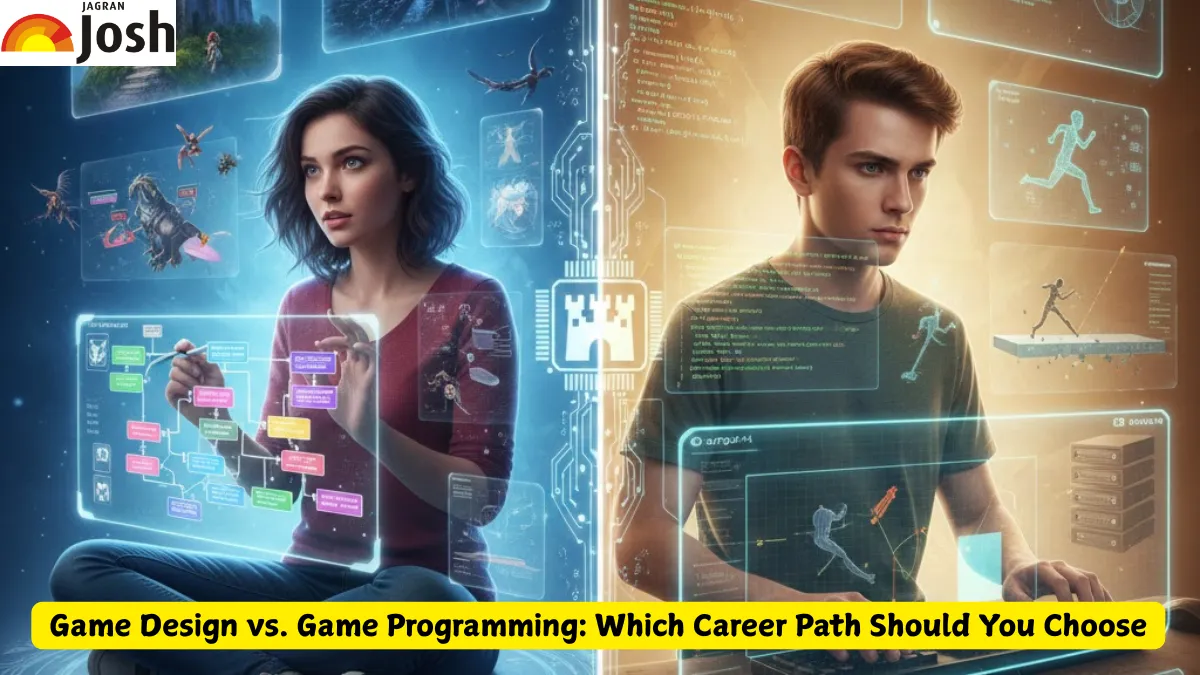
Game Design vs. Game Programming: High-level engines and advanced generative AI have democratized creation in 2026, essentially transforming "playing" into a type of "building." However, the professional divide between game design and game programming has only widened as entrance barriers have decreased. The simplest way to comprehend this difference is to look at it from the perspective of an architect vs an engineer.
The architect is the game designer. They are the creators of the "Why" and the "What," emphasizing narrative flow, player psychology, and the careful balancing act of mechanics. The designer's worth in a world of AI-produced assets is intentionality making sure that a procedurally created forest is not just large but also emotionally compelling. They create the blueprints (the Game Design Document), which specify the "feel" of the world and the rules of engagement.
The Engineer is the Game Programmer, on the other hand. They take care of the "How," converting abstract ideas into exacting, efficient code. AI helps with boilerplate programming, but the expert programmer handles the intricate infrastructure, including networking protocols, physics integration, and engine design. The programmer creates the mechanism to make sure the game doesn't break when time stops, even if the designer envisions a sword that can freeze time.
The decision between them comes down to temperament: the coder enjoys solving the logical riddles that enable meaningful human experiences, while the designer aims to create such experiences.
Game Design vs. Game Programming: Basic Difference
The disparity between game design and game programming in 2026 is frequently compared to the "Blueprint" and the "Bricks." Both are crucial to the game production cycle, but they call for quite different mindsets one that emphasizes logical execution (programming) and the other that focuses on the human experience (design).
| Feature | Game Design (The Visionary) | Game Programming (The Builder) |
| Core Goal | To make the game fun, engaging, and balanced. | To make the game functional, stable, and optimized. |
| Primary Focus | Rules, story, level flow, and player psychology. | Logic, physics, AI behavior, and memory management. |
| Key Mindset | Creative & Empathetic: "How will the player feel?" | Logical & Analytical: "How will the code execute?" |
| Essential Tools | Miro, Figma, Unreal Blueprints, Twine, GDDs. | C++, C#, Python, Visual Studio, Git. |
| Day-to-Day Task | Scripting level events and adjusting weapon stats. | Fixing engine bugs and optimizing frame rates. |
| Industry Path | Narrative Designer, Level Designer, Creative Director. | Gameplay Programmer, Engine Architect, CTO. |
Game Design vs. Game Programming: Career Scopes
The domestic gaming market in India alone is expected to reach around $9 billion by 2026, when the worldwide gaming market is expected to reach over $321 billion. For both game designers (the creative architects) and game programmers (the technical engineers), this rapid expansion has produced unique, lucrative job paths.
-
Creative Directing: For international studios like Ubisoft, designers can progress to positions as Creative Directors, supervising the complete artistic and narrative vision of huge AAA games.
-
Technical Leadership: Skilled programmers frequently advance into CTO or Technical Lead roles, overseeing sophisticated software development teams and intricate engine architectures for large tech companies.
-
Indie Entrepreneurship: Designers frequently run "Micro-studios" with five to twenty members, utilizing AI-assisted technologies to create original, mid-core games with an emphasis on cutting-edge mechanics and experimental storytelling.
-
Specialized Engineering: Programmers find lucrative niches in AI and Physics programming, developing advanced NPC behaviors and realistic environmental simulations that are currently in high demand.
-
Global Consultancy: Both positions can serve as consultants for international outsourcing hubs in India, offering foreign game creators specialized support in the areas of art, engineering, or live operations.
-
Cross-Industry Expansion: Programming abilities provide substantial long-term employment stability in non-gaming industries like medical training simulations, automobile design, and VR-based education.
Related Searches:
-
Top IITs in QS Asia Rankings 2026 - Indian Engineering Institutes Ranking
-
Guide to FMS Delhi Application: Course Fees and Other Details
Also Read:
Top IIT Colleges That Offer Data Science Courses to Learn Online in 2025
Best Free AI Courses for Beginners in 2025
Best Pharmacy Colleges in India 2025 After 12th Offering High Job Placement
To stay updated on current trends, join the Jagran Josh Telegram Community!