

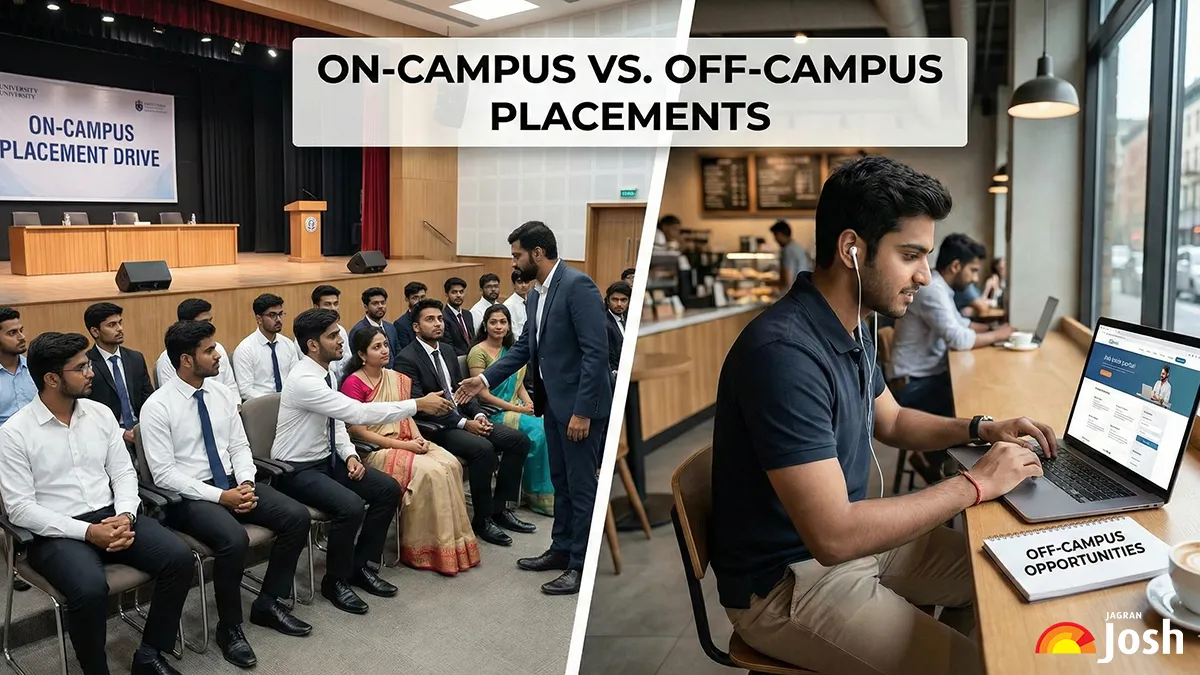
When you’re finishing up your degree, the word "placement" starts popping up everywhere. It’s the bridge between being a student and becoming a professional. But there are two main ways to get that first job: On-Campus (where companies come to you) and Off-Campus (where you go to the companies).
A big question students ask is: "Which one will keep my job safer in the long run?" Let’s get to know each other in simple terms.
Also check: Core Subject vs. Elective Subject: What’s the Difference?
What’s the Difference?
- On-Campus Placements: It is like a private market. Your college invites specific companies to interview students. It’s convenient, and you’re only competing with your classmates.
- Off-Campus Placements: This is the open market. You apply through LinkedIn, company websites, or job portals. You are competing with thousands of people from different colleges and backgrounds.
Job Security: The On-Campus Side
On-campus jobs often feel more secure at the very beginning. Here’s why:
- Trust between College and Company: Companies visit specific colleges because they trust the quality of students there. They usually have a long-term plan to hire a "batch" of freshers and train them.
- Safety in Numbers: Since the company hires 20 or 50 students at once, they are less likely to let people go immediately. They’ve invested a lot of time and money into the campus visit.
- The "Slow Start": On-campus hires often get a "grace period" or a long training phase, which gives you time to settle in without the immediate fear of being fired.
Job Security: The Off-Campus Side
Off-campus jobs might seem "riskier" because you’re on your own, but they can actually lead to stronger long-term security. Here’s why:
- Market Testing: If you get a job off-campus, it’s because you beat the many competitors. This proves your skills are "market-ready," not just "college-ready."
- Better Fit: On-campus, you might take whatever job comes first. Off-campus, you choose the company. If you find a company that truly matches your skills, you are more likely to be an essential part of the team.
- Resilience: The process of hunting for a job off-campus teaches you how the real world works. If a layoff ever happens, an off-campus candidate already knows exactly how to find a new job quickly.
Which is Better?
In the short term, On-Campus feels more secure. It’s a protected environment where the company and college work together to make sure you succeed.
In the long term, Off-Campus skills provide better security. Real job security doesn’t come from the company you work for; it comes from your ability to get hired anywhere.

Conclusion
If you get a great offer on-campus, take it! It’s a fantastic way to start. But if you don't, or if you want to test your limits, off-campus opportunities build a type of "career strength" that can protect you through any economic storm.
Also check: Apprenticeship vs Internship: Which Is Right for Your Career?