

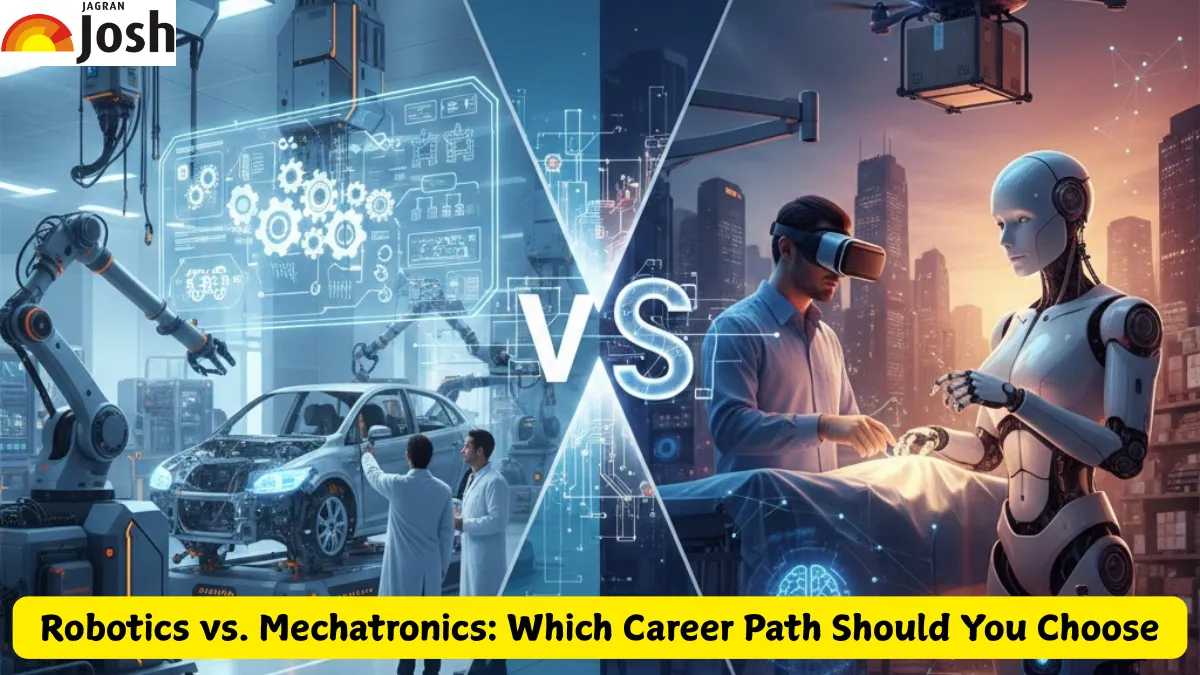
Robotics vs Mechatronics: The divide between robotics and mechatronics has become more nuanced and important in 2026 because to the convergence of sophisticated materials, high-speed connection, and artificial intelligence. Despite having a shared background in mechanical, electronic, and software engineering, their professional paths reflect various engineering mindsets.
The "superset," or parent discipline is mechatronics. It focuses on systems integration, or the smooth coexistence of electrical controllers and mechanical parts. A mechatronics engineer in 2026 will be an expert in "smart products."
They create systems like high-speed automated bottling lines, smart climate control systems, and Advanced Driver Assistance Systems (ADAS) in electric cars that include intelligence to increase efficiency and dependability. Their objective is to build a machine that flawlessly carries out a complicated, integrated task, frequently in a controlled setting.
A subfield of mechatronics called robotics pushes the limits of autonomy. A robotics engineer specializes on machines that are able to detect, reason, and act in unstructured or dynamic settings, even though all robots are mechatronic systems.
AI and machine learning will play a major role in this industry in 2026. Autonomous drones, surgical robots, and cooperative robots (cobots) that assist people are all projects of robotics engineers. High-level software abstractions like path planning, SLAM (Simultaneous Localization and Mapping), and computer vision are all part of their work.
Robotics vs. Mechatronics: Basic Difference
The extent and level of autonomy of the systems they create are the primary differences between robotics and mechatronics. Although they are closely related, robotics is a specialized subset that focuses on autonomous behavior, while mechatronics is typically regarded as the superset (parent field). The main distinctions between prospective engineers and present students are shown in the table below.
| Feature | Mechatronics Engineering | Robotics Engineering |
| Basic Definition | The integration of mechanical, electronic, and computer systems into a single smart device. | The design, construction, and operation of machines capable of autonomous action. |
| Relationship | The "Parent" discipline; a superset of diverse automated technologies. | A "Subset" of mechatronics specifically dealing with robots. |
| Primary Goal | Enhancing mechanical systems through electronic and software integration. | Creating machines that can sense, think, and act independently of human input. |
| Focus of Study | Control systems, embedded firmware, and systems architecture. | Artificial Intelligence, Computer Vision, and Kinematics. |
| Autonomy Level | Usually perform fixed, pre-defined tasks (e.g., smart home devices). | Capable of making decisions in dynamic environments (e.g., self-driving cars). |
| Example Products | Anti-lock Braking Systems (ABS), smart thermostats, CNC machines. | Surgical robots, autonomous drones, humanoid assistants (e.g., Tesla Optimus). |
| Typical Industry | Automotive, Consumer Electronics, HVAC, Smart Manufacturing. | Healthcare, Defense, Space Exploration, Logistics (Warehousing). |
Career Scope In Robotics vs. Mechatronics
The global "Industry 4.0" and "Industry 5.0" shifts influence the job paths of graduates in robotics and mechatronics. Mechatronics is concerned with integrated smart systems and industrial automation, whereas robotics is concerned with autonomy and software intelligence.
-
Robotics AI Specialist: These experts concentrate on "Physical AI," creating sophisticated algorithms for computer vision, SLAM, and generative behavior, mainly for the advanced logistics, space exploration, and healthcare industries.
-
Mechatronics design engineers combine mechanical hardware with integrated electronics and complex control software to create "smart products" such as adaptive braking systems and electric vehicle (EV) drivetrains.
-
Autonomous Systems Architect: Robotics graduates oversee the creation of delivery drones and self-driving cars, using deep learning and sensor fusion to enable robots to safely navigate challenging, unstructured real-world situations.
-
Automation & Control Engineer: Mechatronics specialists dominate "Smart Factory" initiatives, integrating IoT, digital twins, and PLCs to optimize production lines, significantly boosting efficiency in the automotive and consumer electronics industries.
-
Medical Robotics Specialist: This high-growth niche employs robotics experts to design surgical assistants and rehabilitation cobots, requiring a deep understanding of high-precision kinematics and real-time haptic feedback systems.
-
Defense & UAV Engineer: Both fields converge here, where mechatronics engineers build the rugged physical platforms and robotics engineers develop the autonomous surveillance and tactical mission software for unmanned vehicles.
Related Searches:
-
Top IITs in QS Asia Rankings 2026 - Indian Engineering Institutes Ranking
-
Guide to FMS Delhi Application: Course Fees and Other Details
Also Read:
Top IIT Colleges That Offer Data Science Courses to Learn Online in 2025
Best Free AI Courses for Beginners in 2025
Best Pharmacy Colleges in India 2025 After 12th Offering High Job Placement
To stay updated on current trends, join the Jagran Josh Telegram Community!