

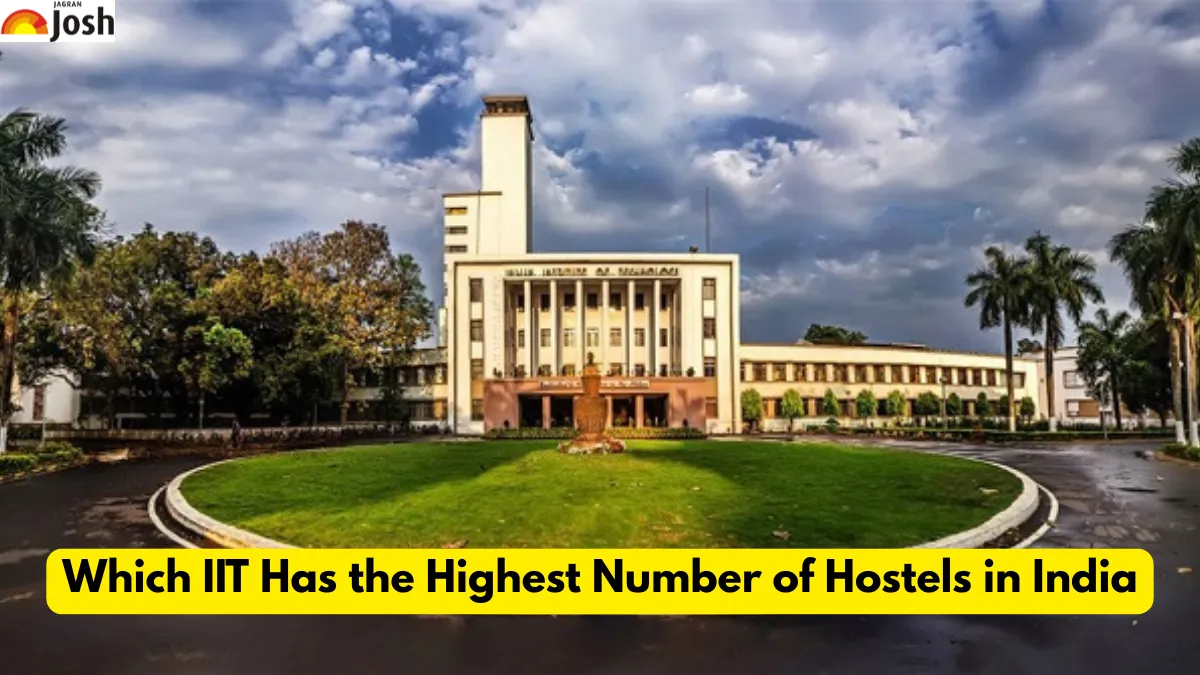
IIT Hostel: IIT Kharagpur is the Indian Institute of Technology with the most hostels (formally called "Halls of Residence") as of 2026. Currently operating between 21 and 24 residential halls (including recent capacity increases like the Atal Bihari Vajpayee and Savitri Bai Phule halls), the institute's expansive 2,100-acre campus can house over 10,000 students.
Because the institute is entirely residential and fosters a distinctive culture where your hall identity becomes vital to your academic and social life, this enormous infrastructure is essential to the "KGP" experience.
IIT Kharagpur's housing expansiveness is matched by its historical significance; Patel Hall, the first IIT hostel in India, was built there in 1952. While newer mega-hostels like Lal Bahadur Shastri (LBS) and Madan Mohan Malviya (MMM) are designed as state-of-the-art complexes, the "Older Campus" halls like Azad and Nehru offer a heritage feel.
LBS alone houses nearly 2,000 residents, making it one of the largest student housing units in Asia. These halls serve as self-contained micro-communities with their own student-run mess, library, gym, and high-speed LAN connectivity that is available around-the-clock.
IIT Hostel Capacity Comparison (2026)
With the largest network of student housing in the nation, IIT Kharagpur continues to be the leader in residential infrastructure in 2026. Its prominence as the largest and most populated IIT campus depends on this capacity.
| IIT Campus | Total Hostels | Est. Student Capacity | Unique 2026 Infrastructure Update |
| IIT Kharagpur | 21–24 | 12,000+ | Home to the historic Patel Hall (India's 1st IIT hostel) and the massive LBS & MMM Mega Halls. |
| IIT Madras | 20 | 10,500+ | Features Mandakini, a 10-storey high-rise and the largest single-building green hostel in the system. |
| IIT Bombay | 18–20 | 11,000+ | Transitioning to high-density towers; Hostel 18 is the newest addition with modern urban design. |
| IIT Roorkee | 16 | 9,000+ | Recently adopted a mixed-hostel pattern, allowing UG and PG students to interact in the same blocks. |
| IIT Guwahati | 13 | 7,500+ | Noted for having the best single-occupancy ratio for senior students on a sprawling 700-acre campus. |
| IIT Kanpur | 13–15 | 8,500+ | Known for Hall 13, a massive complex featuring modern recreational facilities and high-speed LAN. |
| IIT Delhi | 13–16 | 9,500+ | Recently inaugurated Saptagiri, Sahyadri, and Dronagiri to tackle severe space constraints. |
Infrastructure Insights
-
The "Mega-Hostel" Trend: Older IITs like Kharagpur and Madras have switched from modest heritage buildings to "Mega Halls" in order to accommodate the growing intake. These buildings, such as the Lal Bahadur Shastri Hall at IIT KGP, serve as tiny townships and may accommodate up to 2,000 students in a single administrative unit.
-
Gender Parity Expansion: In order to accommodate the rising proportion of women in STEM, all major IITs have substantially expanded the number of female-only dorms by 2026, such as Savitri Bai Phule Hall at IIT Kharagpur.
-
Facilities Standard: While more recent "Tower Hostels" offer centralized air-conditioned common areas, on-site cycle repair bays, and round-the-clock student-run "Night Canteens," modern rooms now come equipped with dual-port high-speed LAN.
Related Searches:
-
Top IITs in QS Asia Rankings 2026 - Indian Engineering Institutes Ranking
-
Guide to FMS Delhi Application: Course Fees and Other Details
Also Read:
Top IIT Colleges That Offer Data Science Courses to Learn Online in 2025
Best Free AI Courses for Beginners in 2025
Best Pharmacy Colleges in India 2025 After 12th Offering High Job Placement
To stay updated on current trends, join the Jagran Josh Telegram Community!