

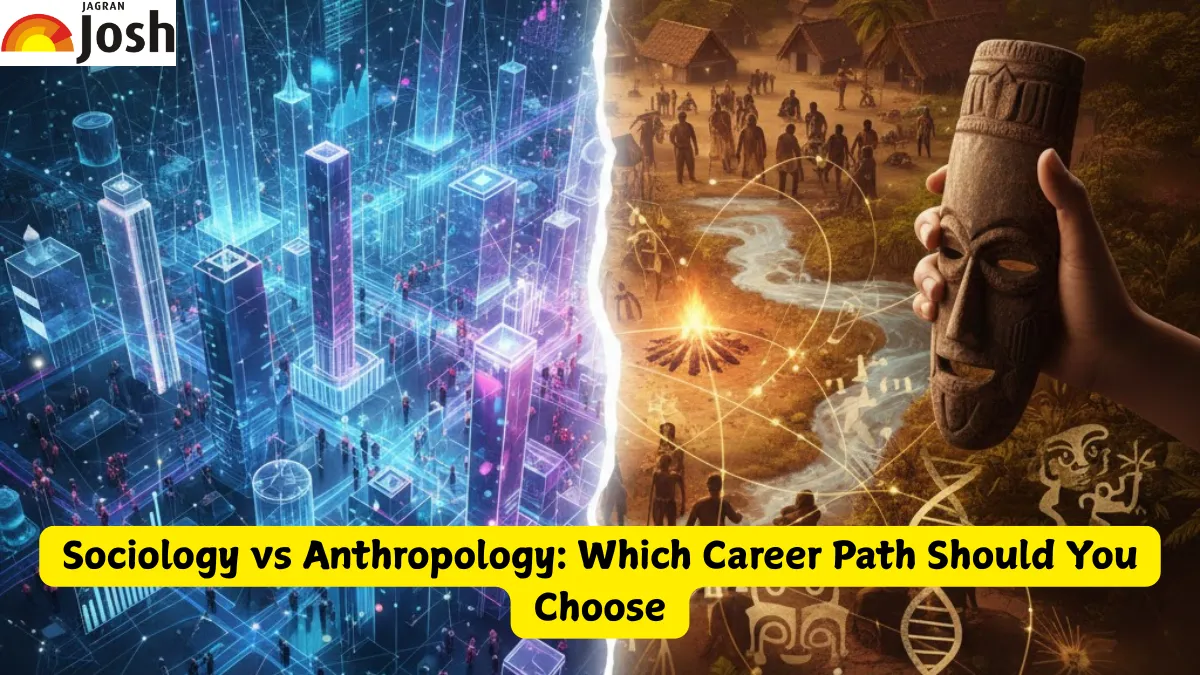
Sociology vs Anthropology: Choosing between sociology and anthropology generally comes down to whether you want to study the "essence" of human experience or the "operating system" of society. Although both fields study human behavior, they use different perspectives, approaches, and scales, which result in diverse professional paths.
For the most part, sociology is a macro-level science. It focuses on how social structures, institutions (such as education, religion, and government), and group dynamics impact human outcomes. Sociologists are methodologically inclined toward quantitative study, utilizing statistical data and extensive surveys to identify trends in contemporary, frequently industrialized cultures.
Anthropology, conversely, takes a holistic and micro-level approach to what it means to be human. It encompasses the past and present, encompassing biology, language, and archeology to comprehend the cultural "superstructure" of a people.
In the end, pick sociology if you are motivated by data-driven insights and systems-level change, or anthropology if you are captivated by the rich history of our species and the great diversity of human culture.
Sociology vs Anthropology: Basic Difference
Understanding why people do what they do is the ultimate goal of both sociology and anthropology, but the focus, scope, and research methods employed to get there are fundamentally different.
| Feature | Sociology | Anthropology |
| Primary Goal | Explaining the structures and institutions of modern society. | Explaining the origins and diversity of human cultures. |
| Core Subject | Social systems, class, race, gender, and institutions. | Culture, biology, language, and historical evolution. |
| Research Method | Quantitative: Focus on surveys, large datasets, and statistics. | Qualitative: Focus on ethnography and deep immersion. |
| Time Frame | Primarily the present and recent history. | Universal: From ancient ancestors to modern tribes. |
| Perspective | Macro: Looks at the "Big Picture" of entire populations. | Holistic/Micro: Looks at the deep details of specific groups. |
| The "Why" | Why do systems fail? How do groups exert power? | What does it mean to be human? How is culture made? |
Sociology vs Anthropology: Career Scope
Both degrees provide a variety of job options in both the public and private sectors. The career options for sociology and anthropology in 2026 are as follows:
-
Corporate UX Research: Anthropologists thrive here, employing ethnography to learn how people engage with technology, enabling tech businesses build more intuitive and culturally sensitive solutions.
-
Data and Policy Analysis: Sociologists engage in public health, criminal justice, and urban planning to solve systemic social challenges by using statistical models to influence government policy.
-
Diversity & Inclusion (DEI): Both disciplines are highly sought after for corporate DEI positions, which include fostering fair working cultures and making sure organizational structures honor a range of human origins.
-
Market Research & Trends: To assist firms in anticipating changes in public behavior and creating successful marketing strategies, sociologists examine extensive consumer demographics and social trends.
-
International Development: Anthropologists oversee non-governmental organizations and global health projects, making sure that aid initiatives are successfully integrated into the local populations they serve and are culturally suitable.
Related Searches:
-
Top IITs in QS Asia Rankings 2026 - Indian Engineering Institutes Ranking
-
Guide to FMS Delhi Application: Course Fees and Other Details
Also Read:
Top IIT Colleges That Offer Data Science Courses to Learn Online in 2025
Best Free AI Courses for Beginners in 2025
Best Pharmacy Colleges in India 2025 After 12th Offering High Job Placement
To stay updated on current trends, join the Jagran Josh Telegram Community!