

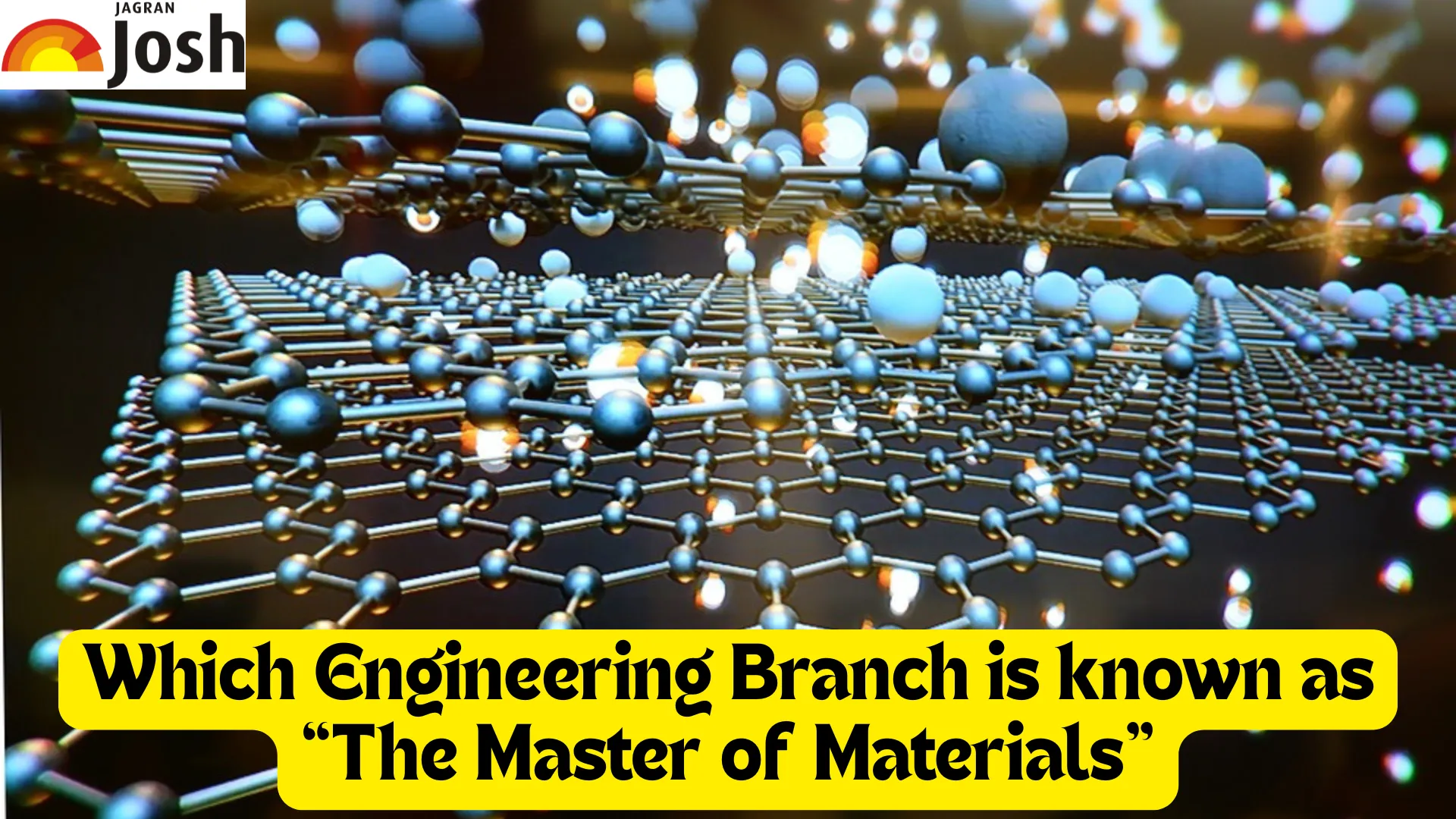
The Master of Materials: The term "The Master of Materials" sums up Materials Science and Engineering (MSE) perfectly. MSE is an interdisciplinary field that focuses on the in-depth study of the structures and properties of materials to design, develop, and optimize new and existing substances for a wide range of applications.
MSE is essentially concerned with the materials paradigm: comprehending how processing impacts a material's internal structure, which in turn determines its essential attributes (such as strength or conductivity), eventually dictating its performance in practical situations.
This information is essential since every technological advancement, from the newest microprocessor and the most potent aviation alloy to biocompatible medical implants and effective solar cells, depends entirely on the materials used.
Materials engineers work at the atomic and macroscopic sizes by linking the domains of metals, polymers, ceramics, semiconductors, and composites.
They are essential inventors who alter composition and structure to create materials with certain properties that directly support developments in the industries of electronics, aviation, energy, and healthcare.
Also Read: Which Degree Is Known As The Financial Doctor?
Why Materials Science and Engineering (MSE)?
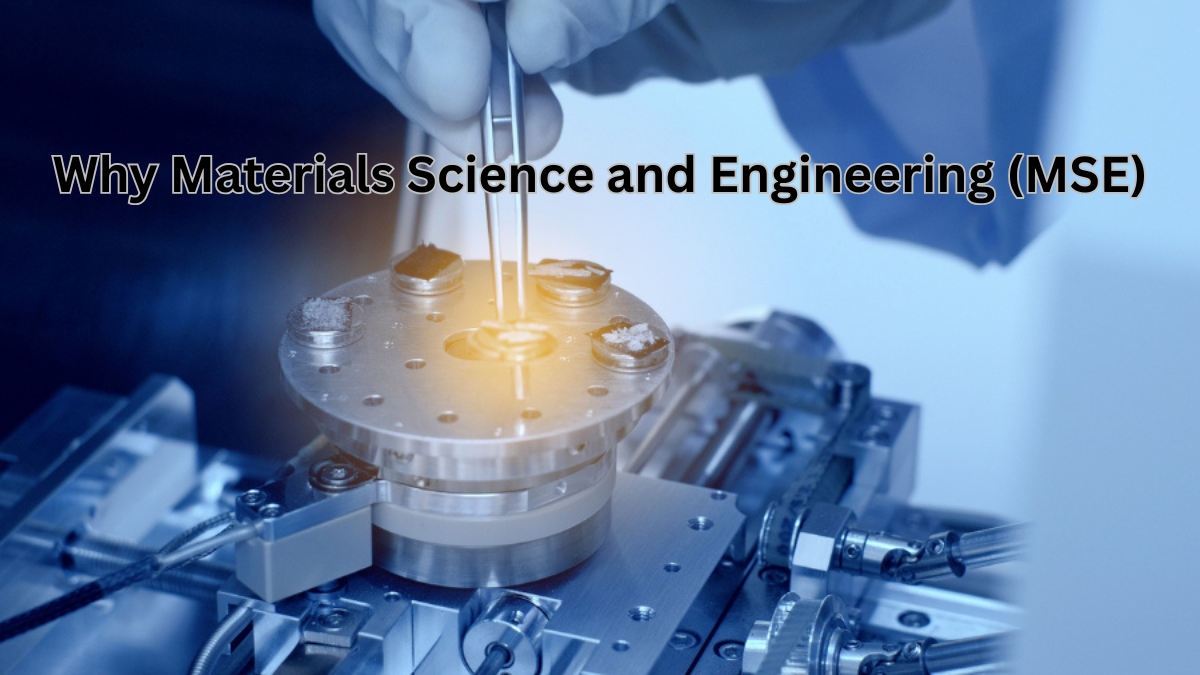
The title "The Master of Materials" is bestowed upon the branch of engineering known as Materials Science and Engineering (MSE) since it is the only field that concentrates on the basic relationship between the structure, characteristics, processing, and performance of a material. The following factors make MSE extremely valuable and crucial in any industry:
Enabling All Other Engineering Fields
MSE is foundational. The availability of materials limits every technical advancement in every other engineering field, including mechanical, electrical, chemical, and aerospace.
-
Aerospace: Needs lighter, stronger, and more heat-resistant composites and alloys.
-
Electronics: Requires innovative semiconductors and dielectrics for smaller, quicker chips.
-
Biomedical: Demands specific biomaterials that are nontoxic and durable for implants and prosthesis.
-
Energy: Depends on extremely efficient photovoltaics (solar cells) and innovative battery materials for storage.
The Materials Paradigm (Structure-Property Link)
The core purpose of MSE is understanding and manipulating the four components of the Materials Paradigm:
Processing→Structure→Properties→Performance
-
Structure: How atoms and crystals are arranged (e.g., grain boundaries, phase composition).
-
Processing: How the material is made (e.g., heat treatment, rolling, casting, deposition).
-
Properties: What the material can do (e.g., mechanical strength, electrical conductivity, resistance to corrosion).
-
Performance: How well the final product functions under specific conditions.
Adaptable Scope and Proficiency
MSE delivers knowledge across every major class of solid materials:
-
Metals & Alloys: Steel, titanium, aluminum.
-
Polymers: Rubbers, advanced plastics, and plastics are examples of polymers.
-
Ceramics: Glass, cement, and high-temperature oxides.
-
Composites: fiberglass and carbon fiber reinforced polymers (CFRP).
-
Electronic Materials: Silicon, Gallium Nitride (GaN).
List of Top 10 Colleges of Materials Science and Engineering (MSE)
Here is a list of the Top 10 Colleges for Materials Science and Engineering (MSE) in India, according to the strength of their B.Tech/M.Tech programs, research output, and excellent NIRF Engineering rankings:
| Rank (Reputation) | Institute Name (Location) | NIRF 2024 Engineering Rank | Key Program Focus |
| 1 | 2 (Overall) | Advanced Research in Materials, Nano-materials, and Ceramics. | |
| 2 | 1 | Focus on Energy Materials, Functional Materials, and Advanced Ceramics. | |
| 3 | 3 | Strong programs in Corrosion Science, Computational Materials, and Metallurgy. | |
| 4 | 2 | Dedicated Department of Materials Science and Engineering focusing on functional and structural materials. | |
| 5 | 4 | Excellent research across metals, polymers, and biomaterials. | |
| 6 | 5 | Long-established departments focusing on Metallurgy and Materials Engineering. | |
| 7 | 6 | Offers specialized courses in Polymer Engineering and Extractive Metallurgy. | |
| 8 | 9 | Strong M.Tech programs in Materials Science and Technology. | |
| 9 | 10 | Recognized for its programs in Ceramic Engineering and Materials Technology. | |
| 10 | 19 | Highly reputed for its Department of Metallurgical and Materials Engineering. |
Please Check:
-
Top IITs in QS Asia Rankings 2026- Indian Engineering Institutes Ranking
-
Guide to FMS Delhi Application: Course Fees and Other Details
Also Read:
Top IIT Colleges That Offer Data Science Courses to Learn Online in 2025
Best Free AI Courses for Beginners in 2025
Best Pharmacy Colleges in India 2025 After 12th Offering High Job Placement
To stay updated on current trends, join the Jagran Josh Telegram Community!