


Every time a student attends a lecture, debates on a particular topic either for or against, registers for credits, marks themselves for attendance, or simply sits inside a classroom wondering why education is set up this way, they unintentionally participate in a system which was built thousands of years ago. Ancient universities had previously figured out how to admit students long before the concept of online education existed, or campuses had Wi-Fi, placements were features, or there were credit ratings.
Ancient universities at that time had already figured out:-
-
How knowledge was to be conveyed
-
How various disciplines of various fields were to be divided
-
And why education was more than simply a job.
Ancient universities like the Nalanda University and Takshashila of Ancient India, Plato’s Academy, and subsequently Al-Qarawiyyin and the University of Oxford were not merely educational facilities but also served as models. The establishment of structured learning, core curricula (law, medicine, and the arts), degrees, faculties (such as the arts and theology), and the concept of a permanent institution for advanced study by ancient universities shaped modern universities.
What were the Ancient Universities of the World Really like?
Whenever a student or individuals come across the word ‘ancient,’ we often think on the lines of the unstructured, informal, or experimental. However, the ancient universities were anything but unorganised. If we compare the ancient universities with the modern universities, many of the ancient universities were more rigorous, and the main focus was on academics. In addition to teaching, ancient universities were intended to develop scholars, leaders, and thinkers who could have an impact on society.
Large and often monastic or court-sponsored institutions like India’s Nalanda or Europe’s Bologna, ancient universities emphasised philosophy, theology, medicine, and law. They also had extensive libraries and a large number of international students. These ancient universities functioned more as scholarly communities than independent modern institutions, with a focus on oral traditions, disciplined and rigorous study, and classical texts.
Given below is the list of some of the key contributions of the ancient universities:-
| Key Contributions | About |
| Institutionalising Knowledge | The first examples of permanent institutions focused on methodical sharing of knowledge were ancient universities like Nalanda in India, and following, medieval European universities like the University of Bologna and the University of Paris. |
| Degrees and Advancement | The ancient universities were the place where ideas like degrees (Bachelor's, Master's, Doctor's) and structured learning pathways came from. |
| Syllabus and Disciplines | The ancient university created the foundation for contemporary faculties by establishing key sections in the Liberal Arts (Grammar, Rhetoric, Logic), Law, Medicine, and Theology. |
| University Idea | By bringing together a variety of learning under one roof, the medieval idea of the universities was promoted as a universal approach to knowledge. |
| Student Experiences | The foundation for residential colleges, housing students and staff, was laid by ancient universities, which offered housing, meals and regulations. |
| Apporaches | Lectures, critical analysis, storytelling, and discussions, particularly in ancient universities of India, were fundamental approaches. |
How Did Ancient Universities shape the Modern College Education?
Every time a student pursues a bachelor’s or master’s degree, they follow an intellectual route which was established long before official graduation ceremonies existed. The belief held by ancient universities was that knowledge had levels and that genuine learning necessitated development, progressive mastery, and time.
Students at Takshashila and Nalanda accomplished more than simply completing a course. They moved from basic books to more complex philosophical or scientific research over a long period of time. The Bachelor’s, Master’s, and Doctorate (B.A., PhD, M.A.) system, of core faculties like Law, Arts, Medicine, and Theology, and the values of academic freedom and rigorous debate were all established and founded by the ancient universities, especially those in medieval Europe. This created a universal standard for higher education and scholarly advancement that is still in continuation today.
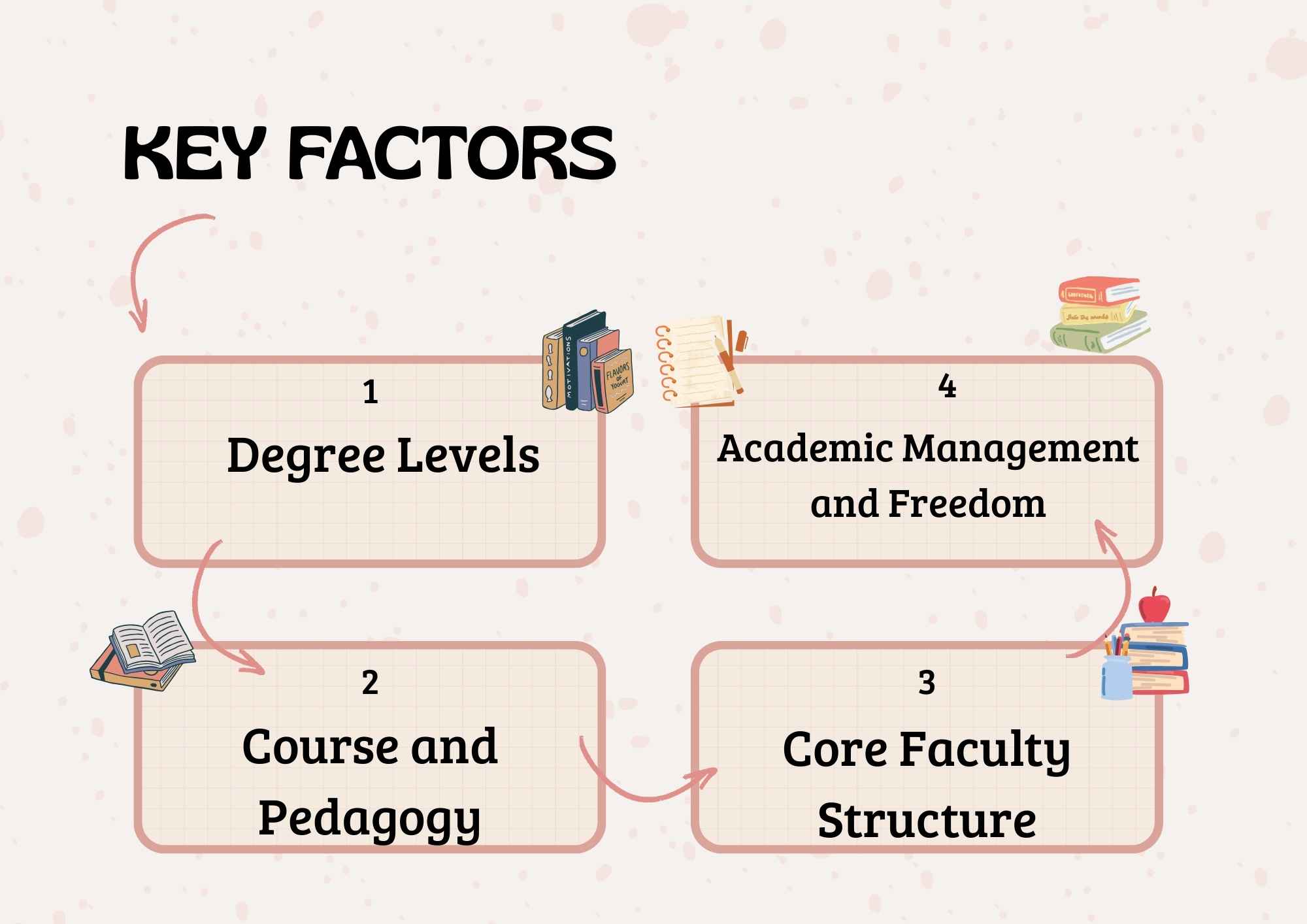
Given below are some of the key factors of the ancient universities that shaped the degree structure of modern college education:-
|
Related Searches:-