

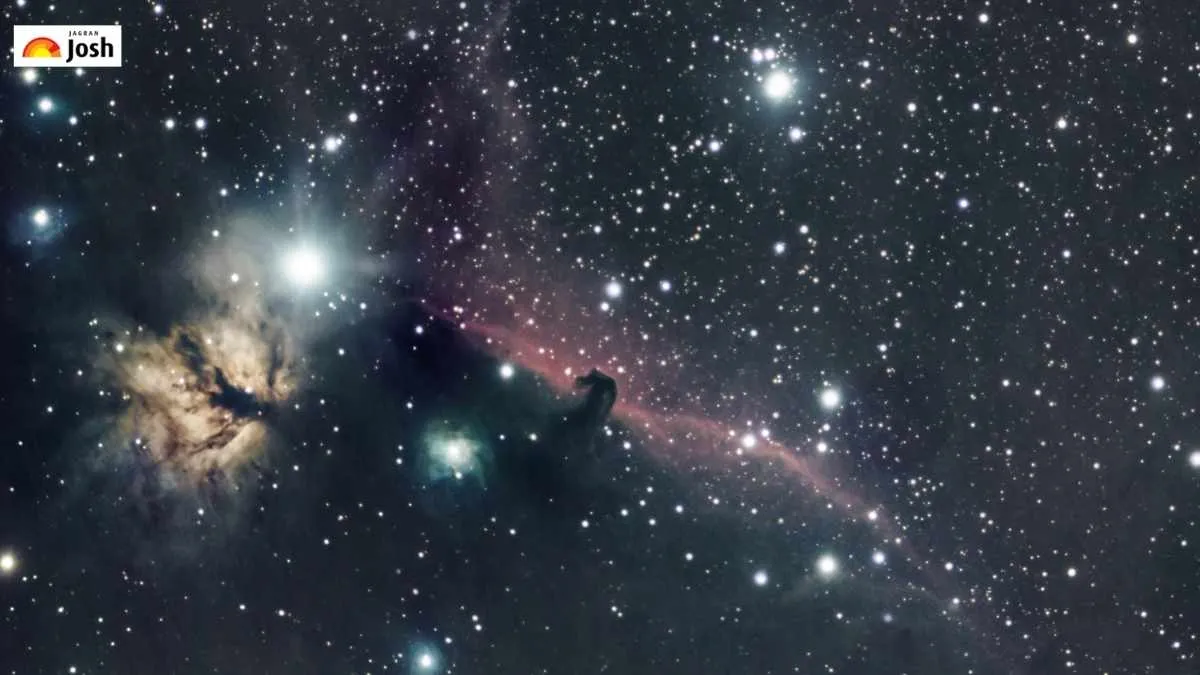
Imagine you are standing beneath a sky devoid of all city lights, telescopes, cellphones, including textbooks. All that you can see are the stars, darkness, and you are left with some unanswered questions.
Did youknow that humans were studying the skies long before they learned to write, farm effectively, or even construct cities? Seeing patterns in the sky was a survival instinct, not just as an act of curiosity. Biology diagrams, physics formulas, and chemistry reactions are frequently used to introduce science in the classrooms. But historically, science started in the night sky rather than in laboratories.
People from ancient times used star tracking to understand time, navigation, and seasons, long before they had microscopes or equations. This raises an important and interesting question, i.e.,
‘Which science discipline originated first in history?’
From ancient civilisations like the Mesopotamia and Egypt to India and China, the answer to the question of which science discipline originated first in history always points to:-
Astronomy
Not only was astronomy the earliest science, but it also served as the basis for the development of mathematics, philosophy, calendars, and navigation.
How Did Astronomy Originate as the First Science Discipline?
Humans needed predictability before they could study forces, cells, or chemicals. That was provided by the skies. Celestial bodies followed consistent, predictable routines, in contrast to animals that migrated suddenly or rivers that inundated without notice.
Astronomy was important to early societies; it was not a choice.
Seasons determined crops, moon cycles determined ceremonies, and stars determined navigation. This basic principle of science, as the first science discipline in history in which observation was necessary, led to prediction.

Given below are three reasons why astronomy originated:-
|
Which Top Institutes offer Higher Education in the Astronomy Discipline?
Astronomy was encouraged in colleges, observatories, and royal academies that approached the study of the universe as both philosophy and precision science, long before it developed into a data-driven discipline of satellites and supercomputers. In addition to teaching astronomy as a discipline, a small number of international and Indian institutions carry on this astronomical legacy by upholding centuries-old customs of sky viewing while also pushing the limits of contemporary astrophysics.
Given below is the list of top institutes which offer higher education in the field of astronomy, both national and International institutes based on QS World University Rankings and NIRF Rankings 2025:-
International Top Institutes for Astronomy based on QS World University Rankings
Given below is the list of the top global institutes which offer higher education in the Astronomy discipline based on the QS World University Rankings:-
| Institute Name | Ranks |
| Massachusetts Institute of Technology (MIT) | 1 |
| Harvard University | 2 |
| University of Oxford | 3 |
| Stanford University | 4 |
| University of Cambridge | 5 |
| University of California, Berkeley | 6 |
| California Institute of Technology | 7 |
| ETH Zurich | 8 |
| The University Of Tokyo | 9 |
| Princeton University | 10 |
National Top Institutes for Astronomy based on NIRF Rankings 2025
Given below is the list of the top national institutes which offer higher education in the Astronomy discipline based on the NIRF 2025 Overall Rankings:-
| Institute Name | Ranks |
| 1 | |
| 30 | |
| - | |
| 6 | |
| 4 | |
| 98 | |
| Aryabhatta Research Institute of Observational Sciences (ARIES) | - |
| The Inter-University Centre for Astronomy and Astrophysics | - |
Stars existed before labs, textbooks, and colleges. Not only did Astronomy originate as the first science discipline in history, but it also taught people how to think scientifically.
Related Searches:-