

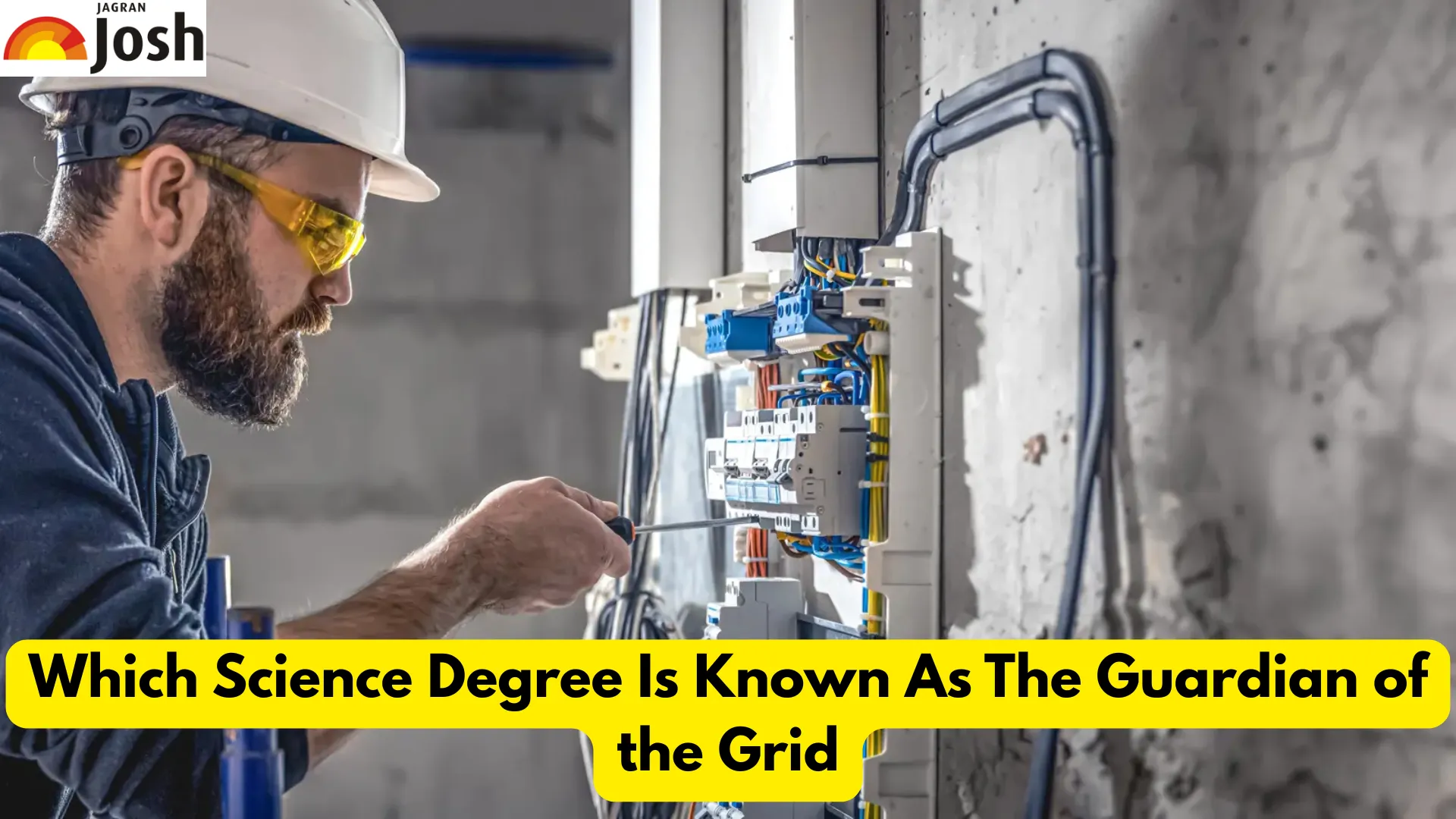
Guardian of the Grid: The "Guardian of the Grid" is referred to as electrical engineering. This honorific conveys the high-stakes job of overseeing the "vascular system" of contemporary civilization, whereas a standard degree title can be technical.
A Guardian of the Grid, in contrast to a general engineer, serves as a strategic sentinel, supervising the vast, linked networks that guarantee energy continues to be society's lifeblood. In order to avoid the "systemic collapse" known as a blackout, their major goal is to maintain grid stability by maintaining a steady frequency.
Fault detection and load flow analysis constitute the "surgical" core of this position. These guardians carry out "intermittency biopsies," creating intricate smart-grid logic to incorporate erratic renewable energy sources like solar and wind without upsetting the grid's synchronized pulse. With the accuracy of a cardiac surgeon, they monitor voltage levels and phase angles using SCADA (Supervisory Control and Data Acquisition) systems, prepared to carry out a "digital intervention" or a controlled load-shedding process at the first indication of instability.
The Guardian of the Grid is ultimately responsible for safeguarding the "Global Nervous System." These professionals bridge the gap between sophisticated cybersecurity and heavy-duty electrical physics as our world grows more digital and electrified.
They protect the infrastructure from both digital threats and physical malfunctions by ensuring that electricity flows safely from various generation nodes to the end-user. This route necessitates a deep understanding of electromagnetics and the capacity of a visionary to design a robust, carbon-neutral future for global energy infrastructure.
Why Is Electrical Engineering Is Known As The Guardian of the Grid?
This title is ideal for these professionals for the following six reasons:
-
Keeping the Synchronous Heartbeat: Guardians keep an eye on the phase and frequency synchronization of the grid. They make sure each generator turns in perfect harmony to avoid catastrophic mechanical and electrical system failure, much like a doctor keeping an eye on a patient's pulse.
-
Strategic Intermittency Biopsies: Engineers conduct "biopsies" on erratic wind and solar data as the globe moves toward renewable energy. To "heal" the instability brought on by weather variations, they recommend battery storage and smart-grid logic.
-
Vascular Flow Management: They oversee the country's "vascular system" of high-voltage transmission lines. In order to avoid "clogs" or thermal overloads that can cause line sagging or fires, engineers make sure electricity flows at ideal levels.
-
Sentinel of Self-Healing Systems: They create "self-healing" grids using automated relays and SCADA. In order to safeguard the remainder of the network, these systems automatically identify "injuries" such as short circuits and immediately reroute electricity.
-
Grid defense and cybersecurity: As the "Guardians of the Grid," they defend the energy infrastructure against cyberattacks. In order to protect the physical grid from malevolent cyber incursions, they construct firewalls around industrial control systems.
-
Architectural load balancing: They serve as master balancers, guaranteeing that supply and demand are precisely balanced in real time. They avoid the network death described as a total blackout by using "surgical" load-shedding or peaking-plant activation.
Educational Requirements to Become a "Guardian of the Grid"
In order to become a "Guardian of the Grid," one must advance via a specific educational and career path that combines contemporary digital intelligence with traditional electrical physics. The goal of this path is to develop a student from a simple "circuit solver" to a sophisticated "systems architect."
| Stage | Academic Milestone | Key "Surgical" Focus | Professional Avatar |
| Foundation | B.Tech/B.E. in Electrical Engineering | Circuit Laws, Electromagnetics, & Basic Power Systems. | The Apprentice of Amperes |
| Specialization | M.S./M.Tech in Power Systems | High-Voltage Engineering, Load Flow, & Stability Analysis. | The Navigator of Networks |
| Techno-Digital | PG Diploma in Smart Grid/IoT | SCADA Systems, Cybersecurity, & Grid-Edge Intelligence. | The Sentinel of Systems |
| Mastery | PhD or Chartered Engineer (CEng) | Renewable Integration, Grid-Scale Storage, & Policy. | The Guardian of the Grid |
Core Requirements & Milestones
-
Power Electronics Mastery: You need to know how to "convert" and "shape" energy. This entails researching how the reliable AC grid can receive erratic solar DC electricity through inverters and converters.
-
Training in SCADA and Automation: A Guardian needs to be proficient in data acquisition and supervisory control. This "nervous system" is utilized to conduct remote operations and keep an eye on the health of the grid.
-
Advanced Mathematical Modeling: To forecast how a single lightning strike can spread throughout a continental-scale network, you will conduct "digital biopsies" using Newton-Raphson or Gauss-Seidel techniques.
-
Sustainability & Policy Knowledge: You need to know about the Carbon Market and Grid Codes, which are the "laws of the land" that specify the amount of green energy that a grid is required by law to accept.
Related Searches:
-
Top IITs in QS Asia Rankings 2026 - Indian Engineering Institutes Ranking
-
Guide to FMS Delhi Application: Course Fees and Other Details
Also Read:
Top IIT Colleges That Offer Data Science Courses to Learn Online in 2025
Best Free AI Courses for Beginners in 2025
Best Pharmacy Colleges in India 2025 After 12th Offering High Job Placement
To stay updated on current trends, join the Jagran Josh Telegram Community!