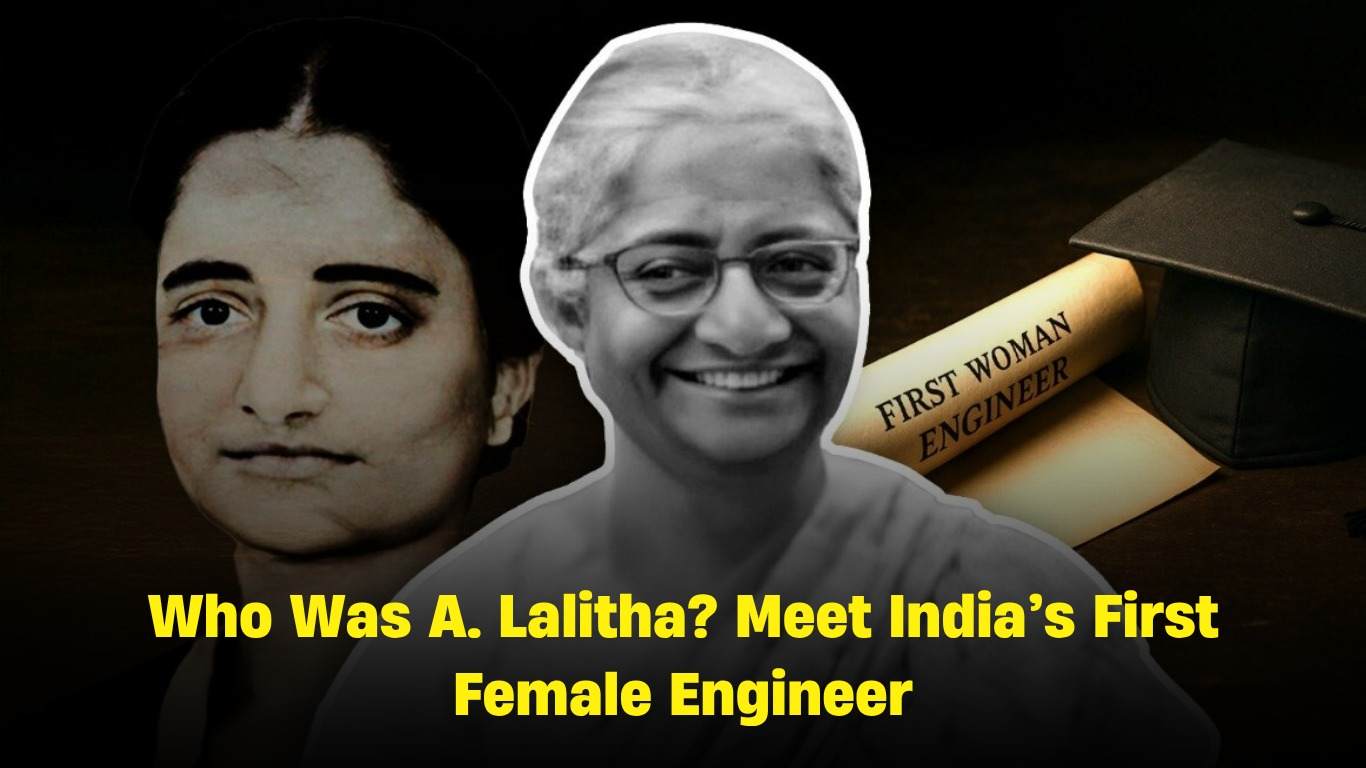
Engineers Day 2026: As India celebrates National Engineer’s Day on September 15, the spotlight is not only on the country’s celebrated engineers but also on the pioneers who broke barriers to enter a profession dominated by men. One such name is Ayyalasomayajula Lalitha, remembered as India’s first female engineer.
Born in 1919 in Madras, now Chennai, Lalitha entered the field of electrical engineering at a time when engineering education and professional careers were largely considered a male domain. Her journey was particularly remarkable because she pursued engineering after becoming a young widow and mother. Her determination eventually took her to the College of Engineering, Guindy, where she graduated in electrical engineering in 1943.
Exclusive: NBEMS NEET PG Answer Key 2026 at natboard.edu.in LIVE
Who Was A. Lalitha?
Ayyalasomayajula Lalitha was an Indian electrical engineer who became a pioneer for women in engineering. Born on August 27, 1919, in Madras, she belonged to a Telugu-speaking family. Her father, Pappu Subba Rao, was an engineering professor and encouraged her to continue her education.
Lalitha was married at the age of 15 and became a mother soon after. Her husband died when she was still very young, leaving her to raise her daughter. Instead of giving up her education, she chose to continue studying and eventually pursued engineering.
Her decision was significant for the period because professional engineering was overwhelmingly male-dominated. Lalitha went on to study at the College of Engineering, Guindy (CEG) in Chennai, becoming the first woman to graduate from the institution as an engineer.
A. Lalitha Became India’s First Female Engineer in 1943
Lalitha graduated with a degree in Electrical Engineering in 1943, earning her place in Indian engineering history as the country's first female engineer.
Her achievement came at a time when very few women had access to professional technical education. She studied in an institution where the overwhelming majority of students were men. The college administration also made arrangements for her accommodation during her studies.
Lalitha's achievement was followed by the entry of other women into engineering. P.K. Thressia and Leelamma George Koshie were among the early women engineers associated with CEG, marking an important moment in the history of women in Indian engineering.
Exclusive: CAT Exam 2026 Registration Last Date LIVE
From Engineering College to Railway Workshop
After completing her engineering education, Lalitha underwent practical training at the Jamalpur Railway Workshop, gaining hands-on experience in engineering. She later worked with the Central Standards Organisation in Shimla and also contributed to technical research with her father.
Her early career demonstrated that her engineering degree was not merely a historic achievement. Lalitha went on to work in technical roles and build a professional career in a field where women were still rare.
A. Lalitha’s Role in Bhakra Nangal Dam Project
One of the most notable phases of Lalitha's professional career came after she joined Associated Electrical Industries (AEI) in Calcutta in 1948.
During her career with the company, she worked on major infrastructure projects, including the Bhakra Nangal Dam, one of India's most important post-Independence infrastructure projects.
Lalitha Took Indian Women Engineers to the Global Stage
A. Lalitha's contribution was not limited to India. Her professional achievements also earned international recognition.
In 1953, she became an associate member of the Institution of Electrical Engineers in London and was later promoted to full membership in 1966. In 1964, she represented India at the First International Conference of Women Engineers and Scientists (ICWES) in New York.
She also played a role in helping more Indian women participate in international engineering forums.
Why A. Lalitha’s Story Matters on Engineers Day 2026
National Engineer’s Day is observed in India every year on September 15, the birth anniversary of renowned engineer and statesman Sir M. Visvesvaraya. The day recognises the contribution of engineers to infrastructure, technology, innovation and national development.
However, the story of Engineers’ Day is also an opportunity to remember engineers whose contributions challenged social barriers. Lalitha's journey is particularly relevant because she entered engineering when women had limited representation in technical education and professional engineering.
CAT 2026 Registration Last Date Today at 5 PM: Apply at iimcat.ac.in, Check Steps, Fee and Exam Date
US Student Visa Rules 2026: Court Blocks Fixed Stay Limits for International Students, What Indian Students Need to Know
NEET MDS 2026 Round 2 Registration Begins Today at mcc.nic.in: Check Last Date, Schedule, Choice Filling
AP EAMCET 2026 Counselling: BiPC Round 3 Web Options Deadline Extended Till Sept 20