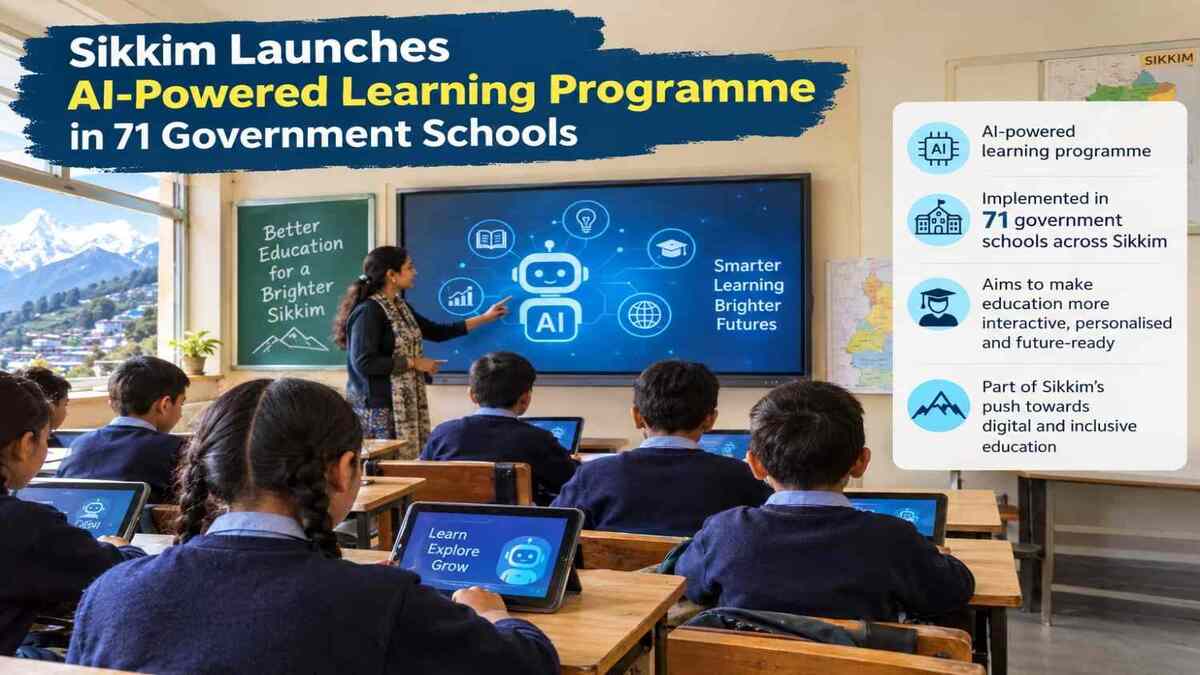
The Sikkim government has rolled out an artificial intelligence-powered learning programme across 71 government schools to improve foundational literacy and numeracy among students, according to an official statement.
The AI-FunZone programme is being implemented in collaboration with the EkStep Foundation under a Memorandum of Understanding signed in April 2026. The initiative covers schools in the Khamdong, Nandok and Martam blocks of Gangtok district. It is aimed at providing students with personalised learning support in English, Nepali and Mathematics.
AI-FunZone for Classes 3 to 5
The programme covers students from Classes 3 to 5. Under the initiative, children receive short, daily practice sessions using computers or shared digital devices.
The AI system can listen to students while they read and identify specific difficulties. It can then adjust subsequent activities according to the individual learning level of each student.
For Mathematics, the system identifies specific errors made by students and adapts practice exercises accordingly. A real-time dashboard also allows teachers to monitor individual student progress and identify areas where additional support may be required.
Also read: NEET PG 2026 Answer Key, Result LIVE: Know How To Check Scorecard At natboard.edu.in
60-Minute AI-FunZone Class
The Education Department said AI will be used as a support tool and will not replace teachers. The practice sessions will be incorporated into the regular school schedule through a 60-minute AI-FunZone class.
The programme uses computers, graphics, audio and interactive activities to encourage independent practice and remedial learning. The department said the non-examination-based approach allows students to practise without the pressure of ranking or comparison.
AI-generated assessments will also help teachers identify learning gaps and address them during regular classroom teaching.
300 Resource Persons Trained
The department said around 300 resource persons from the three participating blocks have already received training for the programme.
However, the initiative requires computers or tablets, headsets and high-speed internet connectivity. The Education Department has acknowledged that some standalone primary and junior high schools face shortages of digital infrastructure.
Teachers Remain Central to Programme
According to the department, teachers and students have responded positively to the initiative. School heads have also found the programme relatively easy to implement, with limited additional administrative work.
The government said the AI-based programme is intended to supplement classroom teaching while helping teachers track students’ learning progress and address foundational learning gaps more effectively.
Read:
Jadavpur University Forms 24-Member Panel for PM-USHA Fund Utilisation
NEET MDS 2026 MCC Round 2 Seat Allotment Process Starts Today; Result on September 23