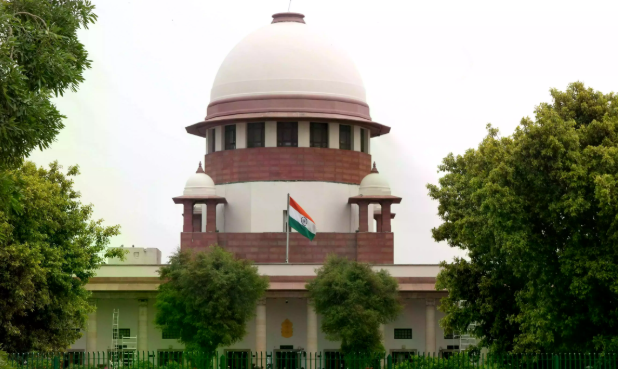
The Supreme Court on Thursday asked the Central Board of Secondary Education (CBSE) to consider deferring the implementation of its three-language policy for Class 6 students to the 2027 academic session.
A bench comprising Chief Justice Surya Kant and Justices Joymalya Bagchi and V Mohana made the suggestion while hearing a plea challenging the CBSE’s revised language framework. The policy requires students to study three languages, with at least two of them being Indian languages.
Additional Solicitor General Aishwarya Bhati, appearing for the CBSE, said the board would consider the Court’s suggestion and submit a fresh note on the issue.
Justice Bagchi suggested that the implementation could be postponed to provide students and schools more time to adjust to the new language requirement. The bench also said that students who are currently in Class 6 and wish to study three languages during the ongoing academic year could be allowed to do so voluntarily.
The Court clarified that its observations and suggestions would not prejudice the rights or contentions of the parties. The legal challenge to the language policy is still pending and the Court has not issued a final ruling on its validity.
Also read:
NEET PG Answer Key 2026 TODAY? LIVE: NBEMS NEET PG Response Sheet & Result at natboard.edu.in
What is CBSE's three-language policy?
The revised framework is part of CBSE’s efforts to align its school curriculum with the National Education Policy (NEP) 2020 and the National Curriculum Framework for School Education (NCF-SE) 2023.
Under the framework, students are required to study three languages, of which at least two must be Indian languages. These include Hindi, Sanskrit, Tamil, Telugu, Kannada, Malayalam, Marathi, Bengali, Punjabi, Gujarati, Odia and Assamese, among others.
Foreign languages such as French, German, Arabic and Spanish can be taken as a third language only after students have opted for two Indian languages, or as an additional fourth language.
The CBSE has already introduced the three-language requirement for Class 9 from July 1, 2026. Under its guidelines, students will study three languages identified as R1, R2 and R3, with at least two being Indian languages.
The board has also said that no Class 10 board examination will be conducted for the additional R3 language, with the aim of reducing examination pressure on students.
Policy under legal challenge
The Supreme Court agreed in May to examine a petition challenging the three-language policy and sought responses from the Centre, CBSE and NCERT.
Meanwhile, the CBSE has constituted a committee to oversee implementation of the language framework in Classes 6 to 10. The committee will examine the availability of language teachers, textbooks and other learning resources and identify implementation-related difficulties.
The immediate issue before the Court is whether the mandatory three-language requirement for Class 6 will be deferred until the 2027 academic session. The CBSE’s response and the Court’s subsequent decision will determine the implementation timeline.
(With inputs from PTI)
Also read:
Supreme Court gives Tamil Nadu 3 months to identify land for Navodaya schools
Uttarakhand Medical Education Department cancels MBBS admissions, FIRs filed over fake certificates