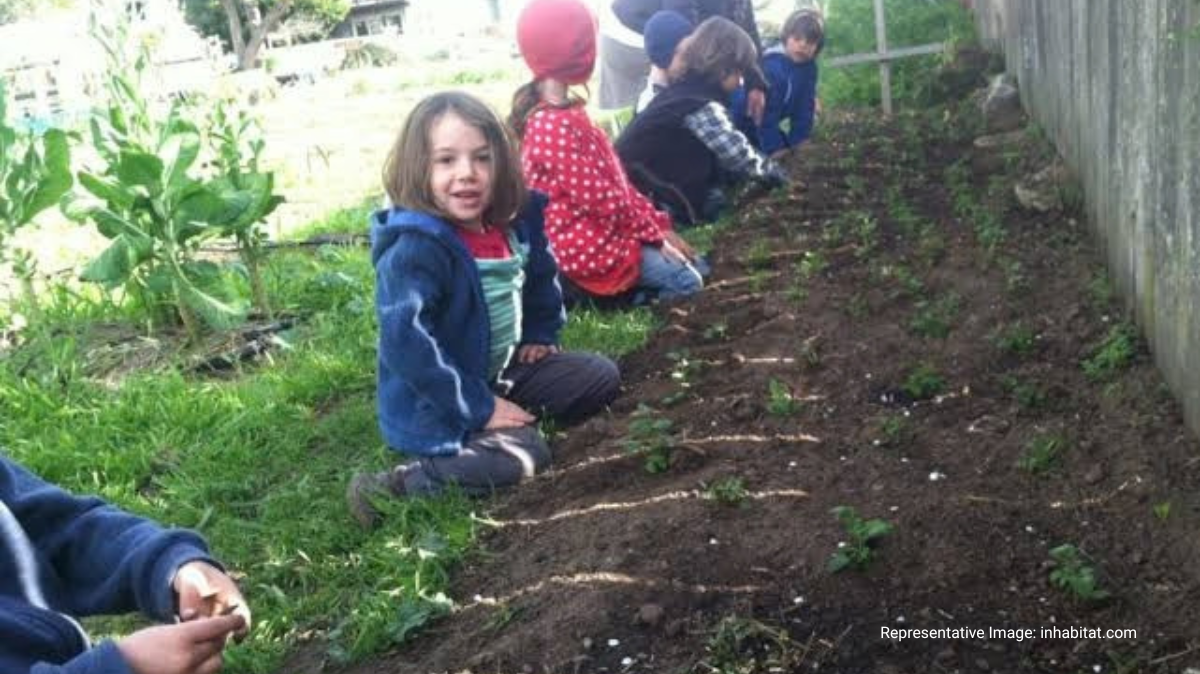
At a school in Vermont, United States, students are spending their school semester doing something far removed from the usual classroom routine. Along with academic lessons, they harvest crops, care for animals, clean classrooms, wash dishes and take part in other tasks required to run the campus.
The programme, offered by The Mountain School in Vershire, Vermont, costs families around $40,000 (Rs. 38,31,630) for a semester. The programme is designed for high-school students and combines classroom learning with farm-based education, communal responsibilities and time away from digital devices.
Students spend hours working on the farm
Students are assigned a range of responsibilities as part of their daily routine. These include harvesting corn, feeding animals, caring for cows and sheep, chopping wood and helping maintain the farm.
They also take part in what the programme calls “commons work”. This includes washing dishes and kitchenware, cleaning classrooms, preparing vegetables and checking irrigation systems.
Students generally spend about eight hours a week on farm-related tasks, in addition to a dedicated Farm Day during the semester when they work for an entire day on activities such as planting or harvesting.
Academic lessons continue alongside practical work
Despite the focus on manual work, the programme is not limited to farming. Students continue with academic subjects and can take rigorous courses, including AP Calculus. The curriculum also includes environmental science, forestry, natural history and practical courses.
The school describes the programme as an opportunity for students to develop independence and self-reliance while learning how different systems work through direct experience.
The Mountain School operates as part of Milton Academy and has been running its semester-based model for decades. The programme brings together students from different parts of the US and other countries.
Phones are taken away during the semester
One of the most unusual aspects of the programme is its approach to technology. Students hand over their phones when they arrive and do not have them during the semester.
Laptop use is largely restricted to academic requirements, while Wi-Fi is switched off at night in the main buildings. There is also no internet access in the dormitories.
The technology restrictions become particularly significant during a four-day wilderness trip, when students spend several days alone in nature without their usual digital devices.
Why are students choosing the programme?
For some students and families, the attraction is the opportunity to experience a different form of education, spend time outdoors and develop greater independence. The programme also comes amid growing competition around US college admissions, with some students hoping that the unusual experience will add another dimension to their applications.
However, admissions consultant Adam Nguyen told the Wall Street Journal that students should consider the programme because it genuinely suits their interests rather than simply expecting an expensive extracurricular experience to improve their applications.
The school also provides financial aid, with around 30% of its students receiving assistance, according to its director.
For students, the semester therefore combines conventional academics with farming, communal work, outdoor activities and a sharp reduction in screen use—an approach that is very different from the technology-heavy routine of many modern schools.