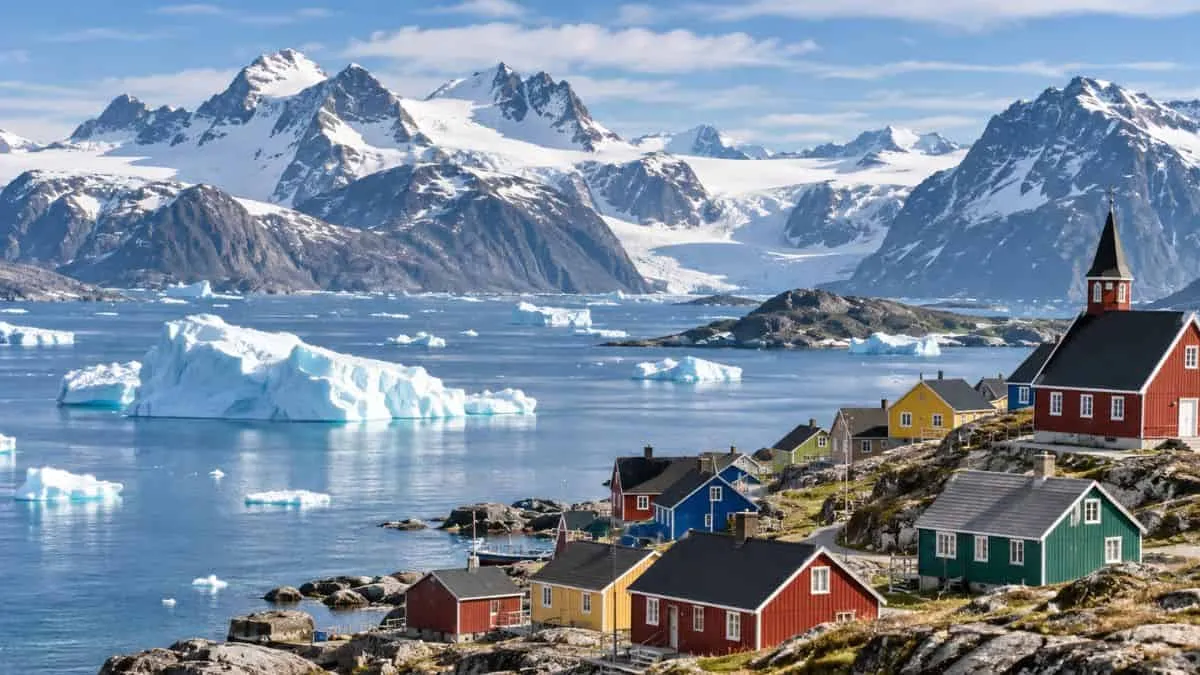
Everyone must have heard about Greenland, which is the largest island in the world, with about 2.16 million square kilometers, and it is situated between the Arctic and Atlantic oceans, northeast of Canada and northwest of Iceland.
But you all will be surprised to know that Greenland is not an independent country. Yes, then you may have doubt that Greenland Is Part of Which Country than?
Greenland is a part of the Kingdom of Denmark, and it is not any independent country, but it has its own self-government, which manages many of the domestic affairs of Greenland.
It has its own parliament and government, but Denmark is responsible for other areas such as foreign policy, defense, and security.
This article is very important in aspects of geographical mapping.
Quick Facts: Greenland Is Part of Which Country?
|
Aspects
|
Detail
|
|
Greenland is part of which country?
|
Kingdom of Denmark
|
|
Is Greenland an independent country?
|
No
|
|
What type of region is Greenland?
|
Self-governing/autonomous part of the Kingdom of Denmark
|
|
Capital of Greenland
|
Nuuk
|
|
Official language
|
Greenlandic
|
|
Greenlandic name
|
Kalaallit Nunaat
|
|
Location
|
Arctic region, geographically part of North America
|
|
Area
|
About 2.17 million sq km
|
|
Population
|
About 56,000–57,000
|
|
Largest island in the world?
|
Yes, if continents are excluded
|
Why Is Greenland Part of Denmark?
Greenland has had a long political and historical relationship with Denmark. It became a Danish colony in 1721 and remained a colony until 1953. In 1953, its constitutional status changed and it became part of the Danish realm rather than a colony.
Greenland later received greater control over its own affairs.
In 1979, Greenland received Home Rule, giving it greater responsibility for local matters. Later, the Greenland Self-Government Act came into force on June 21, 2009. This gave Greenland even greater control over many areas of government.
Source: worldatlas
Greenland's Political Development
|
Year
|
Important Event
|
|
1721
|
Greenland became a Danish colony
|
|
1953
|
Greenland stopped being a Danish colony and became part of the Danish realm
|
|
1979
|
Home Rule was introduced
|
|
2008
|
Greenland voted in favour of greater self-government
|
|
2009
|
Greenland Self-Government Act came into force
|
|
Today
|
Greenland remains part of the Kingdom of Denmark with extensive self-government
|
Is Greenland a Country?
This is where the answer can sometimes become confusing.
Greenland is often described as a self-governing country or autonomous territory, but it is not a sovereign independent state. It is part of the Kingdom of Denmark, which also includes Denmark and the Faroe Islands.
Greenland has its own:
-
Parliament
Government
Official language
Local laws
Flag
National day
Control over many domestic matters
The Parliament of Greenland is called Inatsisartut, and it has 31 members. However, some important responsibilities remain with the Danish authorities.
What Does Greenland Control?
Greenland has control over many areas of daily life, including several domestic matters such as education, health, fisheries and environmental affairs.
Denmark remains responsible for important areas such as:
-
Foreign policy
-
Defence
-
Security
-
Citizenship
-
Currency and monetary policy
-
Certain constitutional matters
Where Is Greenland Located?
Greenland is located in the Arctic region between the Arctic Ocean and the North Atlantic Ocean.
Although Greenland is politically connected with Denmark in Europe, geographically it belongs to the North American continent.
This makes Greenland an interesting place to study because its geography and political connection are linked to different parts of the world.
Greenland Is the World's Largest Island
Greenland is the largest island in the world when continents are not counted as islands.
Its area is about 2.17 million square kilometres. A huge part of the island is covered by ice. Danish government information says that around 80–85% of Greenland is covered by ice, depending on the measurement used.
The island's enormous ice sheet makes much of its interior difficult for people to live in. Most people live along the coast.
What Is the Capital of Greenland?
The capital of Greenland is Nuuk. Nuuk is located on the southwestern coast of Greenland. It is the centre of Greenland's government and is home to the country's parliament and government.
The population of Greenland is only around 56,000–57,000 people, making it one of the world's least densely populated areas.
What Is Greenland's Official Language?
The official language of Greenland is Greenlandic. Greenlandic is also known as Kalaallisut. Danish is also used in official settings and is widely understood.
The name Kalaallit Nunaat is the Greenlandic name for Greenland. It is commonly translated as “Land/Country of the Greenlanders.”
Who Lives in Greenland?
Most of Greenland's population is made up of Kalaallit, the Indigenous Inuit people of Greenland, along with people of mixed Inuit-Danish background and others, including Danes.
People mainly live in towns and settlements along the coast because the large ice-covered interior is not suitable for normal settlement.
What Is Greenland Famous For?
Greenland is famous for its:
-
Huge ice sheet
-
Icebergs
-
Glaciers
-
Fjords
-
Arctic wildlife
-
Northern Lights
-
Inuit culture
-
Fishing
-
Arctic landscapes
-
Midnight Sun
Fishing is particularly important to Greenland's economy.
Is Greenland Part of the European Union?
No. Greenland is not part of the European Union.
Greenland was associated with the European Community when Denmark joined in 1973, but Greenland later left the European Community in 1985 after a referendum.
So, Greenland is politically part of the Kingdom of Denmark, but it is not part of the EU.
10 Interesting Facts About Greenland
-
Greenland is the world's largest island that is not a continent.
-
It is geographically part of North America.
-
Politically, it is part of the Kingdom of Denmark.
-
Greenland has had Home Rule since 1979.
-
Its current Self-Government arrangement began in 2009.
-
The capital of Greenland is Nuuk.
-
Greenlandic is the official language.
-
Around 80–85% of Greenland is covered by ice.
-
Greenland has a population of only around 56,000–57,000 people.
-
Greenland is not part of the European Union.
Greenland at a Glance
|
Feature
|
Details
|
|
Name
|
Greenland
|
|
Local name
|
Kalaallit Nunaat
|
|
Political status
|
Self-governing part of the Kingdom of Denmark
|
|
Continent
|
North America
|
|
Capital
|
Nuuk
|
|
Area
|
About 2.17 million sq km
|
|
Population
|
About 56,000–57,000
|
|
Official language
|
Greenlandic
|
|
Parliament
|
Inatsisartut
|
|
Government
|
Naalakkersuisut
|
|
Home Rule
|
1979
|
|
Self-Government Act
|
2009
|
|
EU membership
|
No
|
|
Main economic activity
|
Fishing
|
Conclusion
So, Greenland is part of the Kingdom of Denmark. It is not an independent country, but it has a large amount of self-government. Greenland has its own parliament and government and manages many local matters, while Denmark continues to handle important areas such as foreign policy and defence.
Geographically, Greenland is part of North America, while politically it is part of the Kingdom of Denmark. This makes Greenland one of the world's most unique places from both a geographical and political point of view.