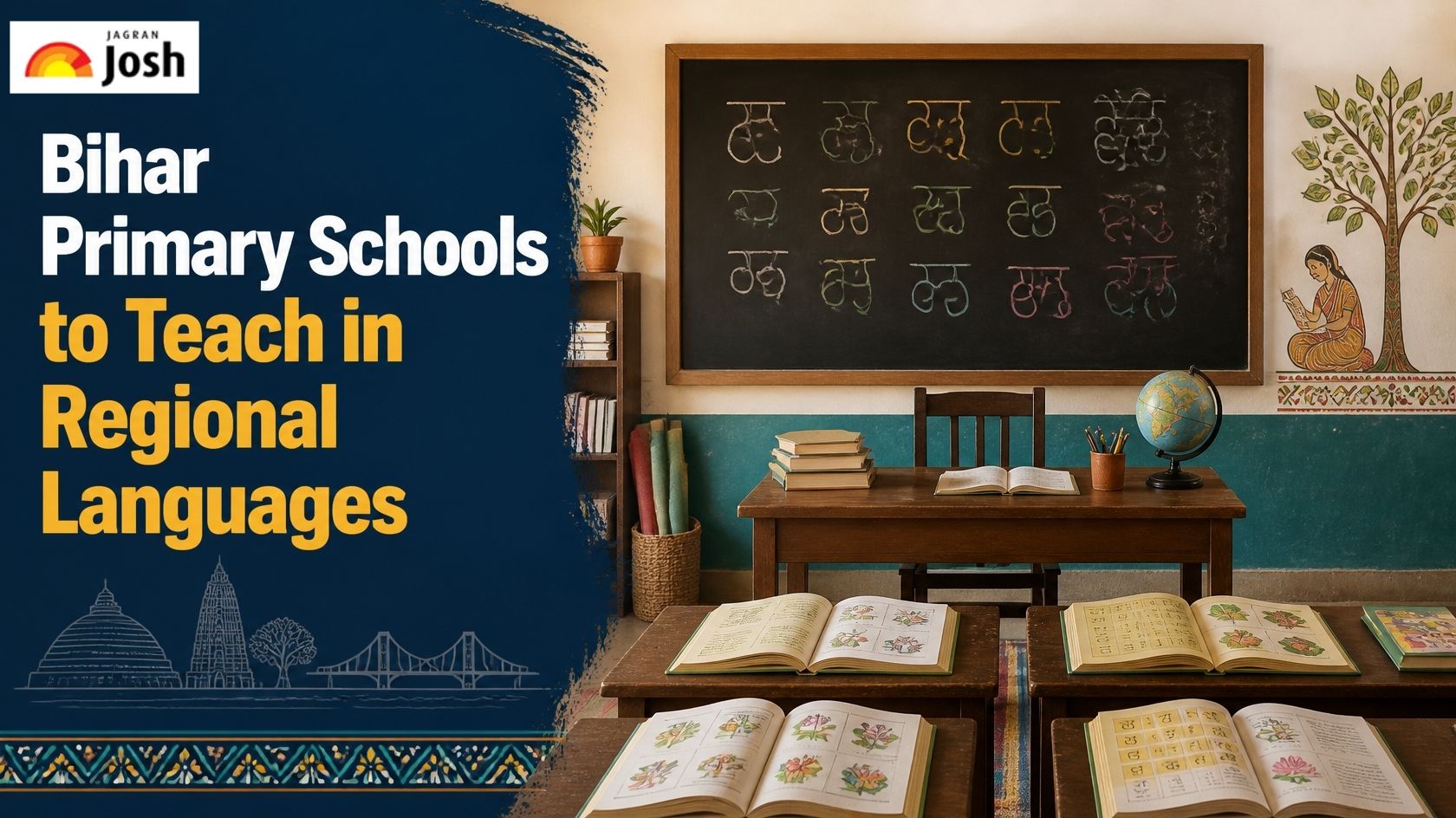
The Government of Bihar has announced that primary students in Classes 1 and 2 across government schools will be taught in their native regional languages starting from the 2026-27 academic session. The initiative is in line with the directives of the National Education Policy (NEP 2020), which advocates using the child’s home language or mother tongue as the medium of instruction during the early foundational stages. The policy will also cover six major regional languages which are spoken across the state, such as Bhojpuri, Magahi, Maithili, Bajjika, Angika, and Surjapuri, as per the various media sources.
SCERT to Prepare Regional Textbooks for Class 1 and 2
The State Council of Educational Research and Training (SCERT), Bihar, has been tasked with developing textbooks, supplementary readers, and interactive visual aids in all six regional languages. Rather than teaching complex grammar, the early primary curriculum will also focus on the phonetic learning of the students, local folk tales, rhymes, community occupations, regional fairs, and everyday cultural references. The approach is designed to make classroom instruction familiar and engaging, bridging the transition from conversational home languages to standardised formal Hindi.
Key Highlights of Bihar Primary Language New Policy for 2026-27
Given below are the key highlights of the new policy of regional languages being introduced for Classes 1 and 2 for the 2026-27 academic session:-
|
Particulars |
Details |
|
Official Body |
Education Department, Government of Bihar |
|
Academic Session |
2026-27 |
|
Classes |
Class 1 and Class 2 |
|
Languages |
|
|
Curriculum Developer |
State Council of Educational Research and Training (SCERT), Bihar |
Also check, No Aadhaar? NRI Students Can Now Apply for JEE Main 2027 Using Passport
What will be the pedagogical impact on early learning of this New Initiative?
Educational psychologists and state education officials note that early immersion in unfamiliar languages often leads to learning gaps and student disengagement:-
- Teaching children in their mother tongue builds stronger cognitive pathways for reading comprehension and basic numeracy.
- Student express themselves more confidently when allowed to converse in the dialect spoken by their families and local communities.
- The education department plans to conduct specialised orientation workshops to train primary educators in bilingual pedagogy, allowing teachers to guide students smoothly from local mother tongues into standard Hindi and English in later grades.
Also check, Delhi Schools Must Form Anti-Tobacco Committees, Conduct Regular Awareness Drives