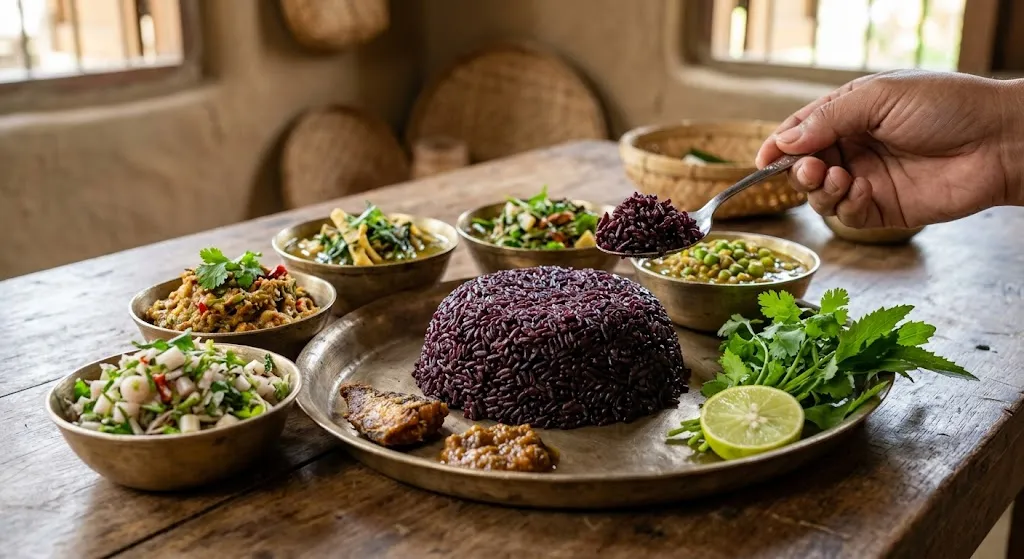
India has a wide variety of rice. Chak-Hao is a traditional black aromatic rice from Manipur. Chak-Hao is also a registered Geographical Indication, with the official GI record listing the geographical area as Manipur and Nagaland.
Which Indian Rice Is Famous for Its Black Colour?
Chak-Hao is also known as Chakhao black rice. It is the Indian rice variety famous for its naturally dark colour. It is traditionally associated with Manipur and is known locally as black aromatic rice.
Which Indian District Is Famous for Black Rice?
Chak-Hao is a traditional black aromatic rice of Manipur. Chak-Hao contains natural pigments that give the grain its dark colour. The rice has also been traditionally used in special occasions and festive food preparations in Manipur.
Where Is Chak-Hao Black Rice Grown?
Chak-Hao is mainly associated with Manipur in Northeast India. However, in it's GI registration records the geographical area as Manipur and Nagaland.
Geographical details
| Feature | Details |
| Rice | Chak-Hao |
| Type | Black aromatic rice |
| Main association | Manipur |
| GI geographical area | Manipur and Nagaland |
| Product category | Agricultural |
| GI application number | 602 |
| GI status | Registered |
| Certificate number | 364 |
Does Chak-Hao Have a GI Tag?
Chak-Hao has a Geographical Indication tag. The GI application number is 602. The applicant was the Consortium of Producers of Chak-Hao Black Rice, Manipur. The application was filed on 26 December 2017. The certificate number is 364 and the certificate date is 20 April 2020.
Why Is Chak-Hao Black in Colour?
The distinctive colour of Chak-Hao comes from natural pigments called anthocyanins. Anthocyanins are plant pigments that can produce red, purple and blue colours in different plants.
Which Varieties of Chak-Hao Are Found in Manipur?
Two varieties highlighted in the recent Manipur Organic Mission Agency product catalogue are Chak-Hao Amubi and Chak-Hao Poireiton.
Chak-Hao varieties
| Feature | Chak-Hao Amubi | Chak-Hao Poireiton |
| Energy per 100 g | 331.27 | 344.2 |
| Carbohydrate | 58.84 g | 63.82 g |
| Dietary fibre | 17.7 g | 14.98 g |
| Protein | 10.29 g | 9.63 g |
| Fat | 2.35 g | 2.44 g |
| Total anthocyanin | 1.57 | 1.62 |
| Iron | 1.62 mg | 2.82 mg |
How Is Chak-Hao Rice Different From White Rice?
Chak-Hao differs from common white rice mainly in its colour, aroma, pigment content and traditional varieties.
| Feature | Chak-Hao | Common white rice |
| Colour | Black to deep purple | White |
| Aroma | Distinctive aromatic character | Varies by variety |
| Major pigment | Anthocyanins | Generally lacks the same dark anthocyanin pigmentation |
| Texture after cooking | Characteristically sticky | Varies |
| Regional identity | Manipur and Nagaland | Grown widely across India |
| GI registration | Yes | Depends on variety |
Chak-Hao Black Rice
| Question | Answer |
| Which Indian rice is famous for its black colour? | Chak-Hao |
| Where is Chak-Hao mainly associated with? | Manipur |
| What type of rice is it? | Black aromatic rice |
| Why is it black? | Natural anthocyanin pigments |
| What colour does it become after cooking? | Deep purple |
| Does it have a GI tag? | Yes |
| GI geographical area | Manipur and Nagaland |
| GI application number | 602 |
| GI certificate number | 364 |
| Famous varieties | Chak-Hao Amubi and Chak-Hao Poireiton |
| New high-yielding variety | RC Manichakhao-1 |
| Main traditional use | Rice and kheer |