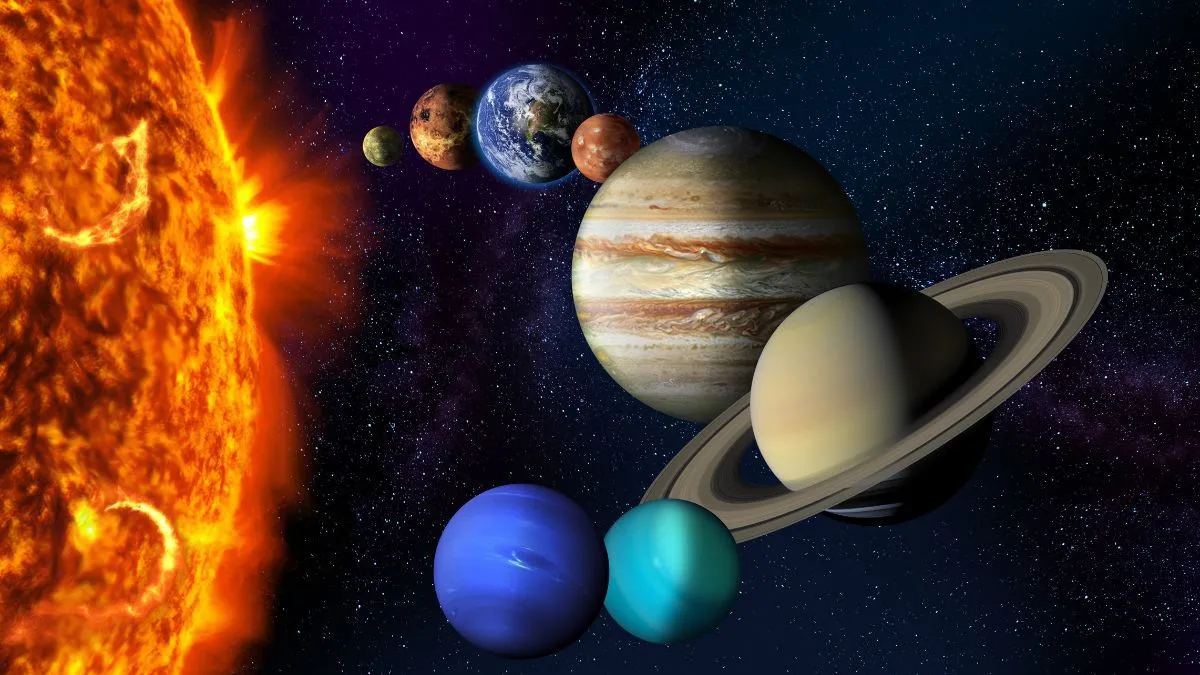
Have you ever thought which planet takes the longest time to complete one revolution around the Sun? Among the eight planets in our Solar System, Neptune has the longest year and is the first largest planet. It takes approximately 164.8 Earth years to complete one orbit around the Sun. Keep reading to know
Which Planet Has the Longest Year?
Neptune has the longest year among the eight planets. One year on Neptune lasts approximately 164.8 Earth years. Neptune is the eighth and farthest planet from the Sun. It takes nearly 165 Earth years to complete one revolution around the Sun.
How Long Is One Year on Neptune?
Neptune takes nearly 165 years on Earth to complete one orbit. Neptune’s orbital period is much longer than that of any other planet in the Solar System.
Why Does Neptune Have the Longest Year?
Neptune is the farthest planet from the Sun. Its orbit is therefore much larger than those of the other planets. Neptune also travels around the Sun at a lower average orbital speed than Earth.
Which Planet Takes the Longest Time to Orbit the Sun?
Neptune takes the longest time to orbit the Sun. It requires about 164.8 Earth years for one complete revolution. Uranus has the second-longest orbital period at about 84 Earth years. Saturn takes approximately 29.5 Earth years. Jupiter takes about 11.9 Earth years.
Which Planet Has the Shortest Year?
Mercury has the shortest year among the eight planets. One Mercury year lasts approximately 88 Earth days. Mercury is the closest planet to the Sun. Its smaller orbit allows it to complete a revolution much faster than Neptune.
Neptune vs Other Planets: Which Has the Longest Year?
| Planet | Approximate Orbital Period |
| Mercury | 88 Earth days |
| Venus | 225 Earth days |
| Earth | 365 days |
| Mars | 687 days |
| Jupiter | 11.9 Earth years |
| Saturn | 29.5 Earth years |
| Uranus | 84 Earth years |
| Neptune | 164.8 Earth years |
Does Neptune Have Seasons?
Neptune experiences seasons. Its rotational axis is tilted by approximately 28 degrees. This axial tilt is similar to Earth’s. But Neptune’s seasons are extremely long because its year lasts nearly 165 Earth years. Each season lasts roughly four decades.
Farthest Planet From the Sun
Neptune is the eighth and farthest planet from the Sun. Its distance from the Sun is one of the major reasons for its long orbital period.
Why is Neptune called Ice Giant?
Neptune is called an ice giant. It is different from rocky planets such as Earth and Mars. Its atmosphere contains mainly hydrogen and helium along with methane. Uranus is the other ice giant in the Solar System.
How Many Moons Does Neptune Have?
Neptune has 14 known moons. Its largest moon is Triton. It is the only large moon in the solar system with a retrograde orbit (moving opposite to the planet's rotation).
Neptune vs Earth: Length of a Year
| Feature | Earth | Neptune |
| Position from Sun | 3rd | 8th |
| Length of year | 365.25 days | About 164.8 Earth years |
| Average distance from Sun | About 150 million km | About 4.5 billion km |
| Length of day | About 24 hours | About 16 hours |
| Planet type | Rocky planet | Ice giant |