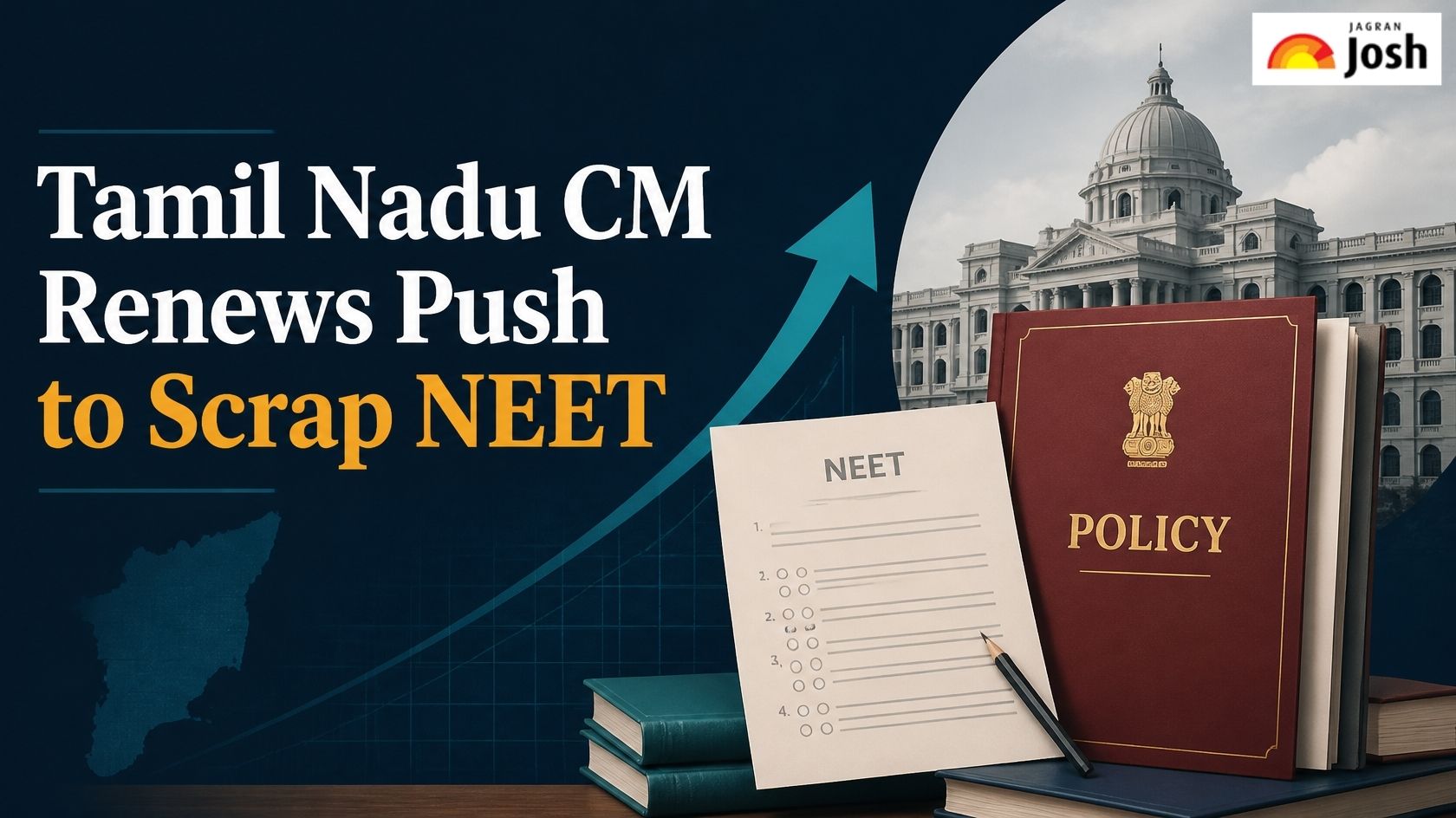
The Government of Tamil Nadu has strongly repeated its demand to abolish the National Eligibility-cum-Entrance Test (NEET) and similar centralised entrance exams for admission to medical and higher education courses. During a high-level meeting at the State Secretariat in Chennai, Chief Minister C. Joseph Vijay has once again requested the High-Powered Task Force (HPTF) on examination reforms, which was headed by the former UIDAI chief Nandan Nilekani, to recommend the scrapping of NEET nationwide and allow the states to admit students into MBBS, BDS, and other allied courses strictly on the basis of their Class 12 public exam marks.
Tamil Nadu Re-emphasises Assembly Resolution on Removing NEET
During the discussions that were held, the state government brought forward the resolution unanimously adopted by the Tamil Nadu Legislative Assembly on August 11, 2026. The resolution formally registered the state’s unified opposition against the NEET, describing the single-window entrance exam as an unfair hurdle for rural, government-school, and economically disadvantaged students. The state had also highlighted the three primary grounds for doing away with NEET:-
- The rapid spread of expensive coaching centres and academics that place low-income families at a deep competitive disadvantage.
- Structural and operational vulnerabilities within the centralised large-scale exams that lead to compromised credibility and administrative delays.
- The unwanted mental stress, anxiety, and the tragic loss of young lives that are linked to the entrance exam pressure.
Also check, SC Questions NBEMS Over "Limited Disclosure" of NEET-PG Answer Keys, Seeks Detailed Explanation
Mandate of the Nilekani-Led Task Force for NEET
The Union government constituted the Nilekani-led High-Powered Task Force to calculate the detailed reforms across the public exams which were administered by the central bodies, including the National Testing Agency (NTA). The panel’s scope covers the systemic integrity, technological intervention, infrastructure upgrades, accessibility, and mental health safeguards for the exam takers. While the panel is consulting various state governments to build an equitable national framework, Tamil Nadu remains steadfast that genuine reform can only be achieved by decentralising medical admissions and restoring full autonomy to states.
Also check, NTA Paper Leak Prevention: 5,000 Experts Enlisted for Secure Question Bank and Stop Paper Leak
Why Tamil Nadu Supports the Class 12 Normalisation Model?
Before NEET’s nationwide enforcement, Tamil Nadu successfully admitted students into medical colleges using a Class 12 board marks normalisation method.
- This model makes sure that students studying in government and aided schools in remote blocks can secure medical seats based on their long-term classroom performance, without spending lakhs on coaching institutes.
- Evaluating Class 12 scores restores academic importance to regular higher secondary schooling, making sure that students and schools focus completely on core subject mastery rather than specialised multiple-choice exam training.
Also check, No More 'Zero Percentile': NEET PG & NEET SS to Shift to Rank-Based Admissions