E-Passport Makes Way in India: Check How to Apply, and its Benefits
Explore the complete overview of India’s e-Passport, including eligibility criteria, online application steps, and advantages over regular passports.
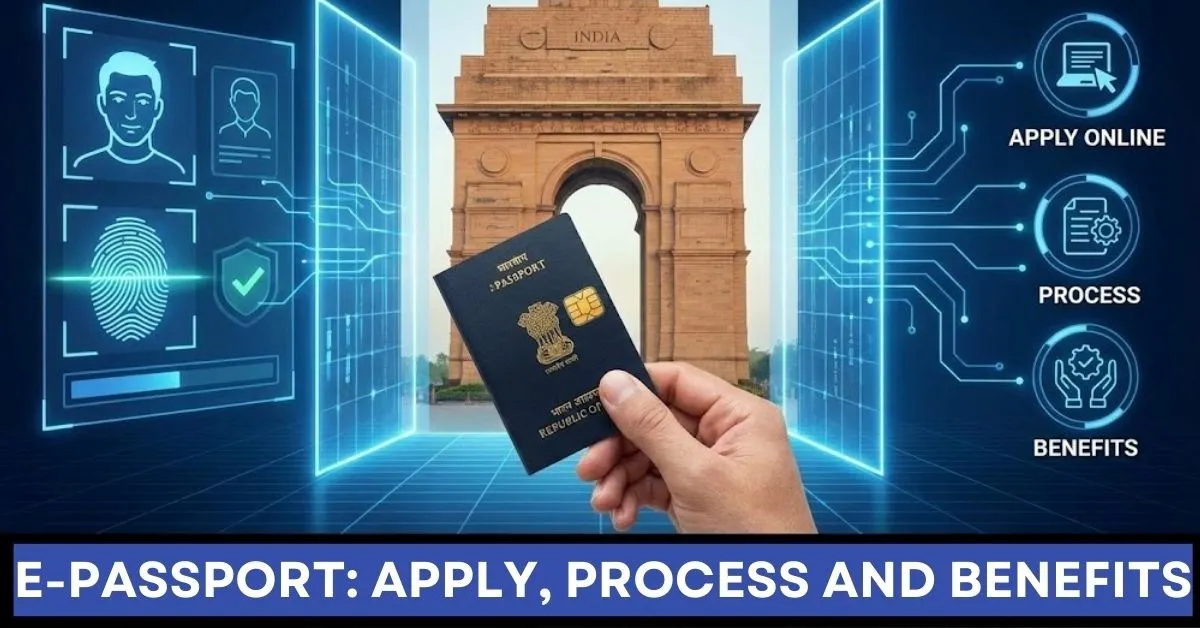
India has introduced the new e-Passport to make international travel more secure and smoother for citizens. This advanced passport comes with an embedded electronic chip that safely stores personal and biometric information, helping prevent tampering and identity fraud. Launched under the Passport Seva Programme, the e-Passport follows international security standards and is designed to speed up immigration checks at airports. With its stronger security features and easier verification process, the e-Passport marks an important step in modernising India’s travel documents and improving the overall travel experience for Indian passport holders.
What is an E-Passport?
An e-passport (also called a chip-based passport or biometric passport) looks like a normal passport but contains a small contactless RFID chip and an antenna embedded in the cover. The chip stores the holder’s passport details plus biometric data (digital photograph, fingerprints, and other identity data). This data is encrypted and digitally signed so immigration authorities can verify the passport’s authenticity quickly and securely.
The Passport Seva website mentions: “An ePassport is a combined paper and electronic passport with a Radio Frequency Identification (RFID) Chip and an antenna embedded as an inlay of passport that contains the personal particulars and biometric information of the passport holder. The ePassport will be visually identifiable as small additional gold colour symbol printed below the front cover of the passport.”
Who Can Apply for an E-Passport in India?
Any Indian citizen applying for a fresh passport or a re-issue at a Passport Office/PSK/POPSK where e-passport issuance is active can receive an e-passport. The e-passport rollout was initially piloted in select offices and it is now expanded to many centres. You need to check whether your chosen PSK/POPSK issues e-passports when booking.
Existing non-e passports remain valid until their expiry; holders don’t need to replace them immediately unless they want a new passport. The government has indicated a phased transition, with full transition plans discussed for future years.
The Passport Seva website states: “No. All Passports issued by Govt of India will continue to remain valid till their validity expiry date. As and when a respective Passport Office is technically enabled for issuance of ePassport, the citizens applying under that passport office will get the ePassport. The phase wise roll out of ePassport covering all Passport Offices across India may take few months.”
How to Apply for an E-Passport in India? Step-By-Step Process
Here are the steps that you can follow to apply for the e-passport:
- Create / login to your account on the official Passport Seva portal.
- Click Apply for Fresh Passport / Re-issue and fill the online form. Provide accurate personal details.
- Choose PSK/POPSK: when you select a centre, check whether that centre issues e-passports (the portal or appointment screen will indicate this).
- Pay fee online. After payment, schedule an appointment at the PSK/POPSK.
- Visit the PSK/POPSK at the appointed time with original documents for verification. The centre will capture biometrics (fingerprints, photo) and any additional data required for the e-passport chip.
- Police verification as applicable — the mPassport Police App and other digital steps have reduced verification times in many states. After clearance, passport printing and dispatch follow.
What are the Key Benefits of the E-Passport in India?
- Faster immigration checks, border authorities can read chip data contactlessly and (where e-gates exist) process travellers faster. This reduces queues at international airports.
- Stronger protection against forgery and tampering — the chip stores digitally signed data; altering the physical passport or the chip is extremely difficult.
- Easier identity verification abroad — ICAO-compliant e-passports are accepted by immigration systems worldwide and support automated identity checks.
- Better traveller experience overall — reduced manual checks, faster exit/entry and more consistent identity checks at modern e-gates.
The Passport Seva website mentions: “The major benefit of the ePassport comes with an enhanced ability to maintain the integrity of the passport holder’s data. The ePassport will have the data in printed form on the booklet, as well as digitally signed in the electronic chip, which can be securely authenticated by immigration officials globally; thus, safeguarding the passport from forgery, and potential fraudulent activities like fake passports, while confirming the genuineness at border controls.”
“The underlying technology supporting the security of the ePassport is the Public Key Infrastructure (PKI) solution which is the foundation for safeguarding sensitive information and confirming the integrity and origin of the personal and biometric data stored on the chip within the ePassport,” it adds.
What is the Availability of the E-Passport in India?
The Ministry of External Affairs started issuing e-passports in pilot offices and expanded the rollout. PSP V2.0 and e-passport issuance were implemented across all 37 Passport Offices, 93 PSKs and 450 POPSKs by 26 May 2025 as part of the national rollout. You can check Passport Seva or specific RPO/PSK pages for the most current list of issuing centres.
The Ministry of External Affairs mentions: “keeping with the Ministry’s commitment to continually enhance the quality of passport-related services and to integrate the latest technological advancements, PSP V2.0 was successfully implemented across all 37 Passport Offices in India, along with their respective 93 Passport Seva Kendras (PSKs) and 450 Post Office Passport Seva Kendras (POPSKs) on 26 May 2025. Subsequently, GPSP V2.0 was launched across Indian Embassies and Consulates worldwide on 28 October 2025.”

Nikhil is a dedicated digital journalist and communications professional with more than five years of experience, currently working within the General Knowledge section at Jagran Josh. He has established himself as a subject matter expert in Finance, Economy, History, Technology, and Trending News, consistently delivering accurate, engaging, and easy-to-read content for a wide global audience.
Over the course of his career, Nikhil has developed deep expertise in crafting informative listicles, viral trending stories. His editorial portfolio also spans finance, historical research, and technology reporting, making him a versatile and well-rounded content professional. Every piece he produces reflects a strong balance between factual accuracy and reader engagement.


-1789999379257_t.webp)