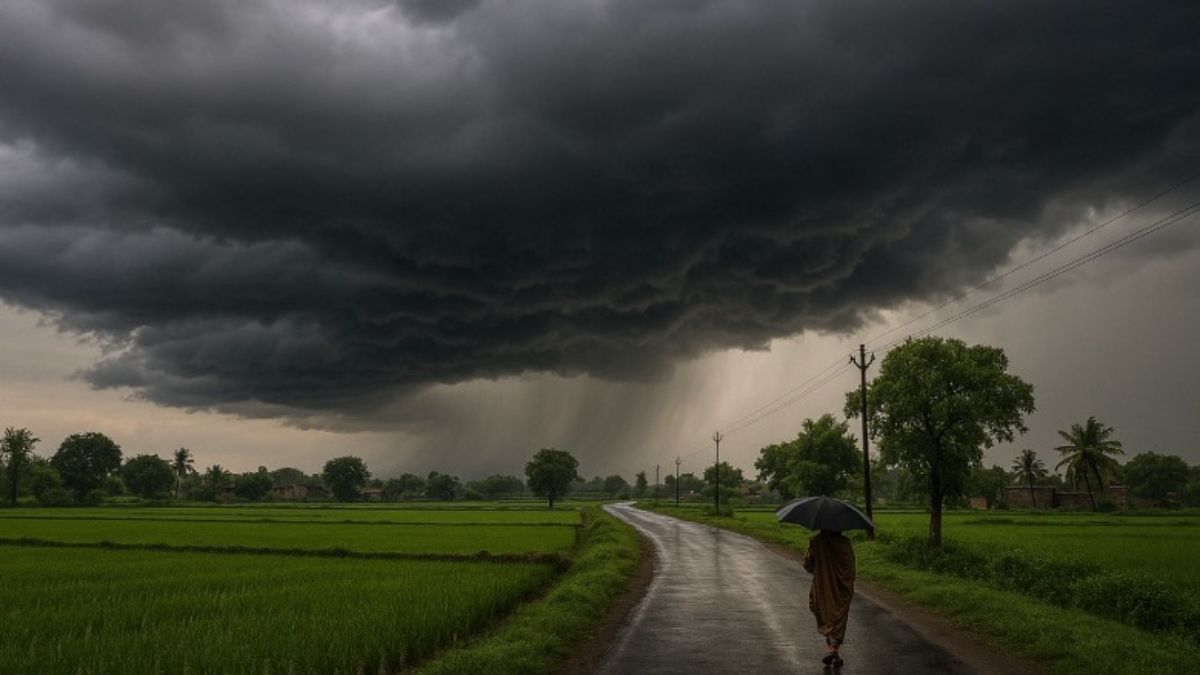
The word 'monsoon' comes from the Arabic word Mausim, meaning 'season'. Monsoon season is critical for an agrarian country like India, which relies heavily on rains for rain-fed agricultural needs. The Reserve Bank of India (RBI) recently said that the outlook for India's agriculture sector in 2026-27 remains dependent on the progress and distribution of the southwest monsoon.
The apex bank, in its Annual Report 2025-26, also cited that the likelihood of El Niño conditions poses downside risks to farm output. ICRA in its Southwest Monsoon Outlook 2026 highlighted that over the last 24 years, India has witnessed El Niño conditions in eight years (2002, 2004, 2006, 2009, 2014, 2015, 2018 and 2023) with varied intensity levels.
It is, therefore, important to understand the phenomenon of monsoon in India. In this article, we will learn what the two types of monsoon in India are.
What are the two types of monsoons in India?
India experiences two types of monsoons each year: the Southwest Monsoon and the Northeast Monsoon.
Southwest Monsoon
The southwest monsoon is the country's primary rainy season that extends from June to September. This monsoon delivers around 75 per cent of the country's annual rainfall. The southwest monsoon aids in recharging groundwater, filling up rivers and lakes, and supporting farming of crops like rice, cotton, and sugarcane. This season also is crucial for irrigation, hydropower, and drinking water.
The southwest monsoon phenomenon begins when the monsoon winds reach the southern part of India, and covering the entire country by mid July. The process begins as the Indian landmass heats up (land heats up faster than the sea) during summer, thus creating a powerful low-pressure system over the northern and central India. Meanwhile, the Indian Ocean remains cooler, thus increasing the increasing pressure over the sea. These monsoon winds then flow from the ocean to the land, thus bringing the moonsoon.
Northeast Monsoon
The northeast monsoon begins as the southwest monsoon starts to fade. The northeast monsoon sets in by October and extends till December. The northeast monsoon is also known as the retreating monsoon. This monsoon system is shorter and less widespread, with winds passing over the Bay of Bengal and bringing rainfall to parts of east and south India. The northeast monsoon plays a crucial role in southern India.
The process of northeast monsoon begins when the lands starts to cool faster than the ocean by October. This creastes a high-pressure over the landmass (Indian subcontinent) and a low-pressure over the surrounding seas. The direction of wind flow reverses during this monsoon wherein the wind starts flowing from land to sea. This phenonmenon is called 'northeasterlies' (air flowing from the northeast to southwest).