Delhi's Winter Pollution Plan Starts From November 1: From 50% WHF, 2X Parking Fees to 0 Fuel, No Construction: Check Key Changes, Who's Affected
Chief Minister Rekha Gupta on Tuesday announced the Delhi government’s 10-point Winter Action Plan for 2026-27, which will remain implemented until February 28. The plan includes tighter vehicle regulations, work-from-home arrangements, construction limits and measures to control road dust and industrial emissions.
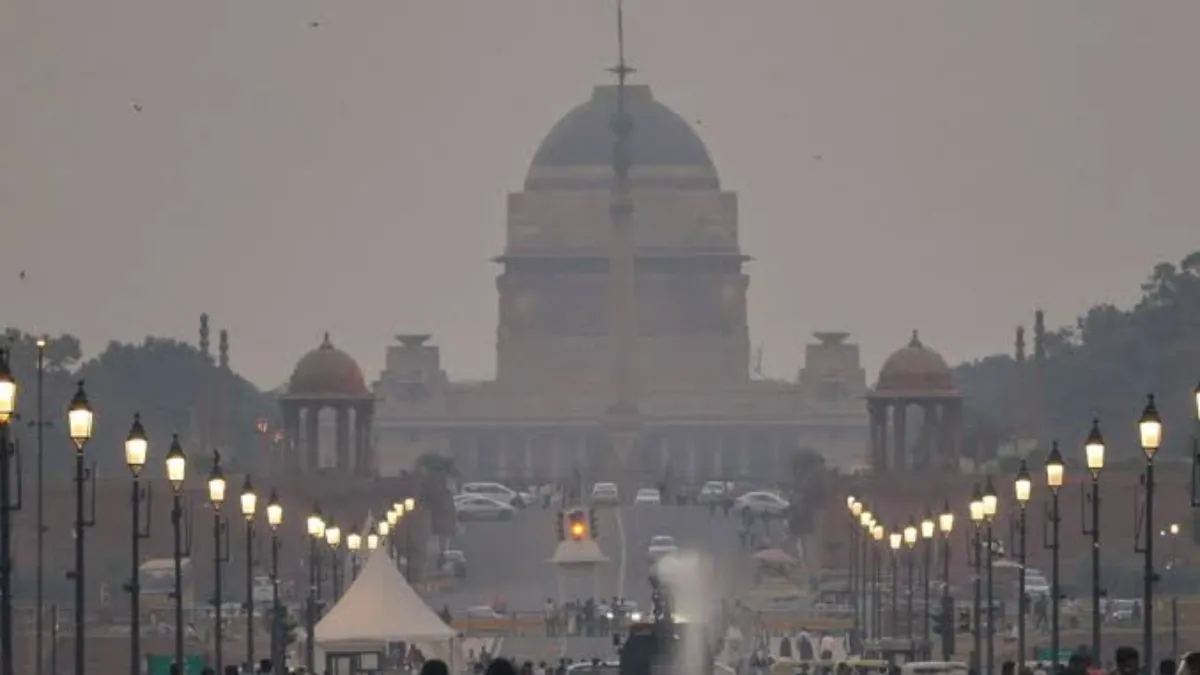
Delhi is set to implement several measures from November 1 as the government tightens efforts to prevent the drastic deterioration in air quality during winter.
Chief Minister Rekha Gupta on Tuesday announced the Delhi government’s 10-point Winter Action Plan for 2026-27, which will remain implemented until February 28. The plan includes tighter vehicle regulations, work-from-home arrangements, construction limits and measures to control road dust and industrial emissions.
This comes in backdrop of Delhi’s air quality degraded sharply, with pollution slated to remain a concern over the next few days. On October 19, live readings featured the city’s AQI at around 224, thus signalling severe pollution on its displayed scale. The reading can vary across monitoring platforms and locations.
The reading was categorised in the platform's "Unhealthy" category, following a brief spell of cleaner air earlier in the 24-hour period.
Delhi Air Pollution Prediction for Coming Days
According to the India Meteorological Department (IMD) prediction, Delhi is likely to witness mainly clear skies with no rainfall expected through October 23. The lack of rain, combined with changing wind conditions and local emissions, could permit pollutants to accumulate. The Indian Institute of Tropical Meteorology’s forecast also hinted that air quality could remain in the poor category through the continuous six days.
No PUC, No Fuel
Delhi will tighten execution of its ‘No PUC, No Fuel’ policy from November 1, with checks at 500 petrol pumps equipped with Automatic Number Plate Recognition (ANPR) systems.
The rule, which came into implementation on October 1, prevents vehicles without a valid Pollution Under Control Certificate (PUCC) from refuelling. Vehicles that have exceeded their prescribed lifespan will also be denied fuel.
In another major restriction, petrol and diesel vehicles registered outside Delhi that do not follow Bharat Stage VI (BS-VI) emission standards will be banned from entering the capital from November 1. However, CNG and electric vehicles will be exempted.
The government will also offer financial incentives under the Parivartan Yojana and EV Policy 2026 to encourage the tarnishing of old vehicles and the adoption of cleaner alternatives.
Construction Ban in Delhi-NCR
The Commission for Air Quality Management (CAQM) has banned outdoor construction and demolition work that causes dust across the National Capital Region (NCR) from November 5 to 20, before Diwali and period before worst stubble burning impact, extending the curbs to highways, roads and other linear public projects.
The order spans work on flyovers, overbridges, power transmission lines, pipelines and telecommunication works as well, although it exempts projects linked to railways, metro services, airports, inter-state bus terminals, hospitals, water supply and sanitation, and national security and defence, along with projects of national relavence.
Parking Fees To Double
Moreover, to prevent the use of private vehicles, parking charges at authorised facilities across Delhi will be doubled. However, parking facilities managed by the Delhi Metro will be exempt.
Delhi’s Winter Action Plan 2026–27 launches stricter measures to tackle rising air pollution, including construction restrictions, vehicle curbs and dust-control drives starting November 1. This will encompass ban on dust-generating demolition and outdoor construction activities until January 31, while a complete construction and demolition ban is planned from December 10 to January 20. Non-Delhi petrol and diesel vehicles that do not fulfill BS-VI emission parameters will also be banned from entering the capital, with CNG and electric vehicles excluded.
Moreover, the ‘No PUCC, No Fuel’ campaign will aim at vehicles without valid pollution certificates. Authorities will intensify mechanised road sweeping, water sprinkling and road redevelopment. Offices have been advised to allow 50% work from home, while parking charges will double at government facilities. The plan also bolsters industrial monitoring and public transport use to lower emissions.
How to check if your vehicle is allowed in Delhi-NCR?
Motorists can know their vehicle details through the government's VAHAN database, accessible via the Parivahan Sewa website.
Open the vehicle-details service, known as “Know Your Vehicle Details”, and enter your registration number. After completing the needed verification, look for the “Emission Norms” or “Norms” field in the vehicle record. It should identify the eligibility standard, such as Bharat Stage IV or Bharat Stage VI.
If the information is unknown, check your physical or digital Registration Certificate (RC). You can also consult Form 22, the manufacturer's certificate containing details of the vehicle's compliance with applicable standards. An authorised dealer or the manufacturer can help tell the eligibility if your documents do not give a clear answer.
Why Delhi is Absent from World’s 20 Most Polluted Cities in 2026?
India comprised 13 of the world’s 20 most polluted cities, according to a real-time ranking on October 19. However, shockingly, Delhi did not feature among the top 20.
Data from AQI.in, accessed at around 3:30 pm IST, positioned Bulandshahr in Uttar Pradesh third, with a US Air Quality Index (AQI) reading of 198, which is identified as unhealthy. Agartala in Tripura ranked fourth with a recording an AQI of 181.
Other Indian cities presented in the ranking included Pali in Rajasthan and Muzaffarnagar in Uttar Pradesh, both with readings of 174. Burhanpur in Madhya Pradesh also hit 174, while Rohtak in Haryana had an AQI of 172. Kota in Rajasthan registered 170, followed by Mumbai at 167, Hapur at 166, Hisar and Bikaner at 165, and Bareilly at 164.
Which Cities Ranked Worst in AQI Globally?
India was surpassed by world cities in pollution rankings. Indonesia secured the leading spot in the list. Palangkaraya, in Central Kalimantan, ranked first with a AQI of 242, thus positioning it in the severe category. Palembang followed with 207. Sampit and Jambi also featured in the top six, with readings of 180 and 176 respectively. Several Malaysian cities, including Putrajaya, Kuala Lumpur and Petaling Jaya, were also showcased among the 20 most polluted urban centres.
Why Was Delhi Not on the Most Polluted Cities List?
Delhi’s absence from the top 20 did not imply its air was clean. The city’s air quality had worsened overnight, according to the report. Its AQI peaked at 191 at 7:31 am on October 19, before deteriorating through the day and surpassing the 130s by afternoon. The previous day’s recorded lowest was 126 at 5:01 pm.

At Jagran Josh, she specialises in writing explainers and analytical stories on international news and current affairs. Over the years, she has developed strong expertise in leveraging digital and multimedia tools, along with SEO best practices, to enhance the speed, reach, and impact of her stories.