Sonam Wangchuk, a renowned education reformer from Ladakh who is also a climate activist, started an indefinite hunger strike on 28th June 2026 at Jantar Mantar, New Delhi.
Earlier hunger strikes have taken place by him, focusing on environmental concerns as well as the autonomy in Ladakh. However, this hunger strike was related to the issue of national education.
He became part of the movement conducted by students in the name of the Cockroach Janta Party (CJP) in the wake of cheating and paper leaks in several competitive examinations like NEET-UG.
In the last 18 days, he had only consumed salty water, and because of that, his health deteriorated very badly. He lost 9 kg with depletion in muscle mass, along with low blood pressure and blood sugar levels.
He was medically checked continuously. However, did you know there is one such severe hunger strike in the world that continued for 16 years? One of the longest hunger strikes took place in India from 2000 to 2016. Let’s learn about it.
The Longest Hunger Strike in India and the World That Went On For 16 Years
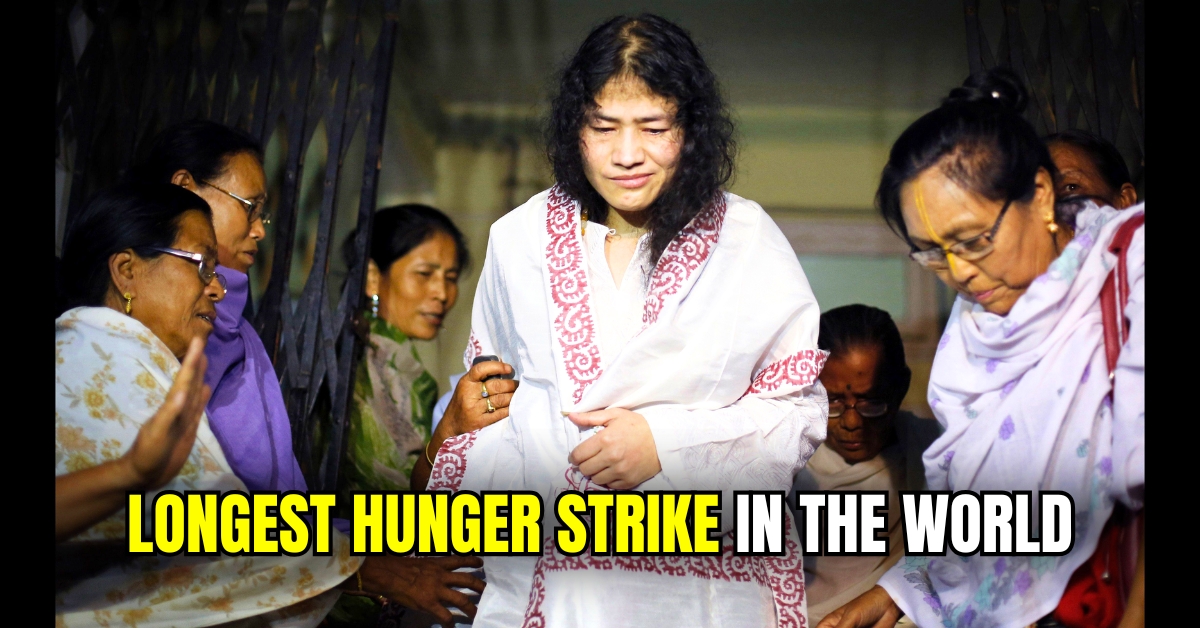
Irom Sharmila Chanu, popularly known as the "Iron Lady of Manipur", holds the record for the longest hunger strike both in India and in the world. Here’s the reason why she did a hunger strike:
|
Metric
|
Details
|
|
Striker
|
Irom Sharmila Chanu
|
|
Duration
|
16 years (November 2000 – August 2016)
|
|
The Cause
|
Demanding the complete repeal of the Armed Forces (Special Powers) Act (AFSPA) in Manipur, which gives security forces sweeping operational powers and legal immunity.
|
|
How She Survived
|
Soon after starting her hunger strike, she was taken into custody by the police on a charge of attempting suicide.
For most of these 16 years, she was held in jail custody at a hospital in Imphal.
Here, she was made to survive through the practice of forced nasogastric feeding (a mixture of liquids, baby milk, and vitamin intake through a nasal tube).
|
|
The End
|
She voluntarily ended her historic fast in August 2016. She stated that she wished to change her strategy and fight the system through democratic politics instead.
|
Current Status of Irom Sharmila Chanu
According to The Guardian, Irom Sharmila conducted an incredible hunger strike of 5,574 days against the AFSPA Act in Manipur.
To keep her alive, the Indian Government was forced to admit her to the hospital and feed her forcefully with tubes placed in her nose and mouth, thus making her a symbol of resistance all over the world.
She got many international awards and became recognised by Amnesty International as a prisoner of conscience. She was supposed to become the first Nobel Prize winner of Manipur.
Her decision to end her hunger strike voluntarily in 2016 by tasting a little bit of honey totally changed her image. Tired of worship and adoration as a goddess, tired of hunger strikes and in love, she decided to give up her sainthood.
The reaction of her former fans and activists was very negative. They blamed her for being the cause of the failure of their movement and considered her an outcast in her own state.