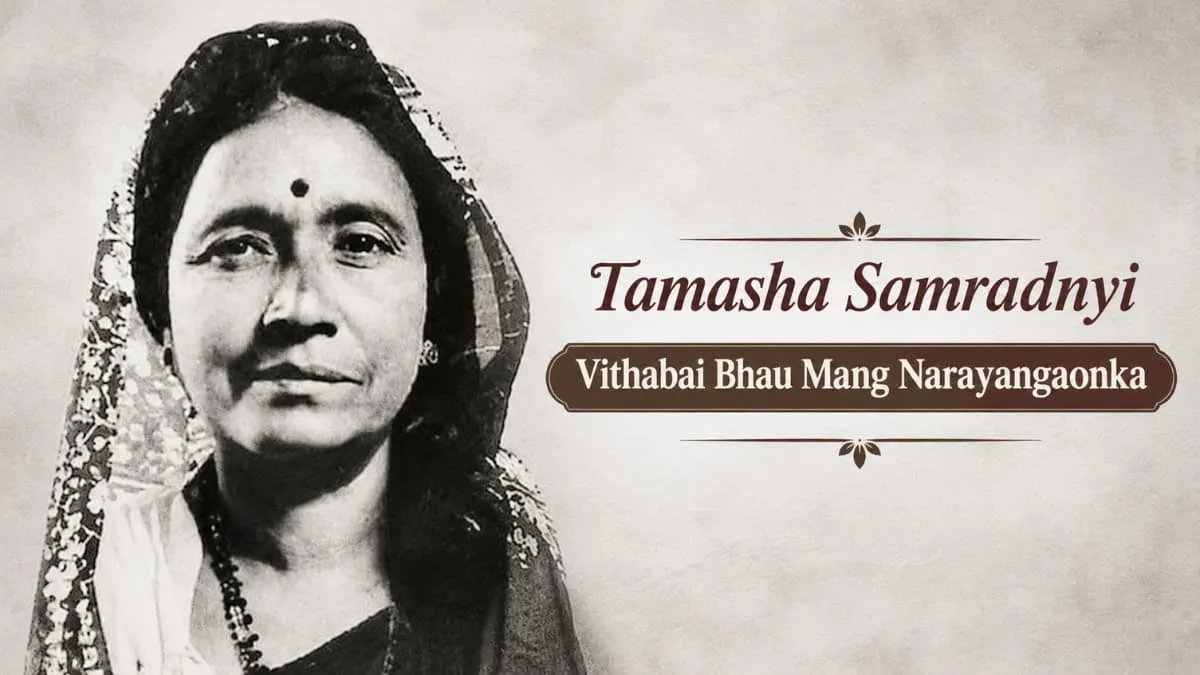
Vithabai Bhau Mang Narayangaonkar was a Indian singer, dancer and folk theatre artist from Maharashtra. She was popularly known as ‘Tamasha Samradnyi’ (Empress of Tamasha), she dedicated her life to Maharashtra's traditional folk theatre and became one of its most respected performers.
She was known for her powerful singing, Lavani performances and remarkable stage presence, she earned recognition for keeping the traditional Tamasha art form alive. Her life was filled with extraordinary performances, personal struggles and dedication to her fellow artists.
Her daughter, Mangala Bansode, who is also a renowned Tamasha artist, has shared several interesting incidents from her mother's life. One such incident, dating back to the 1960s, shows the extraordinary commitment Vithabai had towards her profession.
Who Was Vithabai Bhau Mang Narayangaonkar?
Vithabai was born in 1935 into a family associated with traditional Tamasha performances in Maharashtra. She grew up in an environment where folk music, dance and theatre were an important part of everyday life.
Her grandfather, Narayan Khude, established a travelling Tamasha troupe. The family tradition was later carried forward by her father and other family members through the Bhau-Bapu Mang Narayangaonkar Tamasha Mandal.
Here are some important facts about her early life:
Related Stories
|
Aspects
|
Details
|
|
Full Name
|
Vithabai Bhau Mang Narayangaonkar
|
|
Popular Name
|
Vitha
|
|
Famous Title
|
Tamasha Samradnyi
|
|
Birth Year
|
1935
|
|
Birthplace
|
Maharashtra, India
|
|
Profession
|
Singer, dancer and folk theatre artist
|
|
Traditional Art Form
|
Tamasha
|
|
Associated Dance Form
|
Lavani
|
|
Grandfather
|
Narayan Khude
|
|
Daughter
|
Mangala Bansode
|
|
Family Theatre Group
|
Bhau-Bapu Mang Narayangaonkar Tamasha Mandal
|
|
Joined Theatre Group
|
At the age of 8
|
|
Joined Father's Troupe
|
At the age of 13
|
|
Year of Death
|
2002
|
Vithabai started performing at a very young age. She joined a theatre group when she was just eight years old and became part of her father's troupe at the age of 13. Her talent and stage presence gradually made her a leading name in Maharashtra's folk theatre.
Why Was Vithabai Known as 'Tamasha Samradnyi'?
The title 'Tamasha Samradnyi' means the Empress of Tamasha. Vithabai earned this title because of her outstanding contribution to Maharashtra's traditional folk theatre.
She became popular for combining singing, dancing, acting and storytelling in her performances.
|
Reasons
|
Contribution
|
|
Powerful Singing
|
She was known for her strong voice and traditional folk songs.
|
|
Lavani Performances
|
Her expressive dance movements made her a popular Lavani performer.
|
|
Acting Skills
|
She entertained audiences through acting, expressions and storytelling.
|
|
Stage Presence
|
Her performances attracted large audiences across Maharashtra.
|
|
Leadership
|
She helped carry forward her family's traditional Tamasha troupe.
|
|
Cultural Contribution
|
She dedicated her life to preserving Maharashtra's folk theatre tradition.
|
Her Daughter Mangala Bansode Revealed an Extraordinary Story About Her
One of the most remarkable incidents from Vithabai's life was recalled by her daughter, Mangala Bansode, who also followed her mother's path in traditional folk theatre.
Vithabai’s daughter, Mangala shared an incident from the 1960s when her mother was performing in Shikhar Shingnapur, Maharashtra.
According to her account, Vithabai suddenly went into labour during a performance. She quietly moved behind the stage into a makeshift tent while the other performers continued the show.
After giving birth to her son, Vithabai returned to the stage carrying her newborn baby.
The incident surprised the audience, who had been waiting to see her performance. However, after learning what had happened, people decided to leave and watch her perform another time.
|
Aspects
|
Details
|
|
Incident
|
Vithabai went into labour during a Tamasha performance.
|
|
Location
|
Shikhar Shingnapur, Maharashtra
|
|
Period
|
1960s
|
|
Person Who Shared the Story
|
Her daughter, Mangala Bansode
|
|
What Happened?
|
She moved behind the stage and gave birth to her son.
|
|
What Did She Do Next?
|
She returned to the stage carrying her newborn baby.
|
|
Family Details
|
The child was her seventh of eight children.
|
This incident highlights the extraordinary circumstances in which traditional folk artists sometimes worked. The account is based on her daughter's recollection, not an independently verified stage record.
Vithabai Refused Film Offers to Continue Tamasha
Despite receiving recognition and opportunities outside folk theatre, Vithabai remained committed to her traditional art.
According to her daughter Mangala Bansode, Vithabai received opportunities to work in films, including an offer associated with legendary filmmaker Raj Kapoor.
However, she did not want to leave her Tamasha troupe. The troupe supported around 50 families, and leaving it for a film career could have affected the livelihoods of many people.
|
Aspects
|
Details
|
|
Film Opportunity
|
She reportedly received film offers.
|
|
Notable Name Associated with an Offer
|
Raj Kapoor
|
|
Her Decision
|
She chose to continue performing Tamasha.
|
|
Main Reason
|
Her theatre troupe supported around 50 families.
|
|
Her Priority
|
Supporting traditional folk theatre and its performers.
|
Her decision reflected her commitment to the people who worked alongside her. For Vithabai, Tamasha was not just a performing art but also a livelihood for several families.
Vithabai Performed for Indian Soldiers During the 1962 India-China War
Vithabai's contribution was not limited to village performances and theatre stages. She also performed for Indian soldiers during the 1962 India-China War.
According to her daughter Mangala Bansode, Vithabai travelled to the North-East Frontier Agency (NEFA), an area that largely forms present-day Arunachal Pradesh, to entertain Indian soldiers.
Interestingly, she performed in extremely cold conditions even though she had given birth only three months earlier.
|
Aspects
|
Details
|
|
Event
|
India-China War
|
|
Year
|
1962
|
|
Performance Location
|
North-East Frontier Agency (NEFA)
|
|
Present-Day Region
|
Largely Arunachal Pradesh
|
|
Audience
|
Indian soldiers
|
|
Special Circumstance
|
She had given birth three months earlier.
|
|
Source of Information
|
Daughter Mangala Bansode's recollections
|
Her performances brought traditional entertainment to soldiers stationed far away from their homes.
What Is Tamasha? Understanding Maharashtra's Traditional Folk Theatre
Tamasha is a traditional folk theatre form of Maharashtra. It combines music, dance, acting, comedy and storytelling to entertain audiences.
Lavani is one of the most popular elements of Tamasha. It is performed with energetic movements and music, often accompanied by the dholki.
|
Feature
|
Details
|
|
Art Form
|
Traditional folk theatre
|
|
State
|
Maharashtra
|
|
Main Elements
|
Singing, dancing, acting and storytelling
|
|
Popular Dance Form
|
Lavani
|
|
Musical Instrument
|
Dholki
|
|
Performance Style
|
Live stage performances
|
|
Common Themes
|
Mythology, history, social life and entertainment
|
|
Importance
|
Preserves Maharashtra's traditional folk culture
|
Vithabai played an important role in popularising this art form through her performances.
Awards and Recognition Received by Vithabai Narayangaonkar
Vithabai received recognition for her contribution to Indian folk theatre. Her work helped bring greater attention to Maharashtra's traditional performing arts.
|
Award or Recognition
|
Year/Details
|
|
Sangeet Natak Akademi Award
|
1990
|
|
President's Medal
|
Recognition for her contribution to folk theatre
|
|
Maharashtra Gaurav Award
|
Reported recognition for her cultural contribution
|
|
Tamasha Samradnyi
|
Popular title meaning Empress of Tamasha
|
|
Vithabai Narayangaonkar Lifetime Achievement Award
|
Instituted by the Maharashtra Government in her memory in 2006
|
Vithabai Also Worked for the Welfare of Tamasha Artists
Vithabai understood the difficulties faced by traditional folk performers. Tamasha artists often travelled from one village to another for performances and faced financial insecurity.
She also raised concerns about the need for pension support for traditional folk artists.
|
Area
|
Her Contribution
|
|
Artists' Welfare
|
Raised concerns about the financial difficulties of folk performers.
|
|
Pension Support
|
Worked towards securing pension support for Tamasha artists.
|
|
Traditional Theatre
|
Helped preserve the family's Tamasha tradition.
|
|
Livelihood
|
Supported the performers associated with her troupe.
|
|
Cultural Heritage
|
Contributed to the recognition of Maharashtra's folk theatre.
|
Her efforts highlighted the importance of providing financial security and recognition to artists who preserve traditional Indian performing arts.
The Difficult Final Years of Vithabai's Life
Despite her popularity, Vithabai faced financial difficulties during the later years of her life.
Her family experienced financial problems after she separated from her husband in 1982. She eventually had to close her Tamasha troupe in 1990, the same year she received the Sangeet Natak Akademi Award.
Vithabai passed away in January 2002 following a paralytic attack.
|
Aspects
|
Details
|
|
Separation from Husband
|
1982
|
|
Closure of Tamasha Troupe
|
1990
|
|
Sangeet Natak Akademi Award
|
1990
|
|
Year of Death
|
2002
|
|
Cause of Death
|
Paralytic attack
|
Her final years highlighted the financial insecurity faced by many traditional folk performers despite their contribution to India's cultural heritage.
Vithabai Narayangaonkar Lifetime Achievement Award
To honour her contribution to Maharashtra's traditional folk theatre, the state government instituted the Vithabai Narayangaonkar Lifetime Achievement Award in 2006.
The award recognises senior artists who have made significant contributions to preserving, promoting and developing Tamasha.
|
Aspects
|
Details
|
|
Award Name
|
Vithabai Narayangaonkar Lifetime Achievement Award
|
|
Instituted By
|
Government of Maharashtra
|
|
Year
|
2006
|
|
Named After
|
Vithabai Bhau Mang Narayangaonkar
|
|
Purpose
|
To recognise outstanding contributions to Tamasha and folk theatre
|
|
Beneficiaries
|
Senior folk artists
|
|
Family Connection
|
Her daughter Mangala Bansode has also received this honour.
|
The award keeps Vithabai's contribution alive and encourages new generations to continue Maharashtra's traditional folk theatre.
Conclusion
Vithabai Bhau Mang Narayangaonkar was more than a celebrated singer and dancer. She was an important figure in Maharashtra's cultural history who dedicated her life to traditional folk theatre.
From joining the stage as a child to becoming the 'Tamasha Samradnyi', her journey reflected the dedication and struggles of India's folk artists.
Her daughter Mangala Bansode's recollections provide a personal glimpse into her extraordinary life. Today, Vithabai's name continues to be remembered through her performances, cultural contribution and the lifetime achievement award established in her memory.