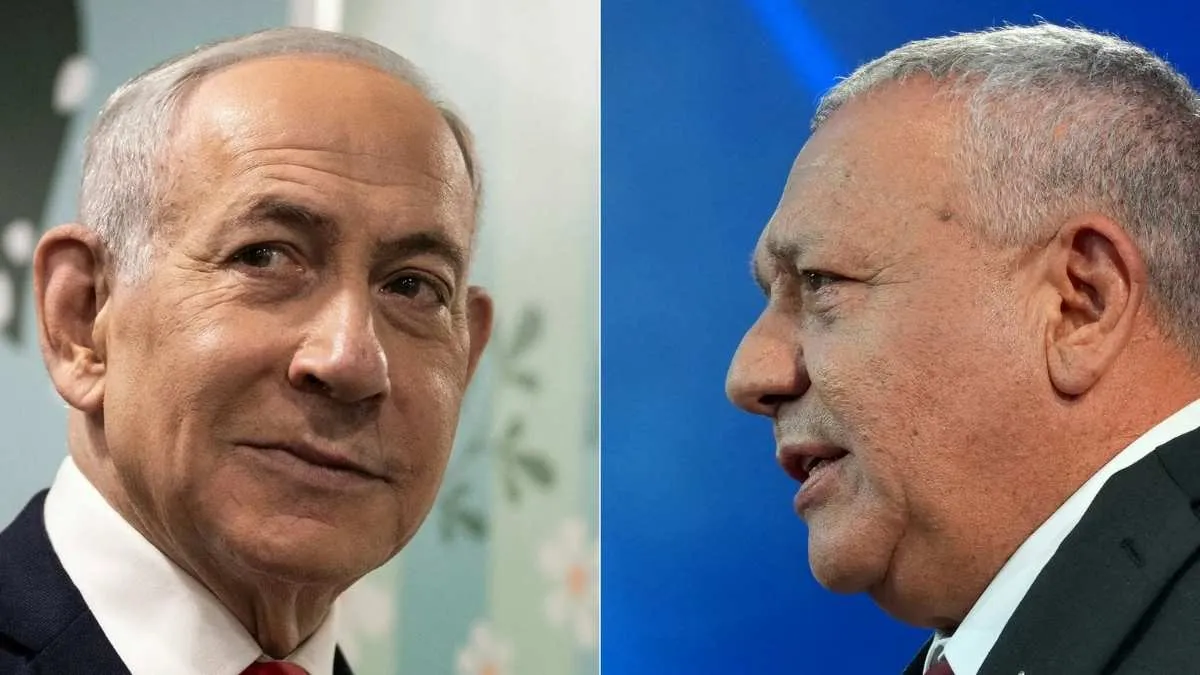
Israel is heading into another uncertain political phase. President Isaac Herzog has chosen former military chief Gadi Eisenkot, one of Prime Minister Benjamin Netanyahu’s strongest political challengers, to attempt to form the country's next government following the inconclusive October 27 elections.
The decision is a setback for Netanyahu, who is seeking to retain power despite his religious-nationalist alliance losing its parliamentary majority.
But removing him from office will not be easy.
After Israel Elections 2026, why was Eisenkot chosen?
Israel's parliament, the Knesset, has 120 members, and a government needs the support of at least 61 lawmakers to secure a majority.
The latest election produced a fragmented result. Netanyahu's Likud party emerged as the largest individual party, winning 27 seats. However, his wider political bloc secured only 53 seats, falling short of the majority required to govern.
Eisenkot's Yashar party won 21 seats, while his broader four-party alliance secured 48.
Two Arab-led parties, meanwhile, secured a record 19 seats, making their support potentially decisive.
During consultations with Herzog, 67 lawmakers recommended Eisenkot for the opportunity to form a government, compared with 46 who backed Netanyahu. This gave the opposition leader the strongest parliamentary backing.
Related Stories
What makes forming an Israeli government difficult?
Eisenkot's biggest challenge is bringing together political groups that do not necessarily agree with one another.
The Arab-led parties have supported his candidature, but several Jewish-led opposition parties remain reluctant to depend on their support. Eisenkot himself has also faced questions over whether he would formally include them in his government.
Another complication involves Israel's ultra-Orthodox parties and the contentious issue of military-service exemptions for religious students. Eisenkot has advocated more equal military obligations, a position that could make negotiations with these parties difficult.
There is also the possibility of a national unity arrangement involving Likud. However, Eisenkot has previously ruled out serving in a government led alongside Netanyahu.
What happens next for PM Netanyahu and Israel?
Eisenkot will receive 28 days to assemble a coalition, with a possible extension of another 14 days.
If he fails, Herzog can give another lawmaker the opportunity. Further unsuccessful attempts could eventually lead to fresh elections.
For now, Netanyahu remains prime minister in a caretaker capacity. However, the pressing question is whether Eisenkot can turn electoral support into a workable parliamentary majority. He has the first opportunity. Whether he can actually take power is another matter entirely.