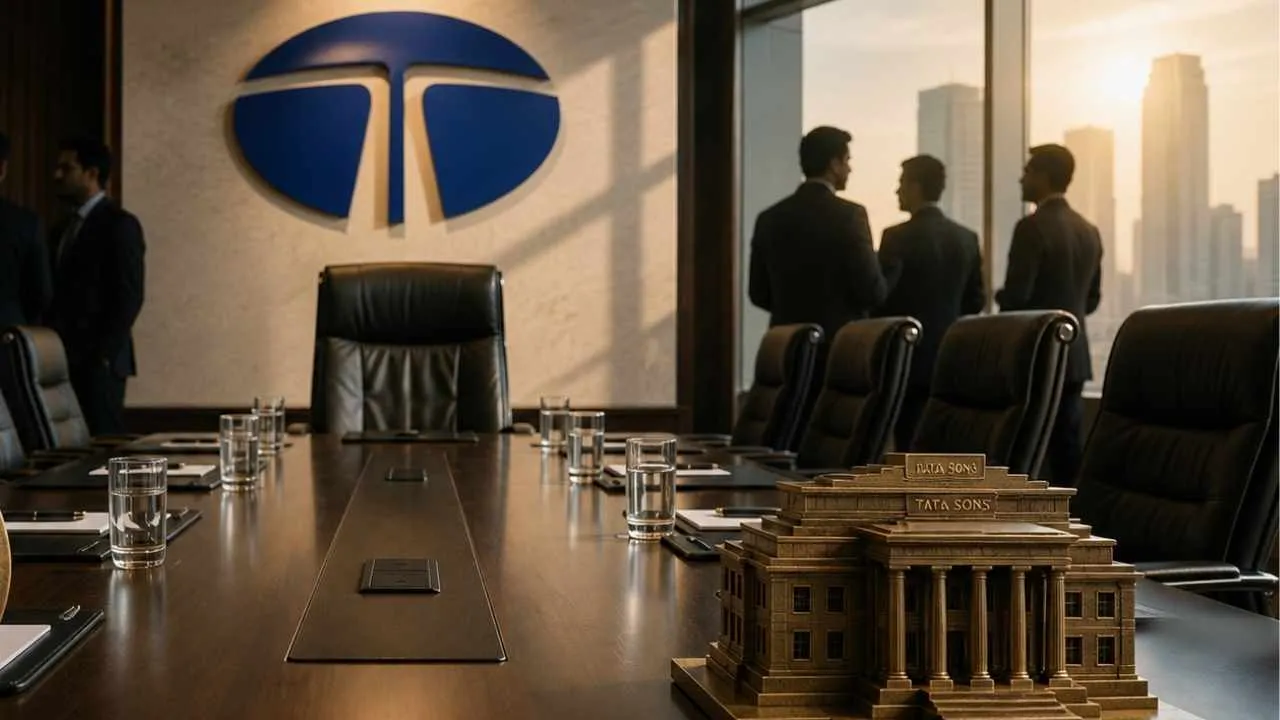
The Tata Sons and Tata Trust dispute is no longer just an inside affair, now it is out in the open. Big names bring bigger lessons for us to learn about corporate affairs and the business environment. The Tata Group leadership dispute has now drawn attention to how a major corporate decision can shape everything. From company stocks to capital, goodwill, and image, everything depends on one decision that is made inside the boardroom, by member's vote.
The Tata Trust issue revolves around the reappointment process of the Executive Chairman, N Chandrasekaran, at Tata Sons.
One single decision teaches us how a different viewpoint between the Tata Sons board and Tata Trusts, the majority shareholder, can make headlines. While the board approved his continuation, a dissenting stance from Tata Trusts raised questions around governance rules and voting validity.
This twist offers a clear view into how leadership decisions are made in large conglomerates. Tata is a company where ownership, trust influence, and board authority must constantly stay in balance, shaping outcomes that impact entire business empires.
What Is The Tata Leadership Dispute?
The Tata leadership has been in the spotlight for quite a few months. Ever since N Chandrasekharan announced he is stepping down and not taking reappointment, investors are keeping a close watch. Something unexpected happened today. The Tata Sons board voted 4-1 in favour of reappointing N Chandrasekaran as Executive Chairman.
This is not the end, Tata Trusts chairman Noel Tata opposed the move, He stated that the decision did not meet required governance approval norms.
What we have to pick from here is, decoding how decisions are validated when there are multiple controlling stakeholders share authority in a large corporate structure.
Understanding Tata’s Unique Ownership Structure
How Boardroom Appointments Normally Work
- Step 1: Proposal of Candidate- A potential candidate is proposed for a leadership role within the company.
- Step 2: Board Discussion- The Board of Directors reviews, discusses, and evaluates the candidate’s suitability.
- Step 3: Board Voting- Board members vote to approve or reject the appointment.
- Step 4: Shareholder or Control Approval- Key shareholders or controlling entities give their consent, depending on company structure.
- Step 5: Final Confirmation- Once approved, the decision is formally confirmed and announced publicly.
- Special Case (Tata Structure)- In Tata’s case, an additional approval layer exists because Tata Trusts hold majority ownership and influence key decisions.
Role Of Boardroom Rules And Veto Power
The big company corporate rules are just about votes and power. They are shaped carefully and framed legally within a framework like Articles of Association and company law.
In the Tata Sons case, certain strategic decisions require explicit approval from Trust nominee directors. This adds an extra layer over the already complicated process.
Now the split between Noel Tata and N Chandrasekharan is visible and evident. A split among the nominees can merge all that is clear into one. This turns approval into a matter of interpretation rather than numbers and votes.
Now here comes the role of governance rules, which ultimately decides whether a resolution stands or stalls. This is why, in complex corporate structures, a simple boardroom majority may not always turn tables into final authority or give approval.
Corporate decisions are guided by legal documents such as Articles of Association. In Tata Sons:
-
Certain decisions require approval from Trust nominee directors
A split vote among nominees can create ambiguity
Governance rules determine whether a decision is valid or not
This is why a simple majority vote inside the boardroom may not always be enough.