Why is Holi known as the Festival of Colours and What is its Significance?
Dive deeper into Holi, the vibrant Festival of Colours! Explore why colours take centre stage and uncover the rich significance of this celebration.
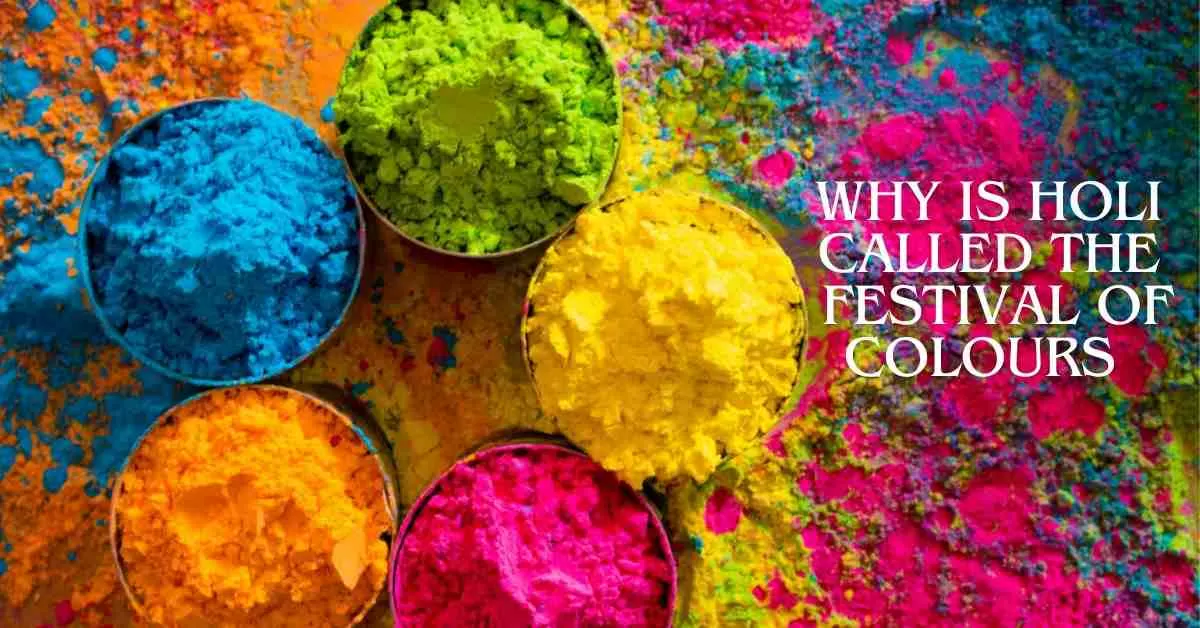
Holi, a vibrant Hindu spring festival, explodes with colour every year. But why is this joyous celebration so synonymous with vibrant hues? Here's a dive into the reasons behind Holi's colourful nickname, the Festival of Colours.
The Tradition of Throwing Colors
The most distinctive feature of Holi is the playful throwing of coloured powders, called "gulal," and water balloons filled with coloured water. Participants get drenched in a kaleidoscope of colours, transforming streets and homes into a scene straight out of a painter's palette.
The colours themselves hold deep meaning. Red represents love and new beginnings, while blue symbolizes Krishna, a revered Hindu deity often associated with Holi. Green signifies spring and new life, and yellow denotes prosperity.
What is the Significance of Throwing Colours on Holi?
Several legends surrounding Holi reinforce the significance of colour. One popular tale tells the story of Prahlad, a devotee of Lord Vishnu, who was saved from his evil father, King Hiranyakashyap, by the trickery of Holika, a demon immune to fire. Holi signifies the triumph of good over evil, with the vibrant colours representing the joy of this victory.
Google Arts and Culture mentions: “Holi marks the onset of Spring. Throwing of colours to each other is the signature of this festival. Therefore, it is often referred to as the Festival of Colours. Mythologically, Holi is associated with the legend of the demon King Hiranyakashyap and his son Prahlad and sister Holika.”
Holi transcends religious boundaries and is a celebration of unity and social harmony. The throwing of colours breaks down social barriers; everyone from young to old, rich to poor, participates in the playful chaos. The colours act as a great equalier, fostering a sense of community and togetherness.
Holi also coincides with the arrival of spring in India. The vibrant colours reflect the blossoming of nature and the renewal of life after the winter months. Google Arts and Culture mentions: “Holi is played in the Spring Season, which is a period between end of winter and advent of summer. In older times or even now also, those people not taking a bath regularly during winter often develop some skin eruptions leading to even severe infections. Also unwanted particle accumulations on the human body happen. This needs rinsing out. The science of using natural colours like turmeric is to cleanse the body and remove unwanted accumulation on the skin.”
While the Hindu festival, Holi transcends religious boundaries. It's a celebration of life, joy, and the beauty of spring, attracting people from all walks of life. The vibrant colours and joyous atmosphere create a sense of universal connection.
In essence, Holi is a multi-layered celebration. It's a time to embrace the beauty of spring, celebrate the victory of good, foster social harmony, seek forgiveness, and revel in the joy of life.
Holika Dahan 2024: Know Date, Time, Significance and Story Behind Choli Holi

Nikhil is a dedicated digital journalist and communications professional with more than five years of experience, currently working within the General Knowledge section at Jagran Josh. He has established himself as a subject matter expert in Finance, Economy, History, Technology, and Trending News, consistently delivering accurate, engaging, and easy-to-read content for a wide global audience.
Over the course of his career, Nikhil has developed deep expertise in crafting informative listicles, viral trending stories. His editorial portfolio also spans finance, historical research, and technology reporting, making him a versatile and well-rounded content professional. Every piece he produces reflects a strong balance between factual accuracy and reader engagement.


-1789560209836_t.webp)