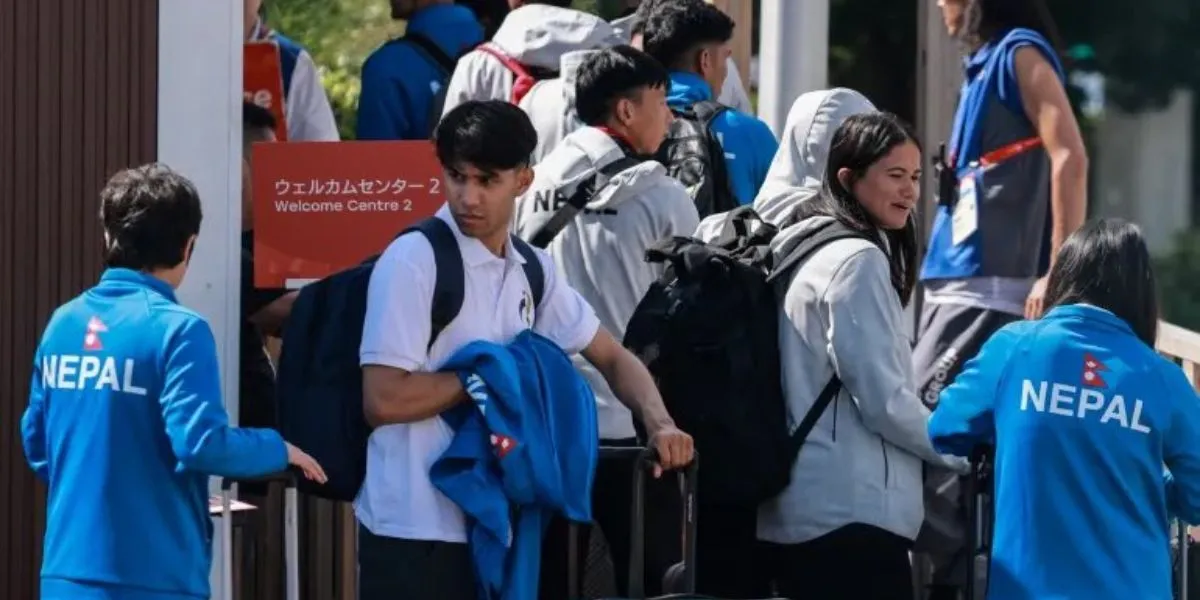
The Asian Games 2026 have taken an unexpected turn even before the competition has fully got underway, with reports of poor accommodation conditions emerging from Japan.
Athletes and officials from several countries have raised concerns over their stay, with complaints ranging from undersized beds and cramped rooms to room allocation. Images have also surfaced on social media, adding to the concerns around the arrangements.
The accommodation concerns have also come alongside challenging weather conditions in the region. Tropical Storm Dujuan is moving towards Japan’s Pacific coast and could strengthen into a typhoon, raising concerns over further disruptions to the Games.
Heavy rainfall has already affected some events, with several competitions facing delays or postponements, while hundreds of athletes were evacuated from their accommodation.
In this article, we will explore what is an Athletes’ Village is, why it is traditionally used during major multi-sport events and why there is no such thing at the Asian Games 2026.
What is an Athletes’ Village?
An Athletes’ Village is a specific area where players and their support staff stay during a multi sport event. Just like the Commonwealth Games 2010, which took place in Delhi, the village covered an area of around 63.5 hectares for accommodation.
The area is well equipped with all the necessary facilities, like food, medical services, transport and other recreational facilities. The idea is to provide all the basic means in an organised manner for athletes from around the world in one place.
Why is there no Athletes’ Village in Asian Games 2026?
Traditionally, the Asian Games have an Athletes’ Village, but it is not the same in this year’s edition. In Aichi-Nagoya, there is no single specific Athletes’ Village, but the accommodation is spread across hotels, temporary container homes and even a cruise ship serving as a floating Athletes’ Village.
The OCA initially planned for around 15,000 athletes and support staff, but the number later rose to more than 17,000, which became a primary reason behind all the chaos.
The decision not to have an Athletes’ Village in Asian Games 2026 can be primarily linked to cost-cutting, as these facilities are not of much use after the event.
Hangzhou 2022 vs Aichi-Nagoya 2026: Athletes’ Accommodation
|
Feature
|
Hangzhou Asian Games 2022
|
Aichi-Nagoya Asian Games 2026
|
|
Athletes’ Village
|
Dedicated, traditional Games Village complex
|
No central Athletes’ Village
|
|
Accommodation Model
|
Centralized Games Village plus satellite villages
|
Distributed across hotels, container units, and a cruise ship
|
|
Capacity
|
Accommodated upto 20,000 people
|
Scaled up from 15,000 to over 17,000 participants
|
|
Special Setup
|
Standard residential buildings
|
Costa Serena cruise ship docked as a floating village
|
|
Temporary Units
|
None used for the main village
|
Container-style temporary villas used for ~2,000 athletes
|
|
Cruise Ship Use
|
None
|
Houses up to 4,000 participants at Kinjo Pier, Nagoya Port
|
|
Locations
|
Main village in Hangzhou with regional satellite sites
|
Spread across Aichi, Tokyo, Shizuoka, Gifu, and Osaka
|
|
Model Reason
|
Centralize housing, dining, and athlete services
|
Reduce costs and avoid underutilized post-Games legacy facilities
|
|
Recent Concerns
|
Minimal accommodation issues
|
Complaints over small rooms, short beds, overbooking, and allocation errors
|
OCA Responds to Accommodation Reports
The OCA and AINAGOC issued a joint statement clarifying the accommodation arrangements for Asian Games 2026.
“Further to incorrect media reports regarding issues in securing accommodation for official Asian Games Participants, the Olympic Council of Asia and the Aichi Nagoya Asian Games Organizing Committee (AINAGOC) can confirm the following:
All the 17,000+ athletes and officials that are registered for the Asian Games before the closing of Entry by Name in July have been provided with Games-appropriate accommodation.
Unless there are exceptional circumstances, no further registrations have been or will be permitted.
The final preparations are all on track and progressing smoothly ahead of what promises to be the most spectacular Asian Games held for generations.”