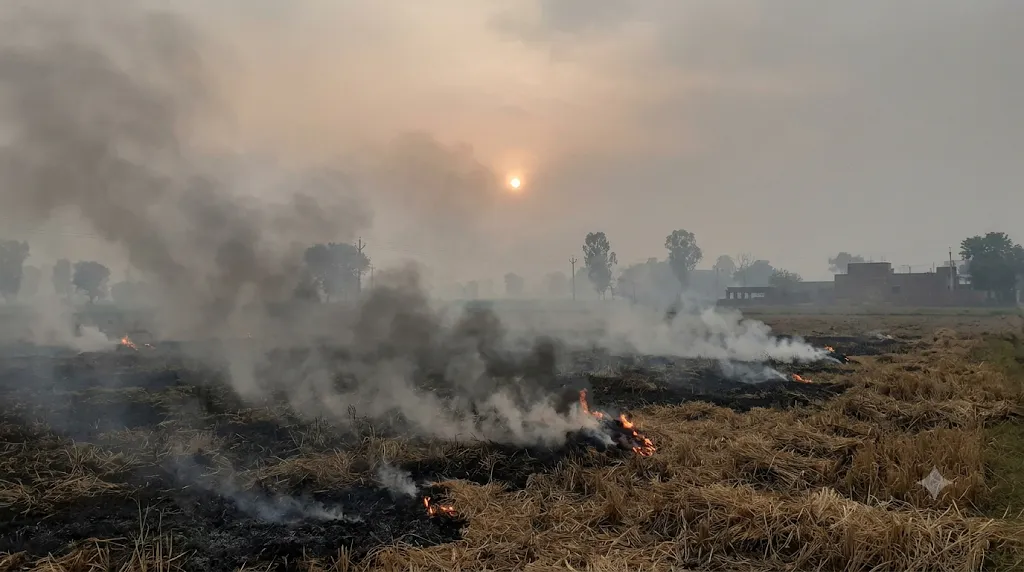
Air pollution has reached alarming levels in several parts of northern India as winter approaches. Bathinda in Punjab has emerged as the country’s most polluted city in a report published on Tuesday, November 3, 2026, after its Air Quality Index (AQI) crossed the 1,100 mark. The sharp rise has also brought attention to other cities in Punjab, Haryana and Uttar Pradesh where air quality readings have reached extremely high levels. Keep reading to read in detail.
Bathinda AQI Crosses 1,100: What Happened?
Bathinda recorded an AQI of around 1,124 in a report published on November 3, 2026. Another report based on ANI data recorded Bathinda’s AQI at 1,018 on the same day. These differences can occur because air quality readings are updated at different times and may come from different monitoring platforms.
Related Stories
India’s Top 10 Most Polluted Cities on November 3, 2026
According to the reported ranking based on November 3 readings, Punjab, Haryana and Uttar Pradesh accounted for all 10 cities.
| Rank | City | State | Reported AQI |
| 1 | Bathinda | Punjab | 1,124 |
| 2 | Sirsa | Haryana | 848 |
| 3 | Rohtak | Haryana | 847 |
| 4 | Faridkot | Punjab | 801 |
| 5 | Jalandhar | Punjab | 760 |
| 6 | Meerut | Uttar Pradesh | 678 |
| 7 | Ghaziabad | Uttar Pradesh | 648 |
| 8 | Sonipat | Haryana | 585 |
| 9 | Hisar | Haryana | 562 |
| 10 | Moradabad | Uttar Pradesh | 545 |
Which States Have the Most Cities in India’s Top 10 Pollution List?
The reported top 10 list shows that northern states account for all the cities featured in the ranking.
| State | Number of Cities in Top 10 | Cities |
| Haryana | 4 | Sirsa, Rohtak, Sonipat, Hisar |
| Punjab | 3 | Bathinda, Faridkot, Jalandhar |
| Uttar Pradesh | 3 | Meerut, Ghaziabad, Moradabad |
| Total | 10 | 10 cities |
Delhi-NCR AQI: How Bad Is the Pollution?
Delhi and its neighbouring cities have also reported high pollution levels. A separate report on November 3 recorded the following readings across parts of Delhi-NCR.
| City | Reported AQI |
| New Delhi | 496 |
| Greater Noida | 493 |
| Noida | 469 |
| Faridabad | 439 |
| Gurugram | 395 |
What Is AQI and How Is It Measured in India?
The Air Quality Index (AQI) is a measure used to communicate the level of air pollution and its possible impact on health. In India, the Central Pollution Control Board (CPCB) uses six categories to classify air quality.
| AQI Range | CPCB Category | Meaning |
| 0–50 | Good | Minimal impact on health |
| 51–100 | Satisfactory | Minor breathing discomfort to sensitive people |
| 101–200 | Moderate | Breathing discomfort to people with lung, asthma, or heart conditions |
| 201–300 | Poor | Breathing discomfort to most people after prolonged exposure |
| 301–400 | Very Poor | Respiratory illness may occur after prolonged exposure |
| 401–500 | Severe | Health effects may occur even among healthy people |
What Are PM2.5 and PM10 Particles?
Particulate matter is one of the major pollutants used in air quality calculations. It consists of tiny solid particles and liquid droplets suspended in the air. PM2.5 particles are particularly concerning because of their small size.
| Pollutant | Full Form | Size | Possible Health Impact |
| PM2.5 | Particulate Matter 2.5 | 2.5 micrometres or smaller | Can travel deep into the lungs and may enter the bloodstream |
| PM10 | Particulate Matter 10 | 10 micrometres or smaller | Can enter the respiratory system and affect the lungs |