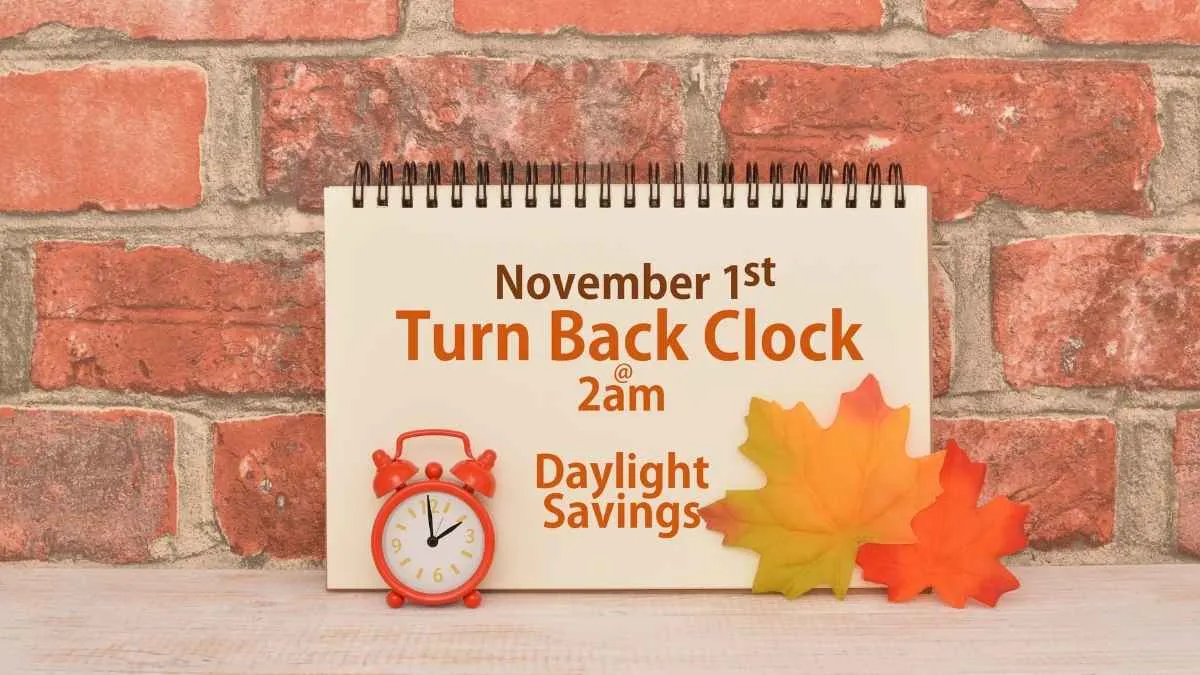
Daylight Saving Time 2026 ended officially at 2:00 a.m. on Sunday, November 1 in US. It means that clocks rolled back to 1:00 a.m. across the United States.
This annual transition brings brighter dawns and darker evenings along with the approaching winter. The clock chage process is overseen by the U.S. Department of Transportation under the Uniform Time Act. The change restores standard time for the colder months.
But medical researchers and sleep physicians continue to push back against the routine. The American Academy of Sleep Medicine also pointed out that switching clocks twice a year harms natural body rhythms and heart health.
Did We Gain or Lose an Hour with Daylight Saving Time 2026 End?
You gained an extra hour of sleep when the clock changed on November 1st. The autumn change requires clocks to fall back from 2:00 a.m. to 1:00 a.m. so the local sixty minute window between 1:00 a.m. and 2:00 a.m. occurs twice in a single night.
Digital gadgets like smartphones and laptops update automatically when Daylight Saving Time starts and ends. But traditional wall clocks and microwave displays still require manual adjustment.
Related Stories
|
Daylight Saving Time Feature
|
Standard Time
(Winter)
|
Daylight Saving Time
(Summer)
|
|
Active Months
|
November to March
|
March to November
|
|
Clock Direction
|
Fall back 1 hour (-1 hr)
|
Spring forward 1 hour
(+1 hr)
|
|
Sunlight Impact
|
Earlier sunrise, earlier sunset
|
Later sunrise, longer evening light
|
|
Health Consensus
|
Matches solar noon and circadian clock
|
Increases chronic sleep disruption
|
When is the Next Clock Change in 2027?
The return to Daylight Saving Time takes place on Sunday March 14 2027 at 2:00 a.m. local time. At that moment clocks will spring forward one hour to 3:00 a.m. And it will cause everyone to lose an hour of sleep.
This schedule of changing clock twice follows the federal Energy Policy Act of 2005 which sets the eight month daylight period from the second Sunday in March to the first Sunday in November.
Which State did not Observe Daylight Saving Time 2026 End?
Two US states do not observe the time change when the entire state falls back. Hawaii and most of Arizona stay on permanent standard time year round alongside overseas territories such as Puerto Rico, Guam, and the U.S. Virgin Islands.
Why the Push for Permanent Time Remains Stalled in US
Public fatigue with biannual clock adjustments has led state legislatures across the country to demand a single, unchanging clock.
While millions adjusted their clocks back one hour this Sunday, legislative pushes to scrap the ritual altogether continue to gain momentum across the country.
Check which 19 US states have approved permanent daylight saving time and why federal approval remains stalled.
Under the Uniform Time Act of 1966, states can opt out of daylight saving time to keep permanent standard time, but they cannot adopt permanent daylight saving time without an act of Congress. The Sunshine Protection Act cleared the House earlier in 2026, but it still waits for action in the Senate. Until federal lawmakers pass the bill, the biannual clock shift stays in place.
Adjusting to darker evenings usually takes about a week. Sleep experts suggest getting outside into the morning light and keeping bedtime routines steady to help your internal clock adjust to winter.