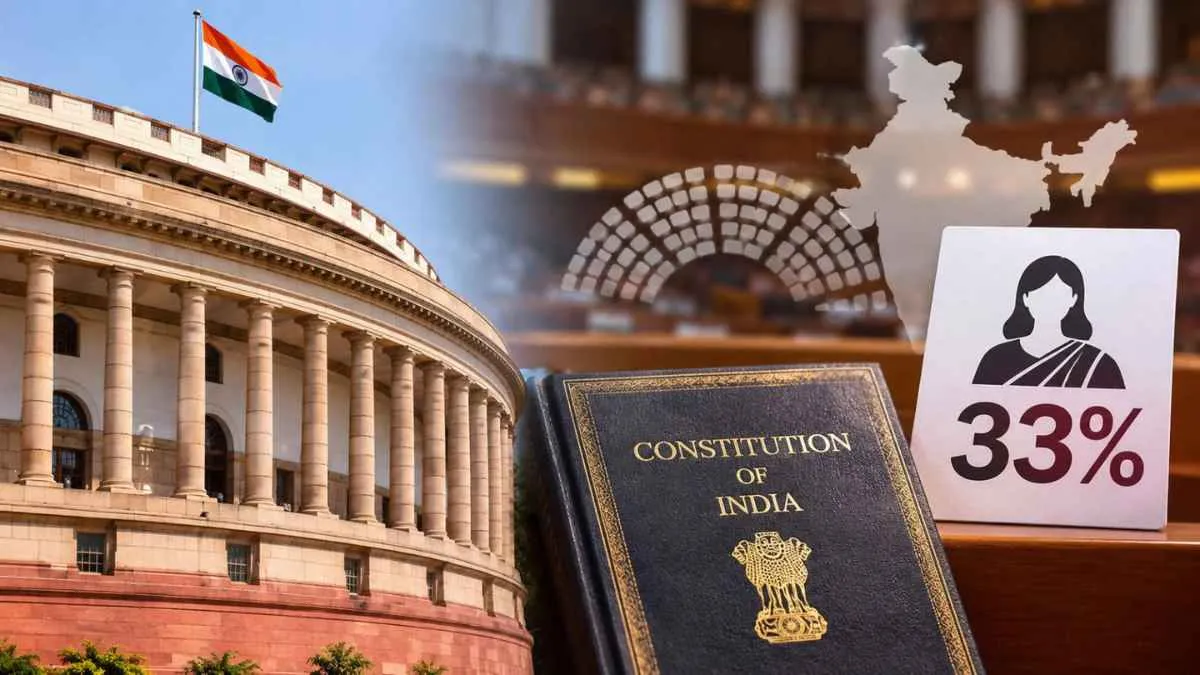
Under the proposed framework of the Delimitation Second Bill, Lok Sabha could expand from 543 seats to 816 seats, according to a state-wise map shared by Union Minister of State for Parliamentary Affairs Arjun Ram Meghwal. It outlines possible changes across states and Union Territories. These figures are provisional and require parliamentary approval.
Uttar Pradesh to Remain Largest State
Uttar Pradesh is forecast to retain the largest share, with its Lok Sabha seats rising from 80 to 120. Meanwhile, Maharashtra’s share would rise from 48 to 72, Bihar’s from 40 to 60 and West Bengal’s from 42 to 63.
In the south, Tamil Nadu’s representation would boost from 39 to 59, Karnataka’s from 28 to 42 and Kerala’s from 20 to 30. Andhra Pradesh is shown with 38 seats, up from 25, while Telangana would rise from 17 to 26.
Related Stories
State-Wise Lok Sabha Seats: Current vs Proposed
|
State/UT
|
Current seats
|
Proposed seats
|
|
Uttar Pradesh
|
80
|
120
|
|
Maharashtra
|
48
|
72
|
|
Bihar
|
40
|
60
|
|
West Bengal
|
42
|
63
|
|
Tamil Nadu
|
39
|
59
|
|
Madhya Pradesh
|
29
|
43
|
|
Karnataka
|
28
|
42
|
|
Gujarat
|
26
|
39
|
|
Rajasthan
|
25
|
38
|
|
Andhra Pradesh
|
25
|
38
|
|
Odisha
|
21
|
31
|
|
Kerala
|
20
|
30
|
|
Telangana
|
17
|
26
|
|
Assam
|
14
|
21
|
|
Jharkhand
|
14
|
21
|
|
Chhattisgarh
|
11
|
16
|
|
Delhi
|
7
|
11
|
Rajasthan’s seats are projected to rise from 25 to 38, Gujarat’s from 26 to 39 and Madhya Pradesh’s from 29 to 43. Odisha would move from 21 to 31, Jharkhand from 14 to 21 and Chhattisgarh from 11 to 16.
Assam would rise from 14 to 21 seats. Arunachal Pradesh, Manipur, Meghalaya and Tripura would each have three, while Nagaland, Mizoram and Sikkim would move from one seat to two. Delhi is projected to rise from seven to 11, Chandigarh and Puducherry from one to two. Ladakh, Lakshadweep and the Andaman and Nicobar Islands would maintain one seat each.
What the Delimitation Proposal Means
The proposed bill envisages an approximately 50% increase in Lok Sabha and state assembly seats. The Lok Sabha’s maximum allowed strength is proposed to rise from 550 to 850, while the limit for state assemblies would increase from 500 to 650.
The exercise would use the 2011 Census to redistribute constituencies within states, while protecting the relative distribution of parliamentary seats among states until 2051. It is also linked to implementing 33% reservation for women in the Lok Sabha and state and Union Territory assemblies before the 2029 general election.
Half-seat calculations have been rounded in some states.
Political Debate Ahead of the passage of Delimitation Bill 2026
The proposal has triggered concerns over political representation. Opposition leaders have questioned its timing and safeguards, while activists and academics have sought more time for public consultation.
The new bills are scheduled for consideration during Parliament’s special sitting from November 30 to December 3. Until Parliament clears them and delimitation is completed, the map remains a projection, not the final seat distribution.
Gender-Wise Distribution under the new Delimitation Bill 2026
Under the Delimitation (Second) Bill, 2026 and the Constitution (132nd Amendment) Bill, 2026, one-third (33%) of all seats in the Lok Sabha, State Legislative Assemblies, and the assemblies of Delhi, Puducherry, and Jammu & Kashmir are reserved for women, thus implementing the 106th Constitutional Amendment Act (Nari Shakti Vandan Adhiniyam). With the legislation expanding overall legislative strength by 50%— taking the Lok Sabha from 543 to roughly 815–816 seats—approximately 271–272 parliamentary seats will be specially reserved for women. While the remaining 544 seats will be gender-open for both men and women. This horizontal quota will be enforced across all categories, meaning 33% of Scheduled Caste seats, 33% of Scheduled Tribe seats, and 33% of general seats are preserved for women, with the specific reserved constituencies rotating after delimitation exercises over a 15-year tenure.
Caste-Wise Distribution under the new Delimitation Bill 2026
For caste and community representation, the bills retain India's present constitutional framework by changing seats solely for Scheduled Castes (SCs) and Scheduled Tribes (STs) in proportion to their given populations in each state based on the 2011 Census. While total seats in each state rise by 50%, the Delimitation Commission will identify the exact number of SC and ST seats—scouting SC seats in areas with high SC population and reserving special ST assembly provisions in northeastern states until 2051.