Thiruparankundram Hill: The 1,048-Foot Historic Hill, Ancient Jain Caves, Karthigai Deepam History & Six Abodes of Lord Murugan
Explore Thiruparankundram Hill in Tamil Nadu, its 1,048-foot height, ancient Jain caves, Murugan temple, Six Abodes and Karthigai Deepam history.
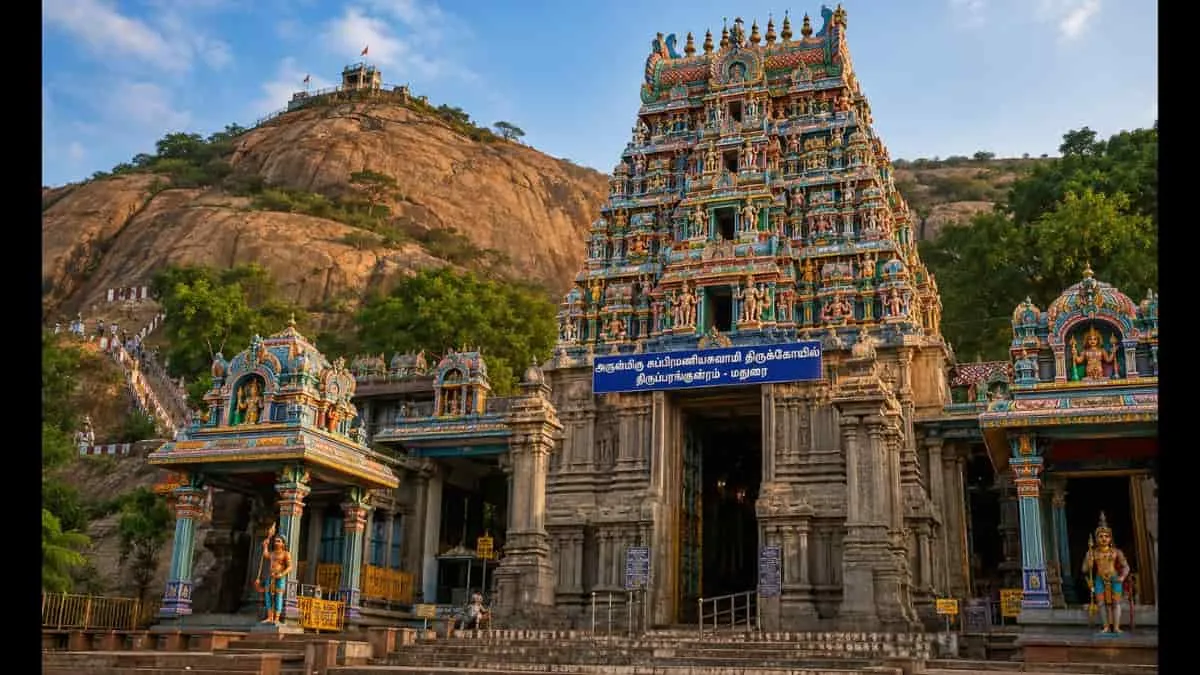
Thiruparankundram Hill, located near Madurai in Tamil Nadu, is one of the most historically important hills in southern India. Rising approximately 1,048 feet above the surrounding region, & it is famous for its ancient rock-cut temple, Jain caves, historical inscriptions and religious heritage.
The hill is particularly known for the Arulmigu Subramaniya Swamy Temple, which is regarded as the first of the six sacred abodes of Lord Murugan, popularly known as Arupadai Veedu.
It is also associated with ancient Jain remains and the Sikkandar Badhusha Dargah.
In November 2026, Thiruparankundram Hill again attracted national attention because of the Karthigai Deepam controversy. The Supreme Court issued directions concerning the lighting of the ceremonial lamp at a stone pillar known as Deepathoon.
Here is everything you need to know about Thiruparankundram Hill, including its location, height, ancient Jain caves, temple history, Karthigai Deepam and interesting facts.
Where is Thiruparankundram Hill located?
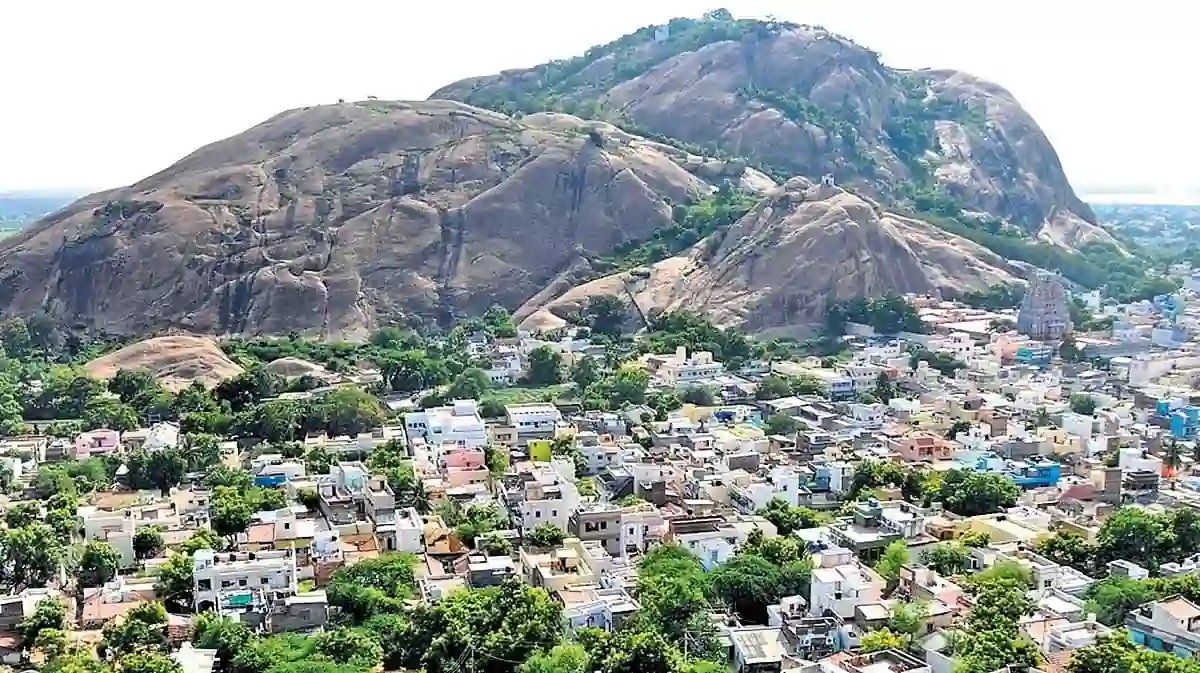
Thiruparankundram Hill is situated in the Madurai district of Tamil Nadu, approximately 8 km from Madurai city. It is an important historical and geographical landmark in southern India.
| Aspect | Details |
| Name | Thiruparankundram Hill |
| Location | Thiruparankundram |
| District | Madurai |
| State | Tamil Nadu |
| Country | India |
| Approximate height | 1,048 feet |
| Famous temple | Arulmigu Subramaniya Swamy Temple |
| Main deity | Lord Murugan |
| Historical remains | Jain caves, rock-cut beds and inscriptions |
| Famous festival | Karthigai Deepam |
| Archaeological authority | Archaeological Survey of India (ASI) |
Why Is Thiruparankundram Hill Famous?
Thiruparankundram Hill is famous for its ancient temple, archaeological remains and historical importance. It contains several structures that reflect the region's different cultural and religious traditions.
| No. | Important Feature | Why Is It Famous? |
| 1 | Murugan Temple | Considered the first of the six abodes of Lord Murugan |
| 2 | Jain Caves | Contain ancient Jain beds and archaeological remains |
| 3 | Panchapandava Beds | Rock-cut sleeping platforms associated with Jain monks |
| 4 | Brahmi Inscriptions | Provide evidence of ancient writing traditions |
| 5 | Rock-Cut Architecture | Reflects the early temple-building traditions of Tamil Nadu |
| 6 | Deepathoon | Stone pillar associated with the Karthigai Deepam dispute |
| 7 | Sikkandar Badhusha Dargah | A Muslim religious site near the hilltop |
Thiruparankundram Hill and Its Ancient Jain Caves
One of the most interesting features of Thiruparankundram Hill is its ancient Jain heritage. The western slope contains natural caverns and rock-cut beds associated with Jain monks.
What Are Panchapandava Beds?
Panchapandava beds are ancient sleeping platforms carved into natural rock surfaces. These structures are associated with Jain monks who used caves and rocky shelters for meditation and resting.
The name Panchapandava is traditionally associated with the five Pandavas of the Mahabharata.
| Particulars | Details |
| Name | Panchapandava Beds |
| Location | Thiruparankundram Hill |
| Associated tradition | Jainism |
| Structure | Rock-cut sleeping platforms |
| Purpose | Resting places for Jain monks |
| Archaeological importance | Evidence of ancient Jain activities |
What Is the Importance of Brahmi Inscriptions?
The Jain caves at Thiruparankundram also contain a short inscription in the Brahmi script.
Brahmi is one of the oldest known writing systems used in ancient India. Such inscriptions help historians understand the language, society and religious activities of earlier periods.
| Feature | Details |
| Script | Brahmi |
| Location | Jain cave area |
| Historical importance | Provides evidence of ancient writing |
| Study area | Ancient Indian languages and history |
Did You Know: Thiruparankundram Hill is known for its ancient Jain caves, Panchapandava beds and Brahmi inscription.
Thiruparankundram Murugan Temple: What is the History and Significance?
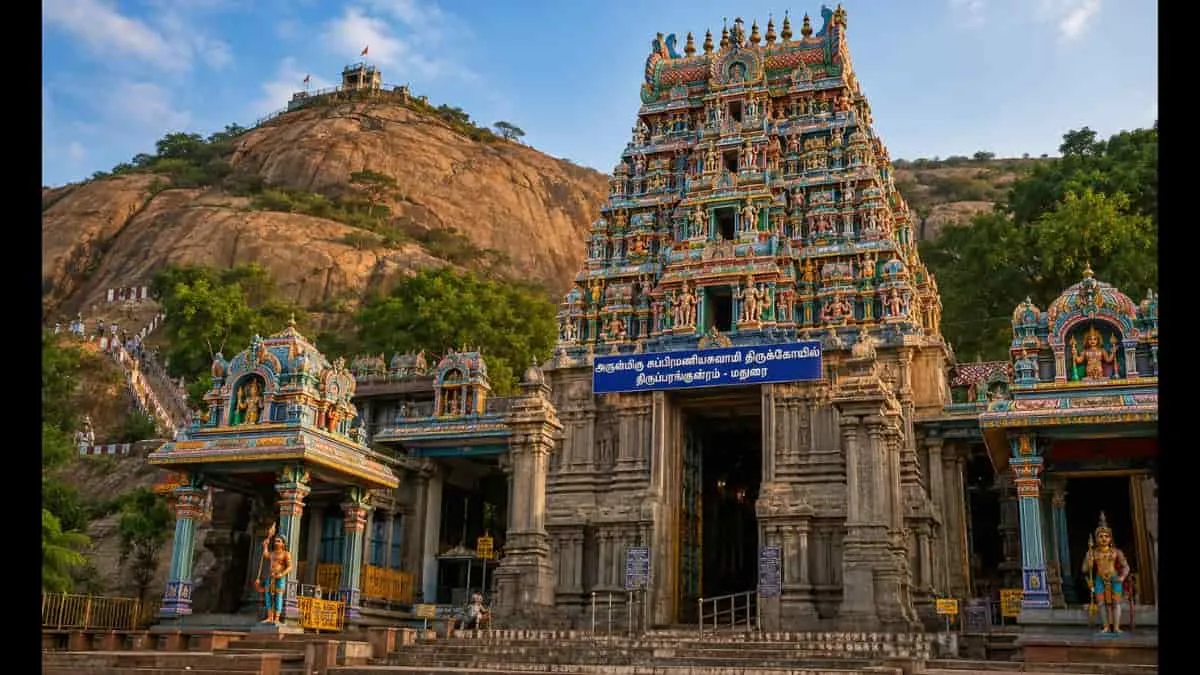
The Arulmigu Subramaniya Swamy Temple is one of the most famous temples dedicated to Lord Murugan in Tamil Nadu.
It is considered the first among the six sacred abodes of Lord Murugan. The temple is particularly known for its rock-cut architecture, which reflects the artistic and architectural traditions of the early Pandya period.
According to Hindu tradition, Lord Murugan married Goddess Deivanai at Thiruparankundram after defeating the demon Surapadman.
The temple's history is also connected with ancient Tamil literature. Its importance is mentioned in works such as:
-
Tirumurukarruppatai
-
Paripadal
-
Akananuru
-
Kalithogai
-
Madurai Kanchi
The Tamil Nadu Hindu Religious and Charitable Endowments Department (HR&CE) also identifies Thiruparankundram as the first of the six abodes of Lord Murugan.
Thiruparankundram Murugan Temple: The First of Six Abodes
The Arulmigu Subramaniya Swamy Temple is one of the most famous temples dedicated to Lord Murugan in Tamil Nadu.
It is considered the first of the six sacred abodes of Lord Murugan, popularly known as Arupadai Veedu.
| Particulars | Details |
| Temple name | Arulmigu Subramaniya Swamy Temple |
| Location | Thiruparankundram, Madurai |
| State | Tamil Nadu |
| Main deity | Lord Murugan |
| Temple type | Rock-cut temple |
| Historical association | Early Pandya period |
| Religious significance | First of the Six Abodes of Lord Murugan |
| Associated goddess | Goddess Deivanai |
According to Hindu tradition, Lord Murugan married Goddess Deivanai at Thiruparankundram after defeating the demon Surapadman.
The temple is also associated with the ancient Tamil literary work Tirumurukarruppatai, which describes the importance of Lord Murugan.
What Are the Six Abodes of Lord Murugan (Arupadai Veedu)?
The six sacred abodes of Lord Murugan are known as Arupadai Veedu in Tamil. These temples are located in different parts of Tamil Nadu and are associated with important events in the traditional stories of Lord Murugan.
List of Six Abodes of Lord Murugan
| No. | Temple Name | Location | Important Significance |
| 1 | Thiruparankundram | Madurai | Associated with the marriage of Lord Murugan and Goddess Deivanai |
| 2 | Tiruchendur | Thoothukudi | Associated with the victory over demon Surapadman |
| 3 | Palani | Dindigul | Famous for Lord Dhandayuthapani |
| 4 | Swamimalai | Thanjavur | Associated with Lord Murugan explaining the meaning of Om to Lord Shiva |
| 5 | Tiruttani | Tiruvallur | Associated with peace and the marriage with Goddess Valli |
| 6 | Pazhamudircholai | Madurai | Associated with Lord Murugan and the Tamil poet Avvaiyar |
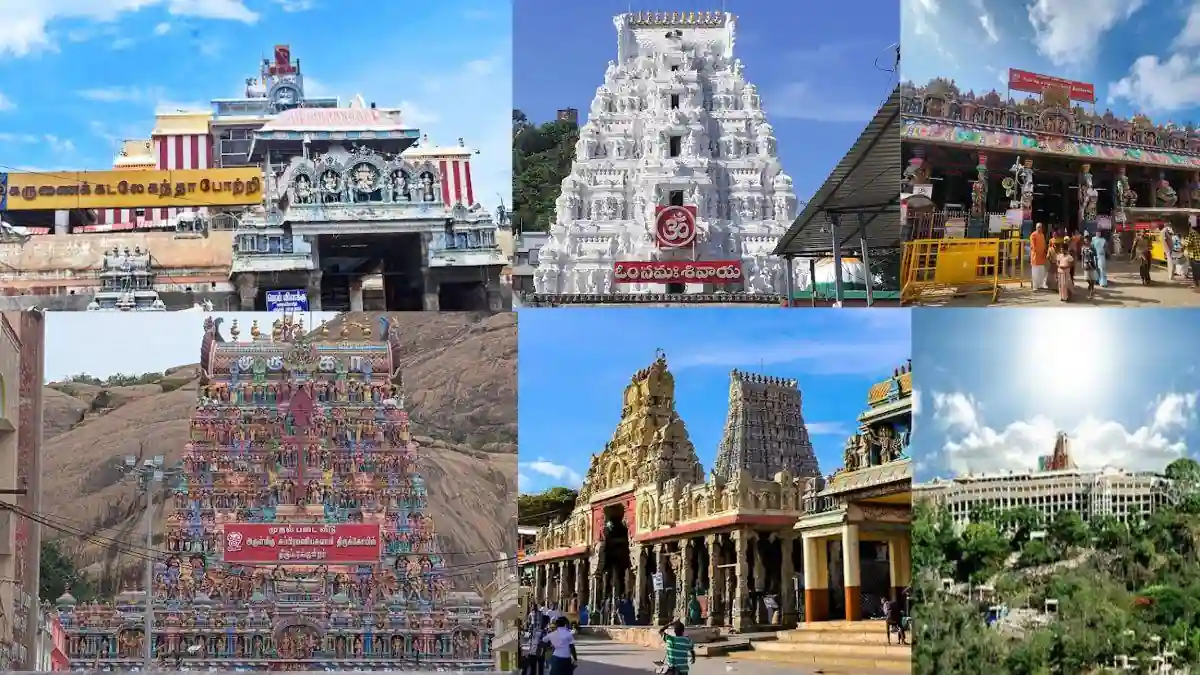
Important GK Fact: Thiruparankundram is the first abode, while Pazhamudircholai is the sixth abode of Lord Murugan.
What Is Karthigai Deepam and Why Was Thiruparankundram in the News in 2026?
Karthigai Deepam is an important festival of lights celebrated mainly in Tamil Nadu. It is observed during the Tamil month of Karthigai, generally falling in November or December.
The festival became a major news topic in November 2026 because of a dispute over lighting the ceremonial lamp at a stone pillar called Deepathoon on Thiruparankundram Hill.
What Is Deepathoon?
| Aspects | Details |
| Name | Deepathoon |
| Meaning | Stone pillar associated with a ceremonial lamp |
| Location | Thiruparankundram Hill |
| Nearby landmark | Sikkandar Badhusha Dargah |
| Main association | Karthigai Deepam |
| Importance | Centre of the 2026 lamp-lighting dispute |
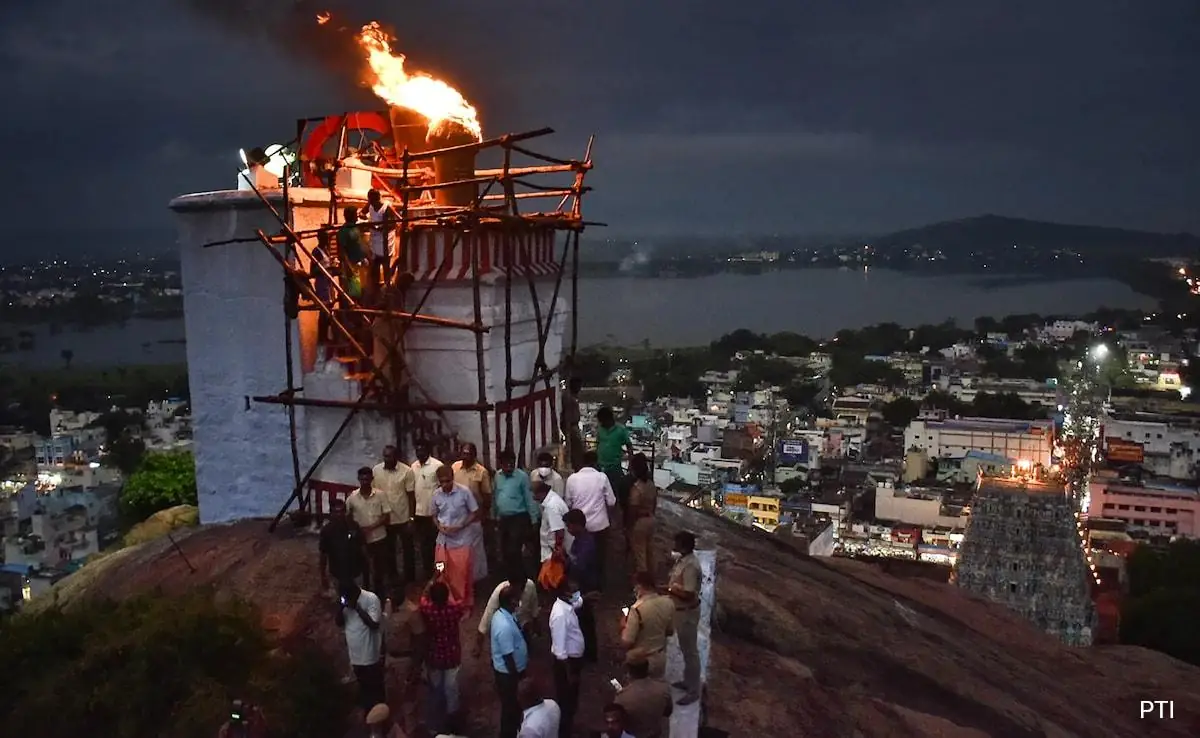
Thiruparankundram Karthigai Deepam Dispute: Important Dates
| Date | Important Development |
| December 1, 2025 | A single-judge bench of the Madras High Court permitted lighting the lamp at Deepathoon. |
| January 6, 2026 | A division bench of the Madras High Court upheld the directions. |
| November 20, 2026 | The Supreme Court permitted the lighting of the lamp at Deepathoon on November 24 as a one-time arrangement. |
| November 24, 2026 | The lamp was lit at the customary Uchipillaiyar Mandapam but not at the disputed Deepathoon. |
| November 27, 2026 | The Supreme Court issued fresh directions for lighting the lamp at Deepathoon on November 28. |
| November 28, 2026 | The Karthigai Deepam was lit at Deepathoon under security arrangements. |
The Supreme Court appointed two retired Madras High Court judges, Justice S. Vaidyanathan and Justice V. Parthiban, as joint receivers. It also directed the CRPF to provide security at the hill.
The court's interim directions should not be confused with a final determination of all historical, property or religious claims concerning the hill.
Archaeological Importance of Thiruparankundram Hill
The Archaeological Survey of India recognises several archaeological remains on Thiruparankundram Hill as centrally protected monuments.
| No. | Archaeological Remains | Historical Importance |
| 1 | Caverns with Panchapandava Beds | Evidence of ancient Jain activities |
| 2 | Jain Beds | Associated with Jain monks |
| 3 | Rock-Cut Cave | Reflects ancient rock-cut architecture |
| 4 | Ancient Inscriptions | Provide information about early writing traditions |
The archaeological protection notifications mentioned in the relevant court record date back to 1908 and 1923.
The protected hillock area referred to in the proceedings measures approximately 172.70 acres.
What Is the Historical Connection Between Thiruparankundram and Sikkandar Malai?
Thiruparankundram Hill is also associated with the Sikkandar Badhusha Dargah, a Muslim religious site located near the hilltop.
The hill is known by different historical names, including Skandamalai and Sikandar Malai.
| Name | Historical or Cultural Association |
| Thiruparankundram | Commonly used geographical name |
| Skandamalai | Associated with Skanda or Lord Murugan |
| Sikandar Malai | Name used in Muslim historical traditions |
| Thiruparankundram Hill | Known for its archaeological and cultural heritage |
The hill's history includes archaeological remains associated with Jain traditions and places of worship connected with other religious communities.
10 Interesting Facts About Thiruparankundram Hill
| No. | Interesting Fact |
| 1 | Thiruparankundram Hill is located in Madurai district of Tamil Nadu. |
| 2 | It rises approximately 1,048 feet above the surrounding region. |
| 3 | It is famous for the Arulmigu Subramaniya Swamy Temple. |
| 4 | The temple is regarded as the first of the Six Abodes of Lord Murugan. |
| 5 | The six sacred abodes are known as Arupadai Veedu. |
| 6 | The hill contains ancient Jain caves and rock-cut beds. |
| 7 | The Jain cave area has a short inscription in Brahmi script. |
| 8 | The hill is associated with the names Skandamalai and Sikandar Malai. |
| 9 | Deepathoon became the centre of the Karthigai Deepam dispute in 2026. |
| 10 | The Karthigai Deepam was lit at Deepathoon on November 28, 2026. |
Conclusion
Thiruparankundram Hill is an important historical and geographical landmark in Tamil Nadu. Its 1,048-foot height, ancient Jain caves, Panchapandava beds, Brahmi inscriptions and rock-cut temple make it a valuable part of India's cultural heritage.
The hill is also famous for the Arulmigu Subramaniya Swamy Temple, regarded as the first of the six abodes of Lord Murugan. Its Karthigai Deepam developments in November 2026 brought further attention to this historic location.

Prabhat Mishra is a Subject Matter Expert and digital journalist with an extensive background in the competitive exam landscape and over 4 years of experience in education, national and international news, and current affairs. Over his tenure with top knowledge platforms like Mentorship India, IAS BABA, IAS SARTHI, and now Jagran Josh, he has a deep understanding of government exams like UPSC and State PCS, including UP and Bihar, as he has already qualified for the UPPCS 2022 Mains and Bihar 68th Mains. With his core expertise in history, polity, geography & current affairs, he specialises in creating well-researched, aspirant-centric content and simplifying complex topics for competitive examinations.