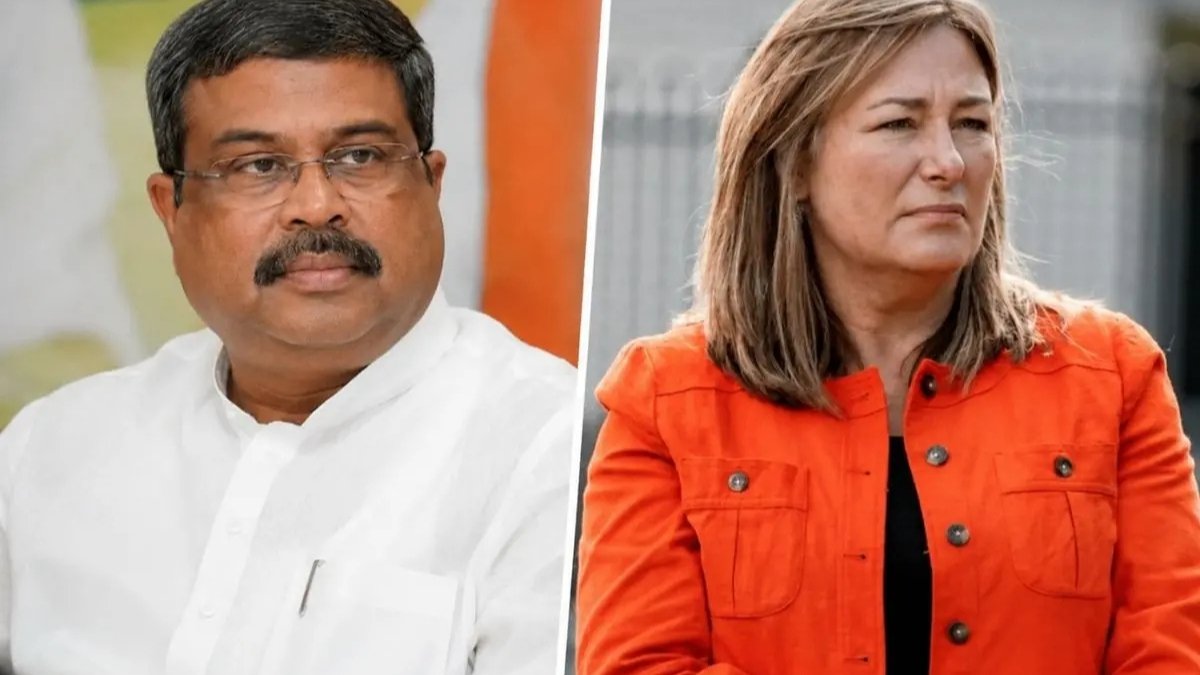
Two education ministers in major democracies left their posts within 48 hours of each other. Dharmendra Pradhan resigned as the Union Education Minister of India on July 25 after a week of students protests over exam paper leaks.
Just two days earlier on July 23 Yvette Berry also submitted her resignation and stepped down as the Education Minister of Australia’s Capital Territory (ACT).
Both exits from the role of Education ministry happened almost together but official statements show that the reasons behind them were completely different.
Why did Dharmendra Pradhan Resign as India’s Education Minister?
Dharmendra Pradhan handed his resignation to the Prime Minister after large student protests broke out across Delhi and other cities over leaks in the NEET UG entrance exam.
President Draupadi Murmu accepted his resignation and the Cabinet Minister Pralhad Joshi became the new Education Minister of India following his exit.
Why did Australia’s ACT Education Minister Resign?
ACT Chief Minister Andrew Barr accepted Yvette Berry's resignation in Australia after a report by the ACT Integrity Commission on a school construction contract.
The investigation found that Berry's former chief of staff and a senior official acted dishonestly to help a labour union during the bidding process.
The commission clearly stated that Berry did no personal wrong but she resigned because ministers are held responsible for the actions of their staff.
Comparing the Two Education Ministers Resignations
Both cases involved top education officials leaving office taking moral responsibilities. But the moral issues driving their decisions were completely different.
|
Feature
|
Dharmendra Pradhan Resignation in India
|
Yvette Berry Resignation in Australia
|
|
Main Reason
|
Public protests over national exam leaks
|
Official report on a school building contract
|
|
Main Issue
|
Exam security and student anger
|
Corruption by ministerial staff
|
|
Official Finding
|
Direct political accountability
|
Cleared of personal wrongdoing
|
|
Outcome
|
Pralhad Joshi appointed to the role
|
Exit accepted under code of conduct
|
What These Resignations Tell Us About Governance
These two political accounts show how different democratic systems handle public pressure and office mistakes.
If we talk about India then public trust in large national tests is crucial. When systems fail political leaders had to face immediate pressure and step down.
Under traditional ministerial rules of Australia on the other hand, leaders often resign when their close staff break code of conduct rules no matter if the leader was directly involved or not.
So both resignations as Education ministers proves that how important transparency and public trust remain in managing government education systems.