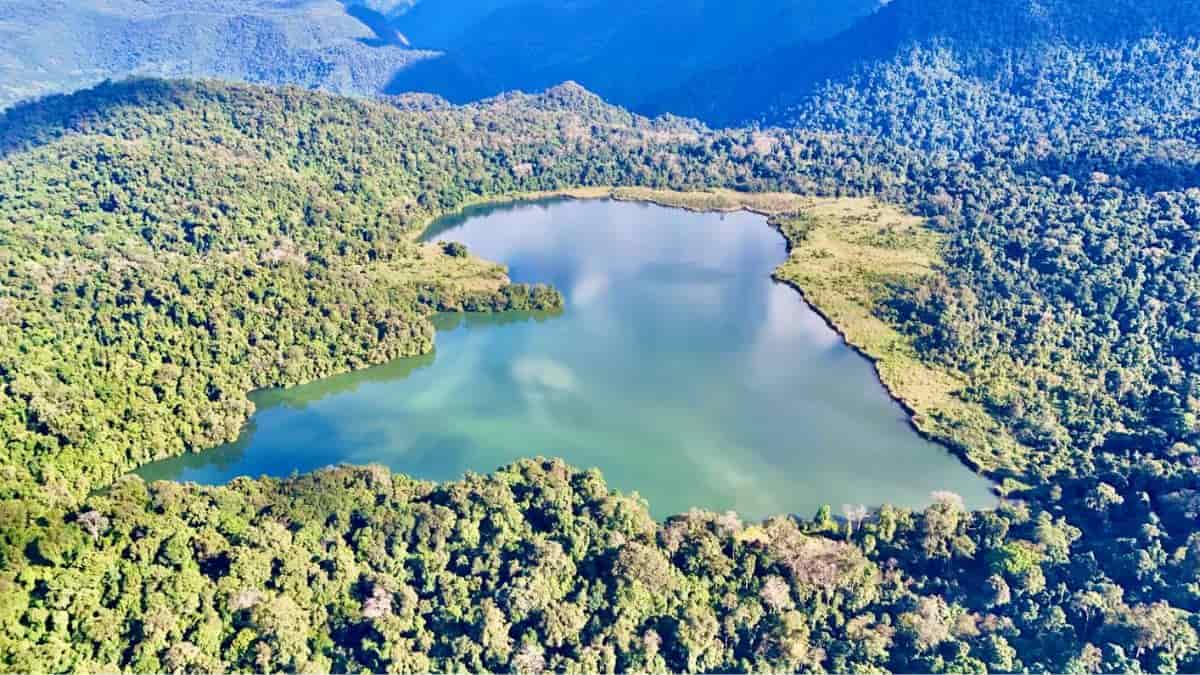
In the conservation of wetlands, India achieved another milestone on August 03, 2026. The Ministry of Environment, Forest and Climate Change (MoEFCC) announced that Glaw Lake in Arunachal Pradesh has been designated as the 101st Ramsar Site of India.
This is a historic achievement for India because Glaw Lake is the first Ramsar site in Arunachal Pradesh.
This announcement was made by the Union Environment Minister, Bhupender Yadav, who has highlighted India’s commitment toward the protection of wetlands, biodiversity, water resources, and climate security.
Learn about its location, biodiversity, importance, and key facts in this GK article.
Glaw Lake: Key Highlights
|
Feature
|
Details
|
|
Wetland Name
|
Glaw Lake
|
|
State
|
Arunachal Pradesh
|
|
Ramsar Site Number
|
101st in India
|
|
State's First Ramsar Site
|
Yes
|
|
Type
|
Freshwater Lake
|
|
Location
|
Kamlang Tiger Reserve & Wildlife Sanctuary
|
|
Region
|
Eastern Himalayas
|
|
Declared On
|
August 3, 2026
|
|
Announced By
|
Union Environment Minister Bhupender Yadav
|
Where is Glaw Lake Located?
Glaw Lake is located inside the Kamlang Tiger Reserve and Wildlife Sanctuary in Arunachal Pradesh.
It is:
-
Located in the Eastern Himalayan region
It is fed by perennial mountain streams
It is also surrounded by dense forests
It is one of the most ecologically rich freshwater wetlands in Northeast India
Why is Glaw Lake Important?
Glaw Lake is considered a biodiversity hotspot because it supports a wide variety of plants and wildlife in Arunachal Pradesh.
Rich Biodiversity
According to the Ministry of Environment:
-
More than 150 tree species
-
Around 49 orchid species
-
Dense Himalayan forests
-
Rich freshwater ecosystem
-
Habitat for numerous birds, mammals, insects, and aquatic organisms
Why is Glaw Lake designated as a Ramsar site in India?
Glaw Lake is designated as a Ramsar Site in India because of the following criteria, which meet the international ecological values, which are:
-
It supports exceptional biodiversity in this region
-
It also conserves freshwater ecosystems
-
It helps in regulating the climate of this region
-
It also maintains groundwater and water resources and water quality
-
It also has a habitat for wildlife
-
Encourages sustainable livelihoods for nearby communities
India's Ramsar Journey
India has rapidly expanded its Ramsar network over the last decade.
|
Year
|
Number of Ramsar Sites
|
|
2014
|
26
|
|
August 2026
|
101
|
This growth reflects India's increasing efforts toward wetland conservation and ecological restoration.
Why are wetlands important in India?
Wetlands play an important role by improving water quality, controlling floods, and supporting rich biodiversity.
With all these, they also provide several environmental and economic benefits.
The environmental benefits that wetlands provide are the following:
-
Freshwater storage
-
Reduces flooding
-
Refill the groundwater
-
It also improves the water quality
-
It also helps to absorb carbon dioxide
-
It also supports biodiversity
It also gives economic benefits that are:
-
In fisheries
-
Agriculture
-
Tourism
-
Livelihoods for local communities
-
Scientific research
-
Nature education
Interesting Facts About Glaw Lake
-
Glaw Lake is recognised as the first Ramsar Site of Arunachal Pradesh, and it is the 101st Ramsar Site of India.
-
It is located inside the Kamlang Tiger Reserve.
-
IT supports more than 150 varieties of trees.
-
About 49 orchid species are grown in these wetland areas
-
It is located in the Eastern Himalayas region
Did you know
|
The Glaw Lake, which is recognised as the first Ramsar Site of Arunachal Pradesh and the 101st Ramsar Site in India, is making major steps toward environmental conservation.