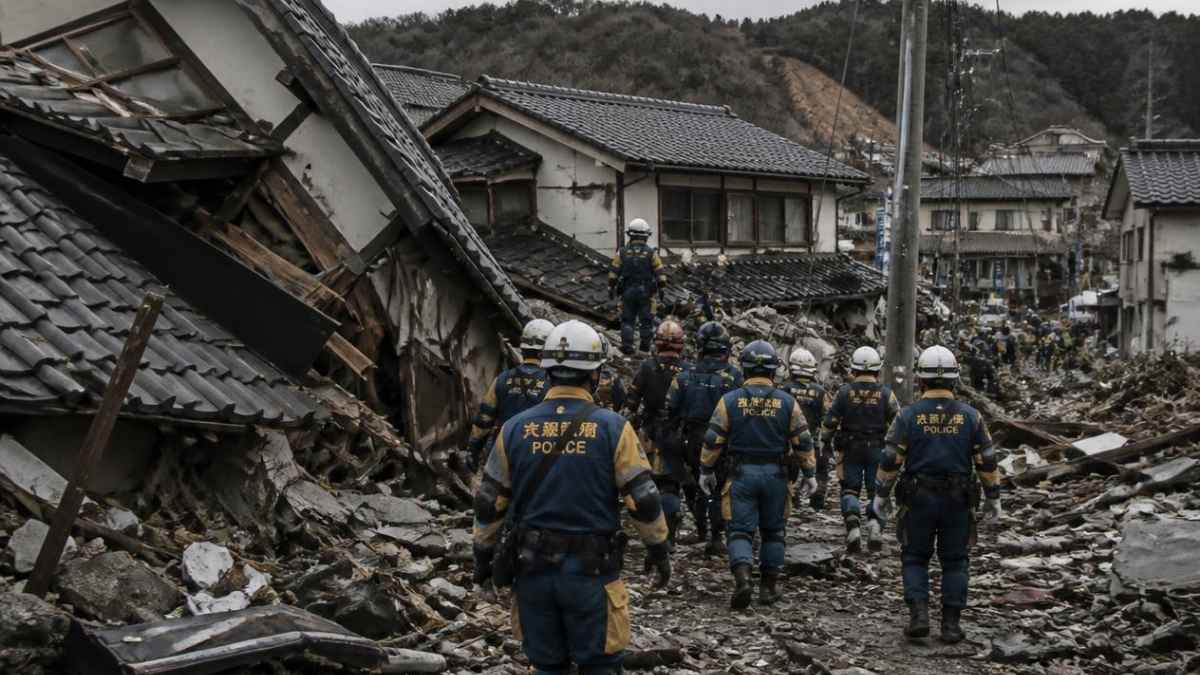
A 7.1 magnitude earthquake hit Kumamoto Prefecture on Japan's southern island of Kyushu at 4:27 p.m. JST on July 28, 2026.
Reports from the Japan Meteorological Agency (JMA) show the tremor started just 10 kilometres below the surface of earth. Prime Minister Sanae Takaichi in a live broadcast said that rescue teams were currently checking reports of cracked roads, collapsed walls and power failures.
This latest Japan earthquake today is registered as the highest level 7 earthquake in 2026 on the country's local Shindo shaking scale. It now leaves residents across Kyushu preparing for a series of secondary tremors.
Damage Reports of 7.1 Magnitude Earthquake in Japan
The ground shook heavily across central Kyushu in Japan with the worst impact centred in Kumamoto Prefecture. Japan's main news broadcaster NHK showed images of damaged shop fronts in Kashima Town and cracks running along regional roads.
Power went out for over 48,000 homes and officials temporarily grounded flights at Kumamoto Airport to inspect the runways.
Emergency warnings have been sent to phones across seven prefectures on the island. Power companies also checked nearby energy facilities right after the shaking stopped. And they confirmed that nuclear power plants in the region including the Sendai plant in Kagoshima and the Genkai plant in Saga kept running normally without any safety issues.
Why Kyushu Faces More Strong Aftershocks
The main reason Kyushu expects more tremors comes down to how close the earthquake was to the ground surface.
This 7.1 magnitude earthquake cracked rock along the Beppu Shimabara fault zone instead of happening deep underwater off the coast. It led to a series of active cracks running right under the land in central Kyushu later on.
| Important Earthquake Fact | Details | What It Means for Residents |
| Fault Zone | Futagawa Fault System | The ground slipped along active inland fault lines under towns. |
| Quake Depth | 10 kilometres (Shallow) | Shaking stays strong on the surface instead of dying out deep underground. |
| Fault Motion | Strike-Slip Shift | Rocks ground past each other sideways, putting extra stress on nearby land. |
When a shallow earthquake snaps the rock under a town the broken ground takes time to settle back into place.
Scientists from the JMA and the United States Geological Survey (USGS) explain that when the ground shifts to relieve this new pressure, smaller quakes will keep popping up nearby for days or weeks.
Why is Japan Prone to Earthquakes?
Japan sees around 20% of the world's strongest earthquakes because of its geographical placement on the map. The country sits right on top of four large moving pieces of the Earth's crust:
- The Pacific,
- Philippine Sea,
- Eurasian, and
- North American plates.
Down in southern Japan the Philippine Sea Plate constantly pushes under the Eurasian Plate. That slow and heavy pressure creates tight stress points along smaller inland fault lines like the ones under Kumamoto.
Japan's tough building laws helped prevent total destruction during this 7.1 magnitude quake. But safety officials are still telling people across Kyushu to stay ready for more shaking in the coming days.