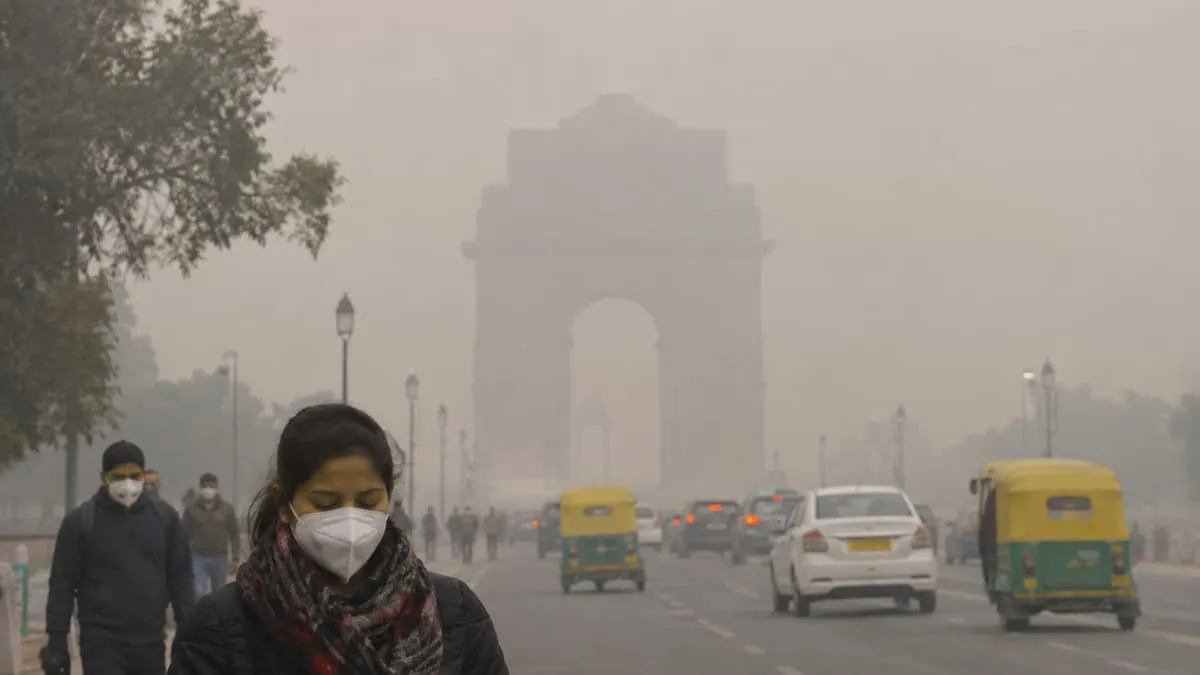
New Delhi AQI Today: New Delhi is witnessing a hazardous level of air pollution on November 15, 2026. The Air Quality Index (AQI) of the national capital has reached 384 (US AQI), placing it in the hazardous category. The high concentration of fine particulate matter (PM2.5) is a major concern, with its level recorded at 262 µg/m³.
According to the latest available air quality data, the PM10 concentration has also reached 325 µg/m³. These high pollution levels can affect people's health, particularly children, older adults and those with respiratory problems.
The weather in New Delhi is currently cloudy, with a temperature of 24°C. Despite the cloudy conditions, the air quality remains a serious concern for residents.
Source: AQI
New Delhi AQI Today: Latest Air Quality Report
Here are the latest air pollution readings for New Delhi, recorded at 9:51 AM on November 15, 2026.
Related Stories
|
Air Quality Details
|
Latest Reading
|
|
City
|
New Delhi
|
|
Date
|
November 15, 2026
|
|
Last Updated
|
10:10 AM (IST)
|
|
AQI (US)
|
384
|
|
Air Quality Category
|
Hazardous
|
|
PM2.5
|
262 µg/m³
|
|
PM10
|
325 µg/m³
|
|
Temperature
|
24°C
|
|
Weather
|
Cloudy
|
|
Humidity
|
53%
|
|
Wind Speed
|
4 km/h
|
|
UV Index
|
0.6
|
|
Global Pollution Ranking
|
22nd
|
Note: These are the readings supplied for the stated update time. AQI and pollutant concentrations can change throughout the day.
What Does an AQI of 384 Mean?
The Air Quality Index (AQI) measures how clean or polluted the air is. It helps people understand the possible health effects of breathing polluted air.
An AQI of 384 falls under the Hazardous category on the US AQI scale. At this level, exposure to polluted air can cause health problems, and people should reduce their outdoor activities.
The AQI categories provided in the latest report are:
|
AQI Range (US)
|
Air Quality Category
|
|
0–50
|
Good
|
|
51–100
|
Moderate
|
|
101–150
|
Poor
|
|
151–200
|
Unhealthy
|
|
201–300
|
Severe
|
|
301 and above
|
Hazardous
|
Important: India also follows its own National AQI scale. On that scale, an AQI between 301 and 400 is classified as Very Poor, while 401–500 is Severe. Therefore, US AQI and Indian AQI categories should not be mixed.
Major Air Pollutants in New Delhi Today
Several harmful pollutants are present in New Delhi's air. The latest readings show particularly high concentrations of PM2.5 and PM10.
|
Air Pollutant
|
Recorded Level
|
|
PM2.5
|
262 µg/m³
|
|
PM10
|
325 µg/m³
|
|
Carbon Monoxide (CO)
|
1,105 ppb
|
|
Sulphur Dioxide (SO₂)
|
6 ppb
|
|
Nitrogen Dioxide (NO₂)
|
18 ppb
|
|
Ozone (O₃)
|
3 ppb
|
What Are PM2.5 and PM10?
- PM2.5: These are extremely small particles in the air with a diameter of 2.5 micrometres or less. They can enter deep into the lungs and may even reach the bloodstream.
- PM10: These particles have a diameter of 10 micrometres or less. They mainly include dust, pollen and other small particles that can enter the respiratory system.
Both pollutants can cause breathing difficulties and other health problems, especially when people are exposed to them for a long time.
How Does Hazardous Air Quality Affect Health?
When the AQI reaches hazardous levels, breathing polluted air becomes a serious health concern.
Some possible health effects include:
-
Breathing problems: High pollution levels can cause coughing, breathing difficulties and throat irritation.
-
Eye irritation: Polluted air may cause redness, itching and watering of the eyes.
-
Lung problems: Continuous exposure to fine particles can affect lung function.
-
Heart-related problems: Long-term exposure to air pollution can increase the risk of cardiovascular diseases.
-
Problems for children: Children are particularly vulnerable because their lungs are still developing.
People with asthma, heart disease and other respiratory conditions should take extra precautions.
Precautions to Stay Safe During High AQI in New Delhi
Residents should follow these precautions when air pollution reaches hazardous levels:
-
Avoid outdoor exercise, jogging and cycling.
-
Wear a well-fitted N95 mask when going outside.
-
Keep doors and windows closed when outdoor pollution is high.
-
Use an air purifier indoors, if available.
-
Avoid burning waste, wood and other materials.
-
Children and older adults should avoid unnecessary outdoor activities.
-
People with breathing difficulties should consult a doctor if their symptoms worsen.
Delhi's official health advisory also recommends avoiding outdoor activities, using N95 masks when necessary and keeping indoor spaces protected from polluted air.
What Is the Current GRAP Status in Delhi?
The Commission for Air Quality Management (CAQM) uses the Graded Response Action Plan (GRAP) to control air pollution in Delhi-NCR.
According to the CAQM's available update on November 15, 2026, Stage III of GRAP is in force. It includes additional restrictions to control pollution across Delhi-NCR.
Some important measures under GRAP include:
-
Restrictions on dust-generating construction and demolition activities.
-
Water sprinkling and dust-control measures on roads.
-
Encouraging people to use public transport.
-
Work-from-home measures for offices as directed.
-
Hybrid classes for students up to Class V as directed.
-
Restrictions on certain polluting industrial and construction activities.
New Delhi Air Pollution: Global Ranking
According to the supplied live AQI report, New Delhi ranks 22nd among the most polluted cities globally.
The ranking can change throughout the day depending on pollution levels in different cities and the availability of monitoring data.