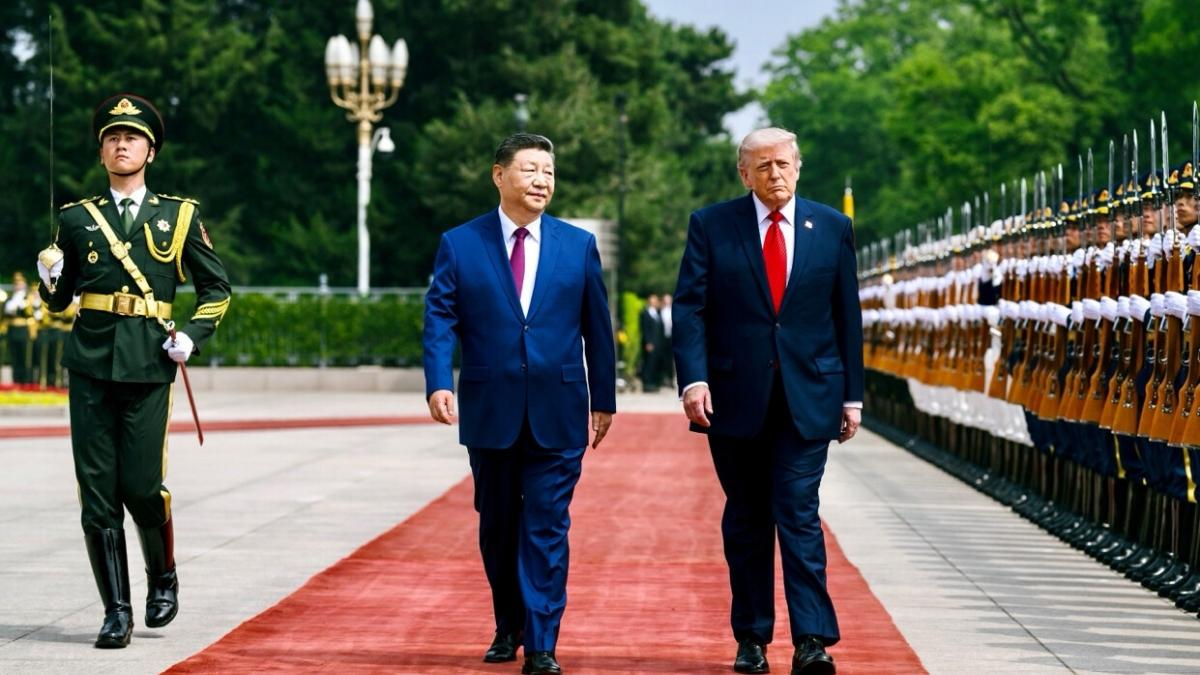
A shocking shift in international politics has been observed in the latest trust rating survey of Pew Research Centre. According to their latest trust and attitudes report China has officially surpassed the United States in terms of global popularity.
The survey interviewed 42151 adults across 36 countries and the results highlight how the world views the two superpowers in 2026.
The United States held a comfortable lead in global public opinion reports for many years. But a combination of improving perception of China and a sharp decline in trust towards the U.S has flipped the balance of trust in favour of China.
How China Takes Lead Over US in Global Popularity Report
The numbers reveal an unmistakable trend. The respondents from 25 out of the 36 participating countries surveyed a more favourable view of China than the United States.
This also included some of the oldest Western allies who have historically sided with American leadership.
The shift is highly apparent among the closest neighbours of America.
The favourability for the US in Canada has reduced to 33% whereas their trust in China has jumped to 44%.
A similar shift in the trust index occurred in Mexico, Germany, and the United Kingdom. Observers pinpoint this slide in trust to increasing tension between the Trump administration and long term international partners.
Donald Trump vs Xi Jinping: Leadership Trust Gap
The dip in the public image of America is directly related to how the world views its leader. The data shows that global confidence in U.S. President Donald Trump has weakened significantly during the start of his second term of presidency.
The overall confidence though remains low for both leaders still a median of respondents across 22 countries expressed higher trust in Chinese President Xi Jinping to handle world affairs correctly than in Donald Trump.
For example in nations like Italy, Sweden, and the Netherlands, President Xi leads President Trump by double digits in public trust ratings.
Credit: Pew Research 2026 Report
The Narrowing Freedom Gap and Global Interference
The United States had so far maintained a big reputational advantage by being viewed as a defender of personal liberties. That advantage is slowly fading away.
Trust in the U.S. government's respect for domestic personal freedom has experienced sharp double digit drops globally since 2021. In Sweden this metric has drastically dropped from 61% to 27%.
The middle income nations now increasingly view Washington as overbearing.
A striking median of 75% across these developing economies states that the U.S. interferes in the affairs of other countries a great deal or a fair amount when compared to just 45% who say the same about China.
India Remains a Major Global Exception
India chose to vote for America as a powerful exception in the survey. The United States is viewed more positively than China in just six of the participating countries. And India leads this group alongside Japan, South Korea, and the Philippines.
The confidence in Donald Trump remains comparatively higher than the trust in Xi Jinping in India. The Indian public maintains some of the highest pro-US and anti-China sentiments due to the ongoing regional border tensions and strategic defence alignments.
Photo Credit: Pew Research 2026 Report
This would be the first time in the last 20 years that China has surpassed the US in the 2026 Pew Research survey for global favourability. For students and competitive exam aspirants, this report serves as a critical case study on how fast global soft power can shift in modern international relations.