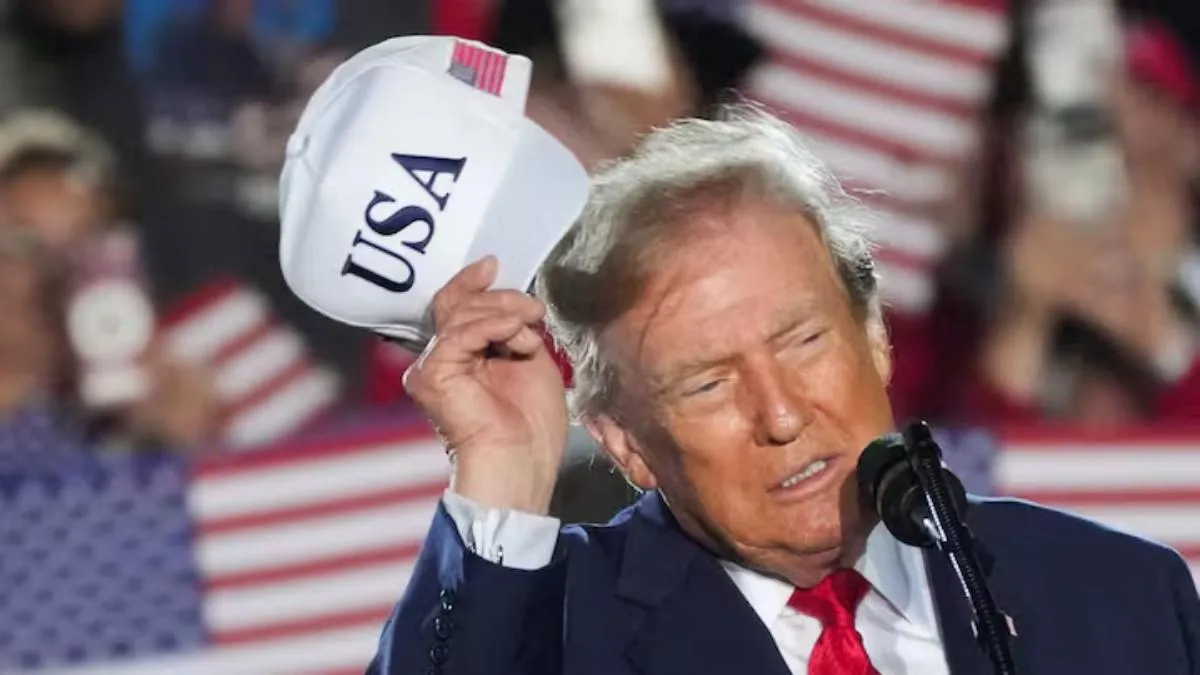
United States President Donald Trump asserted on November 4 that the Republican Party would have achieved a sweeping victory in the midterm elections if his name had appeared directly on the ballot, while reacting to early election results signal massive victory for the Democratic Party.
Taking to his Truth Social platform late Tuesday night, Trump distanced himself from down-ballot Republican issues while reiterating his personal electoral appeal to American voters. “I wasn’t on the Ballot and if I was, we would have won IN A LANDSLIDE! Thank you for your attention to this matter,” Trump posted, in his first official response to early vote tallies and prodictions.
The President’s defiant statement arrived as several media outlets projected that Democrats won e control of the House of Representatives, thus giving a major legislative setback to the present administration’s policy ambitions. Beyond the House, Democrats scripted critical breakthroughs across competitive swing districts and key Senate races. Notably, Democrats flipped Senate seats in North Carolina and South Carolina, where former Democratic Governor Roy Cooper defeated Trump-supported candidate and former Republican National Committee chair Michael Whatley.
Trump Rejects or Accepts Early Results in US Midterm Elections 2026?
Trump indicated in subsequent statements that he would formally accept the election results 2026 and showcased a willingness to partner with incoming Democratic leaders on some bipartisan matters. The changing balance of power in the US will majorily change the political landscape, handing Democrats crucial committee gavels, subpoena power, and more authority over the executive branch.
Political analysts viewed Trump’s comments as an immediate bid to preempt intra-party criticism on candidate selection and midterm campaign policies. Throughout the primary cycle, Trump had massively supported loyalist contenders across seats. The midterm outcome serves as a reportcard for voter behaviour on pressing economic issues, governance, and domestic policy.
Related Stories
What will happen now in US House and Senate?
With divided government now taking form, the White House faces a far more hurdles to achieve judicial nominations, budget legislation, and executive appointments over the next 2 years of the presidential term.
Previously, an NBC News survey reported that 75 per cent of respondents were dissatisfied with the national economy, while 51 per cent showed disappointment with their personal financial situation. According to a Pew Research Center survey, 88 per cent of Democratic supporters called the economy as very integral, compared with 82 per cent of Republicans.