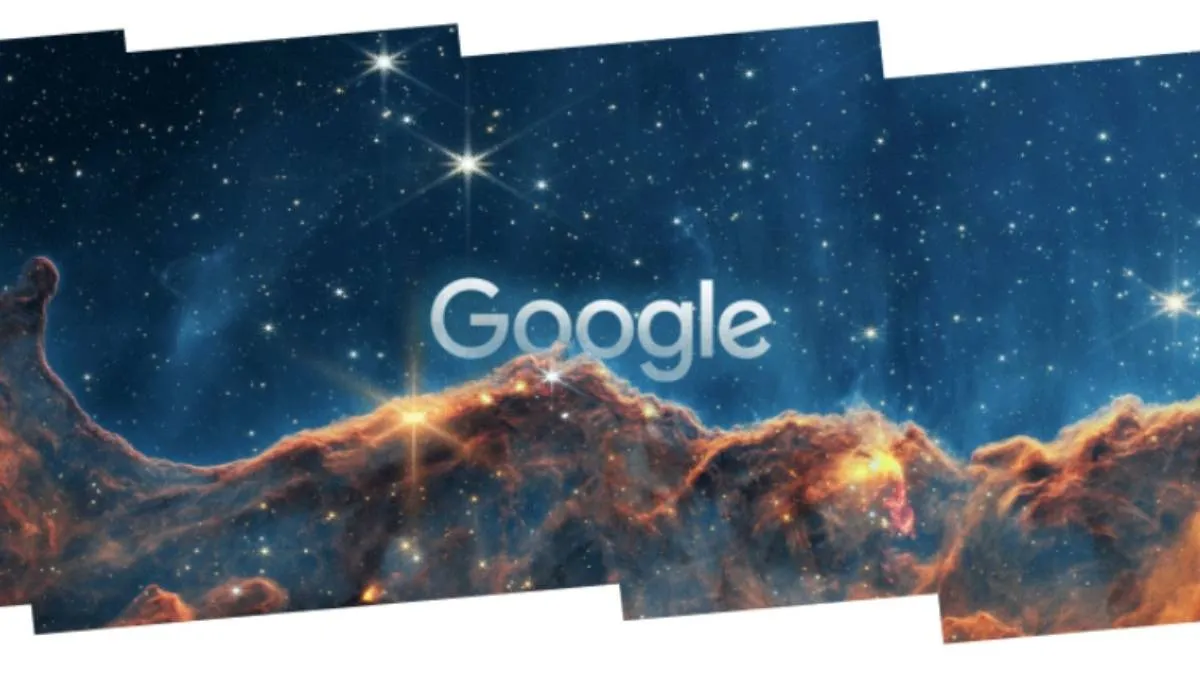
Google launched a multi day homepage series which is known as Google Doodle to mark World Space Week 2026. Google is replacing its search logo with high resolution space observations doodle on 6 and 8 October.
The episodic release of Google doodles features astrophotography captured by NASA’s James Webb Space Telescope (JWST). Each installment exposes deep celestial nurseries while celebrating international technological advancements across space exploration.
What is World Space Week 2026?
World Space Week is a global event that runs annually from October 4 to October 10. The official theme for World Space Week 2026 is "Rocket Revolution" designated by the United Nations.
According to official Google Doodles documentation the interactive feature honors the technology behind awe-inspiring astrophotography. It gives billions of web users a clear window into active astronomical research.
Daywise World Space Week 2026 Google Doodle
|
Feature Release
|
World Space Week 2026 Google Doodle
|
Release Date
|
Global Reach
|
Key Astronomical Measurements
|
|
Day 1
|
Oct 06, 2026
|
Global Homepage
|
3,300 light-years away; 130+ young stars
|
|
|
Day 2
|
Oct 08, 2026
|
Global Homepage
|
Spans 300+ light-years; home to O-type stars
|
World Space Week 2026 Day 1: The Rosebud Nebula
With the help of the near-infrared capabilities of the JWST telescope, scientists were able to go through thick stellar curtains that prevented older telescopes from getting clear pictures. The piece shows how real physical gas structures fall down under gravitational pressure to form new solar systems.
World Space Week 2026 Google Doodle Day 2: The Carina Nebula
"More than a dozen O-type stars live inside, and they are the hottest, most massive, and brightest stars in the universe," noted Google in its official release notes. These huge stellar engines give shape to immense gas clouds in the form of pillars that scientists call 'cosmic cliffs.'
Why does Google Use a Day-Wise Release for Space Week?
Multiple days are needed for the logo campaign in order to maintain engagement for the entire observance period. Complex astrophysical ideas can be broken down into segments to make them easier for general audiences to understand.
-
Connects classroom learning with real scientific data from space agencies.
-
Honors the 1957 launch of Sputnik 1 and the 1967 Outer Space Treaty.
-
Highlights how space systems power modern navigation, weather tracking, and orbital research.
The sequential deep space portrait campaign showcases the development of human spaceflight and observational optics technology during the last ten years.