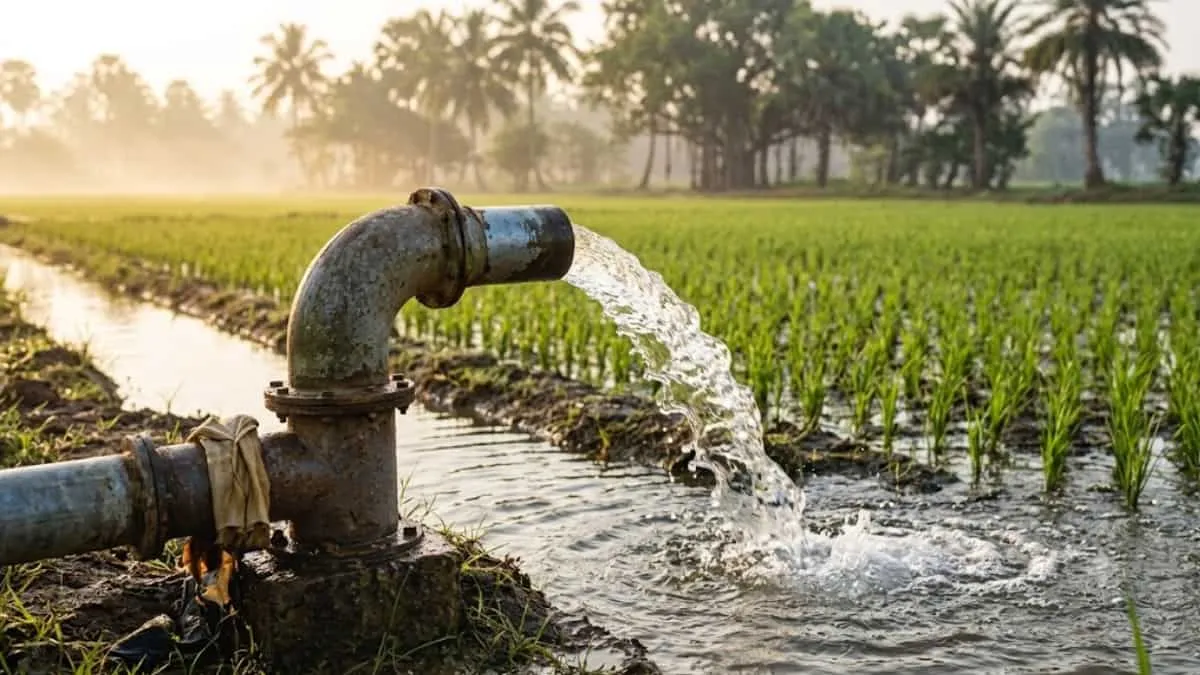
In summer the underground water is cool and in winter it is warm as the temperature of underground water fluctuates little from year to year, and deep tube wells provide the water. What changes with the seasons is the air above the ground, not the water deep below. So, the same water is cold on a summer day and warm on a winter day.
Key Takeaways
-
Water deep underground keeps a nearly constant temperature in all seasons.
Heat and cold do not flow readily through soil or rock so surface heat and cold cannot penetrate deeply.
The temperature of the water hardly changes at all. The difference we feel is because of the change of air temperature.
The water temperature is more constant in deeper wells than shallow wells.
The temperature of the earth increases a little with its depth, but the increase is small.
The earth becomes slightly warmer with depth, but the rise is small.
What Is a Deep Tube Well?
A tube well is a long pipe that is sunk deep into the ground. At the bottom of the pipe is a layer of sand, soil or rock that absorbs water. The layer is called an aquifer. Pump used to extract water from the aquifer.
A deep tube well is a hole that is dug to a greater depth than a hand pump or open well. It takes water from layers that lie far below the surface.
Why Does Underground Water Stay at a Steady Temperature?
Only the surface of the soil is heated by the sun. Rock and soil have low heat conducting properties. Such a low rate of movement and penetration of heat from a hot summer day is therefore observed. Similarly, not much cold penetrates a winter night.
The effect of the summer and winter is very small at depths of around 10-15 metres. Water is drawn from deeper wells, called deep tube wells. So the water's temperature remains near the mean annual temperature of that location. This is approximately 25℃ in a number of regions in India. The actual figure varies depending on the region.
Why Does the Water Feel Different in Different Seasons?
During the summer, the air temperature can reach 40°C or more. Water is 25 degrees cooler than the air so you feel cool and get used to it.
The air temperature may drop to 5 – 10 degrees Celsius in winter. Same water is about 25 degrees, which is warmer than air temperature, thus it feels warm.
Hence the water's composition is nearly unchanged. We feel the change in temperature because we compare it with the temperature of air around us.
Does the Water Get Warmer at Greater Depth?
Yes, but only slightly. On the average, the earth's temperature increases by 3 degrees C with every 100 metres of depth. This is called the geothermal gradient. In most tube wells, this is a slight increase and is insufficient to make the water hot.
Shallow Wells and Deep Tube Wells
|
Aspects
|
Shallow Well or Hand Pump
|
Deep Tube Well
|
|
Depth
|
Less
|
Much more
|
|
Water temperature
|
Changes somewhat with the season
|
Almost constant all year
|
|
Water in summer
|
May be less cool
|
Feels cool
|
|
Water in winter
|
May feel cold
|
Feels warm
|
|
Effect of surface weather
|
More
|
Very little
|
Other Examples of the Same Effect
The steady temperature of the ground can be seen in other places too.
-
Caves feel cool in summer and warm in winter.
-
Basements and underground rooms stay cooler than upper floors in summer.
-
Some buildings use pipes buried in the ground to help with cooling and heating. These are called ground source heat pumps.
What Can Change the Temperature You Feel?
Water stored in an open tank on a roof is affected by the sun and the outside air. It becomes hot in summer and cold in winter. To feel the true temperature of underground water, collect it directly from the pump after running it for a short time.