India to Have World's 2nd-Largest Muslim Population, Behind Pakistan; US to Lose Christian Majority; Check Pew Study’s Country-Wise Key Findings
One of the massive findings surrounds India's evolving religious composition. The study predicts that India's Muslim population will rise from approximately 213 million in 2020 to 334 million by 2070. This would position India from third to second place globally, behind Pakistan, whose Muslim population is slated to reach 461 million.
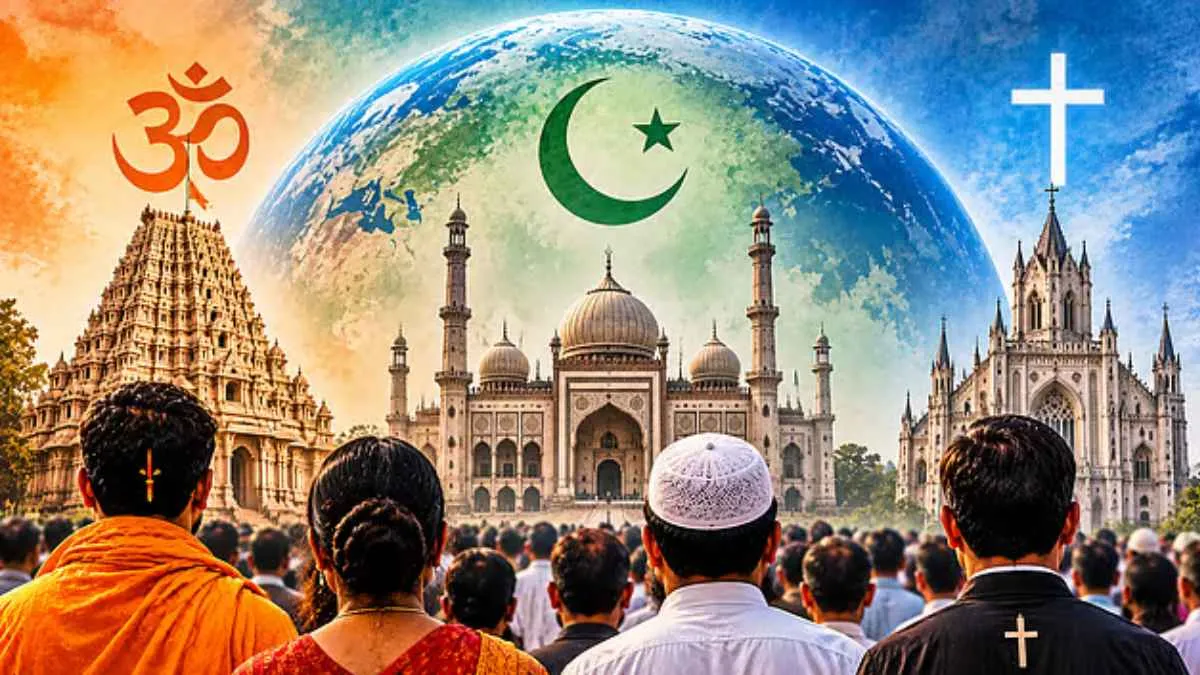
The religious composition of the world could experience transformational shifts over the next five decades, with Muslims expected to surpass Christians as the World's largest religious group by 2035. India is likely to have the world's second-largest Muslim population by 2070, while the United States could lose its Christian majority as the number of people determining with no religion still grows, according to a new Pew Research Center study.
The report, titled 'The Future of World Religions: Population Growth Projections, 2020-2070', analyses demographic trends across 201 countries and territories. It reviews fertility rates, age profiles, migration, mortality and religious switching.
India to have world's second-largest Muslim population
One of the massive findings surrounds India's evolving religious composition. The study predicts that India's Muslim population will rise from approximately 213 million in 2020 to 334 million by 2070. This would position India from third to second place globally, behind Pakistan, whose Muslim population is slated to reach 461 million.
India's Hindu population is also expected to jump by rising from approximately 1.11 billion in 2020 to 1.29 billion by 2070. However, the Hindu share of the country's population could slip from 79.4% to 75.8%.
Meanwhile, the Muslim majority is forecasted to skyrocket from 15.2% to 19.6%. Despite these changes, India will remain a Hindu-majority country, with Hindus comprising for more than three-quarters of its population.
Pew attributes the forecasted differences partly to age and fertility patterns. Indian Muslims have a younger median age and higher fertility rates than Hindus, although fertility has declined across both communities.
US could lose its Christian majority by 2070
The research also determines a massive demographic shift in the United States. Christians, who presently comprise the US’ largest religious group, are likely to account for less than half of the population by 2070.
Their numbers could slip from approximately 217 million in 2020 to 174 million by 2070. Meanwhile, religiously unaffiliated Americans, including atheists, agnostics and people identifying with no particular religion, could comprise 41% of the population.
Religious switching is identified as a massive factor behind this trend. Pew noted that Christianity has been losing more followers through religious conversions than it gains in the US. The younger average age of religiously unaffiliated Americans is another contributing reason.
Muslims projected to lead global religious rankings
Globally, Muslims could trespass Christians by 2035. By 2070, Muslims may consist nearly 36% of the world's population, compared with around 29% for Christians.
The forecast underscores how fertility, population age structures and changing religious identities could reshape countries differently. However, these are population predictions based on present trends, not definite results.
Pew Reserch Country-Wise Projections on Religion Population
• Pakistan, Nigeria & Indonesia: Pakistan is projected to surpass Indonesia to have the world's largest Muslim population by 2070, succeded by India, Nigeria, and Indonesia.
• Democratic Republic of the Congo (DRC) & United States: The DRC is forecasted to leave behind the U.S. as the country with the most Christians by 2070. The U.S. (along with Canada and Germany) is expected to no longer have a Christian majority by 2070, though Christians remain the largest group in the U.S..
• United Kingdom, France & South Korea: The religiously unaffiliated are forecasted to become a majority in these countries by 2070.
• China: Comprises about two-thirds of the world's religiously unaffiliated population; its expected population decline lowers the global share of "nones" even as unaffiliated numbers rise in many other nations.
• Ivory Coast: Slated to be the only additional country to gain a Muslim majority by 2070, bringing the total to 54 Muslim-majority country.

At Jagran Josh, she specialises in writing explainers and analytical stories on international news and current affairs. Over the years, she has developed strong expertise in leveraging digital and multimedia tools, along with SEO best practices, to enhance the speed, reach, and impact of her stories.