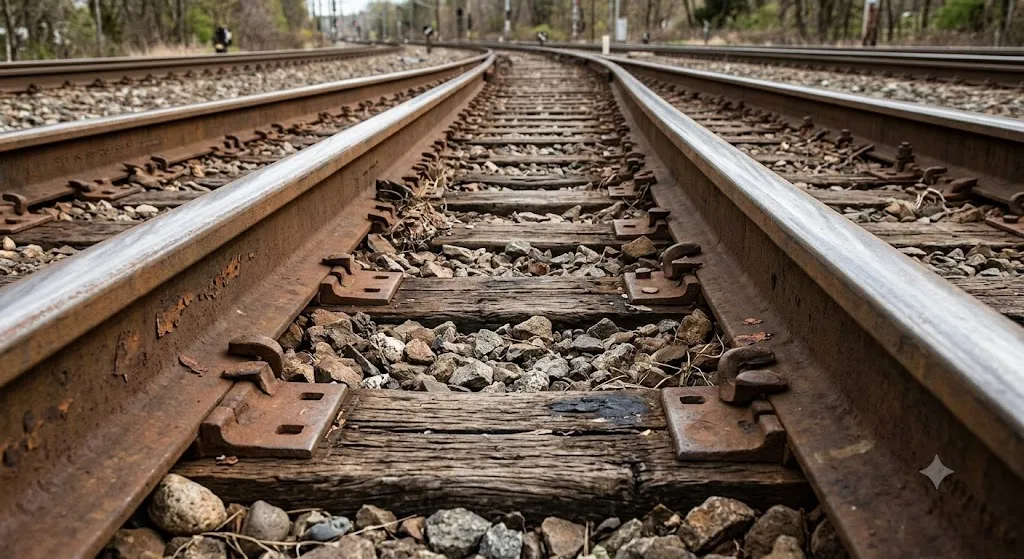
Have you noticed the layer of stones placed under railway tracks? These stones are not placed there randomly. They are an important part of the railway track system. These stones are called track ballast. They help keep the railway tracks stable and reduce movement. Keep reading to know in detail.
What Are the Stones Under Railway Tracks Called?
The stones under railway tracks are called ballast. Ballast is made from hard and strong stones. It is placed below and around the railway sleepers and supports the railway track. It helps keep the tracks in the correct position.
Why Do Railway Tracks Have Stones Under Them?
Railway tracks have stones underneath them mainly to provide stability and drainage. They keep the tracks firmly in place. They spread the weight of trains over a wider area.They reduce track movement and vibration.
How Do Railway Track Stones Support Trains?
Trains are extremely heavy so their weight needs to be spread across the track structure. Train wheels put a large load on the rails. Rails transfer this load to the sleepers. Sleepers transfer the load to the ballast.
How Do the Stones Keep Railway Tracks in Place?
Railway tracks can move because of the weight and movement of trains. Ballast helps reduce this movement. The stones hold the sleepers in position.
Why Is Water Drainage Important for Railway Tracks?
Water can damage railway tracks if it remains around the sleepers and ground for a long time. Rainwater can pass through the gaps between the stones as it helps prevent water from collecting around the track.
What Happens If There Are No Stones Under Railway Tracks?
Without proper ballast, railway tracks can become unstable. The tracks may move more easily. Water may collect around the track foundation.