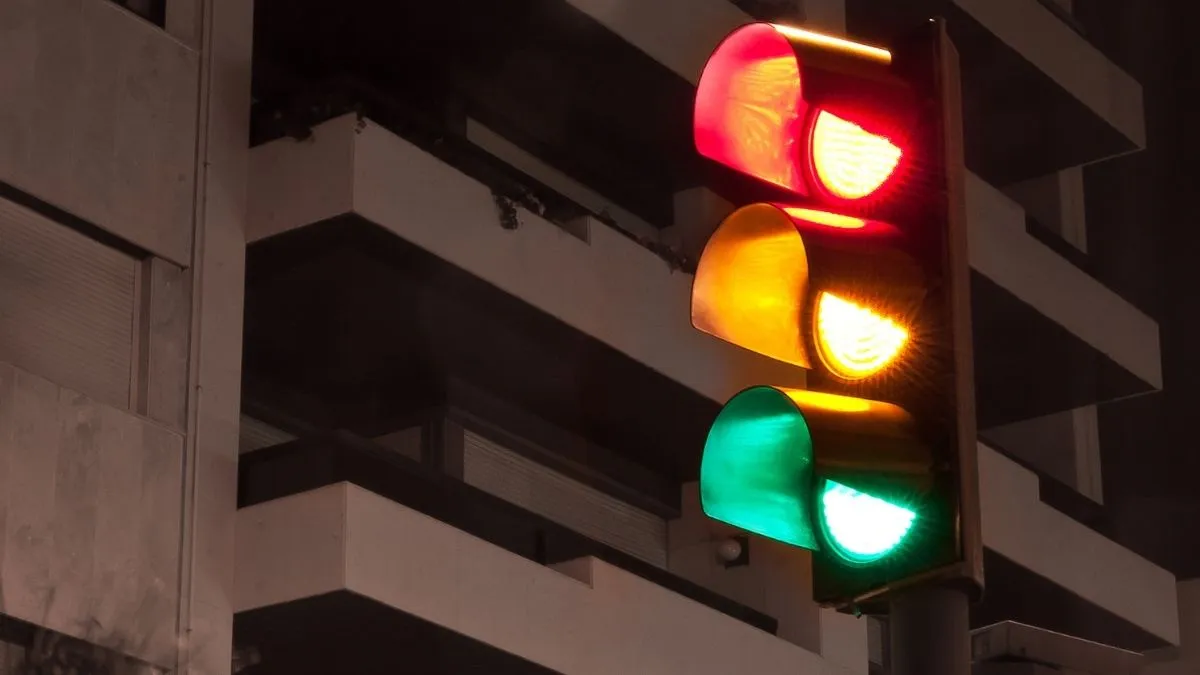
Traffic lights are the most important part of road safety. They manage traffic, help prevent accidents and allow vehicles and pedestrians to move in an organised manner. But why does red mean stop, yellow means caution, and green means go?
The answer is linked to railway signalling, colour visibility and the need for simple and easy to understand signals.
Why does Red in Traffic Lights Mean Stop?
Red is used to signal stop because it is highly visible from a distance. Among visible colours red has relatively long wavelength, allowing it to remain noticeable even from far distances and in various conditions.
The use of red as a warning signal began with railway systems. Railways used red light to tell train drivers to stop, as failing to notice the signal can lead to various major accidents. When the traffic signals were later introduced for roads, this already established system was adopted. Today red is worldwide famous for signaling danger and to stop.
Related Stories
Why does Yellow Mean Caution?
Yellow indicates caution and warns drivers that the signal is about to change. Yellow is a bright colour and generally easy to see both during day and at night. It serves as an intermediate signal between red and green, giving drivers time to act. This helps reduce sudden rush and allows traffic to move more safely.
However drivers should not speed up when the traffic light turns yellow.
Why does Green Mean Go?
Green was chosen to indicate permission to proceed. In the railway method it used to mean that the tracks are free and it was a signal to move forward which later on carried to the road safety method.
Green is a contrast colour for red which makes it easier for people to access the traffic and prevent accidents.
Traffic light colours were selected to make road signals clear, visible and easy to access the road while not facing major accidents. Knowing the meaning of the colours behind these colour encourages the driver to drive carefully.